The eFTI regulation, Regulation (EU) 2020/1056 on electronic freight transport information, obliges competent authorities across the EU to accept freight data from a certified eFTI platform from 9 July 2027. eFTI covers road, rail, inland waterway and air, not sea. The European Commission estimated in January 2025 that eFTI could save EU transport and logistics up to €1 billion per year.
The EU goes paperless on the inspection side first. From 9 July 2027, EU authorities can no longer refuse freight data shown through a certified eFTI platform; companies keep the right to use paper. The European Commission must assess an obligation for companies by 21 February 2029. For small and medium-sized (SME) shippers, the work is clean data and a forwarder conversation, not new software.
Key takeaways
- Every EU authority must accept certified eFTI platform data from 9 July 2027.
- eFTI stays voluntary; paper CMR consignment notes, the road contract documents, remain valid.
- Only certified-platform data counts EU-wide; we found none publicly listed as of October 2026.
- Waste is already digital: DIWASS, the EU’s Digital Waste Shipment System, became mandatory on 21 May 2026.
This guide is for SME shippers using a forwarder for road, air or groupage freight in the EU and on Balkan and Türkiye routes. Customs and maritime reporting are out of scope.
On this page: Is it mandatory? · Platforms · Responsibility map · eFTI vs eCMR · Do you need to act? · Balkan and Türkiye routes · Timeline · Checklist · FAQ
Is eFTI mandatory? What Article 4(2) says
Article 4(2) of Regulation (EU) 2020/1056 opens with a condition: “Where the economic operators concerned make regulatory information available electronically to a competent authority, they shall do so on the basis of data processed on a certified eFTI platform”. Economic operators concerned, typically carriers, must show this information; their data often starts with the consignor, in our reading usually the shipper. “Where” makes electronic optional. Only certified-platform data must be accepted EU-wide; a PDF or email counts only where national rules allow.
For operators, the eFTI regulation is voluntary now, with a possible obligation after the 2029 review.
Why do some pages call eCMR “non-optional” under eFTI, or 2027 the end of paper? They merge the authority’s duty to accept (Art. 5(1)) with the operator’s choice.
eFTI changes who must accept digital data, not who must produce it.
How a certified eFTI platform works at a roadside check
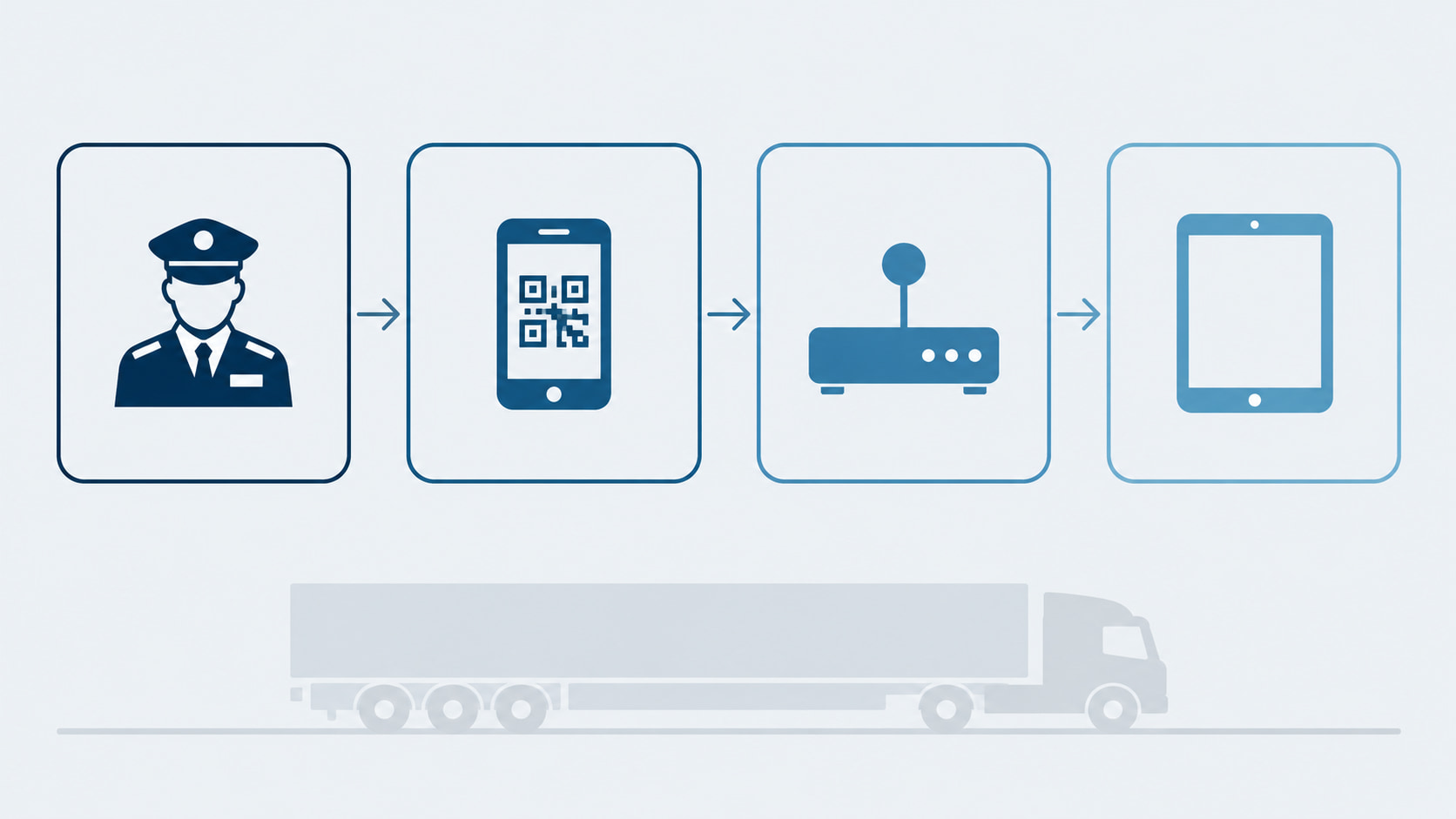
A certified eFTI platform is an IT system holding regulatory transport data, certified by a conformity assessment body accredited under Regulation (EC) No 765/2008; an eFTI service provider runs one for others.
Under the eFTI regulation, data is shared only when an authority asks. The operator passes on “the unique electronic identifying link” (Art. 4(3)), such as a QR code, and shows a human-readable version on its own device. Inspectors reach distributed platforms through national eFTI Gates — there is no central EU system.
The European Commission’s eFTI page schedules certification rules by December 2026. We found no certified eFTI platform publicly listed as of October 2026, so ask “eFTI-certified” vendors for the certificate.
eFTI for shippers: the responsibility map
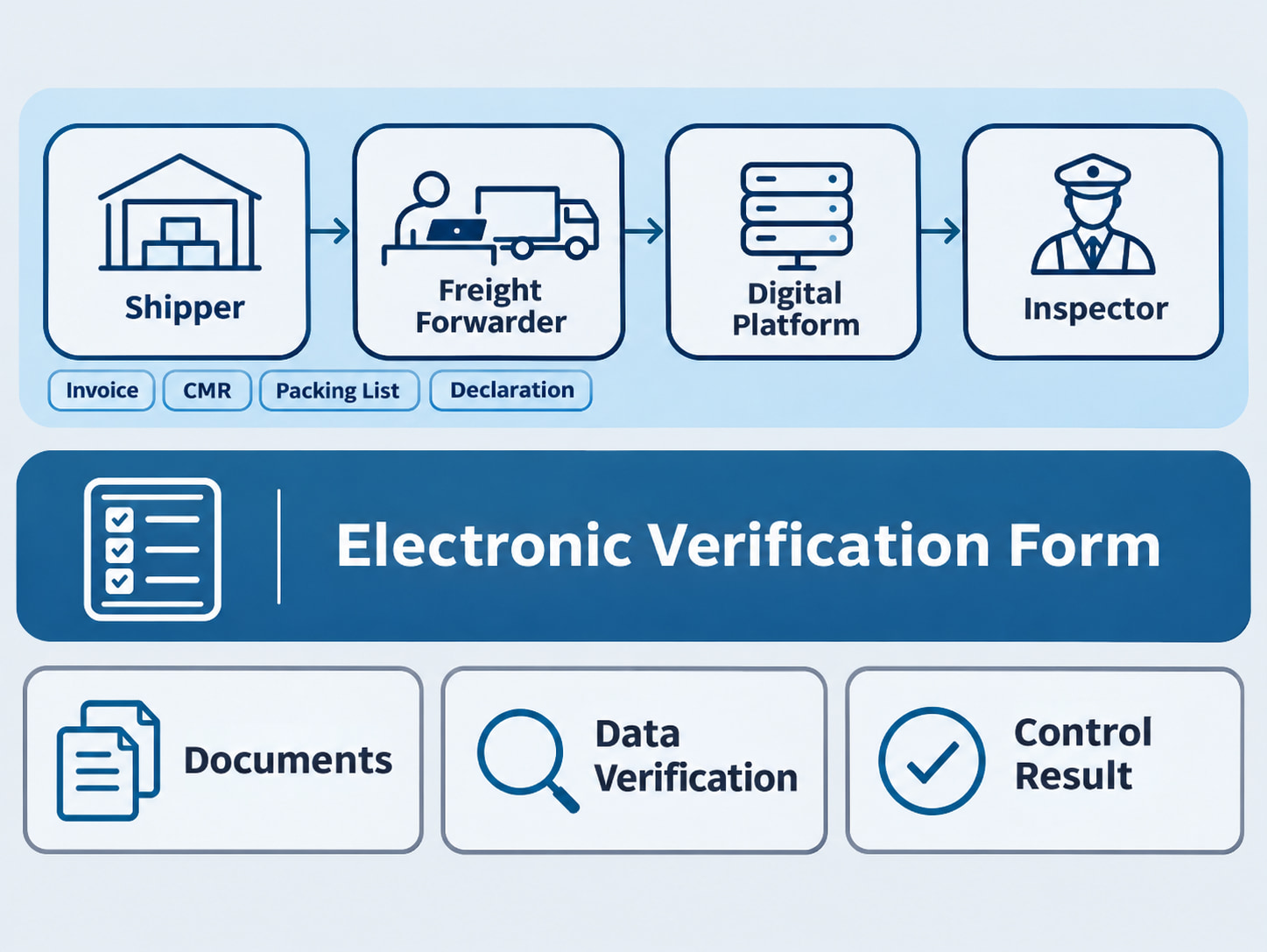
The eFTI regulation adds no new information requirements, only a new channel: DG MOVE, the Commission’s transport department, lists “No new information or language requirements”. The shipper’s eFTI responsibility map traces each data set to its supplier, including documents under ADR, the UN agreement on the international carriage of dangerous goods by road. Supplier entries are our reading, not legal advice.
| Requirement in eFTI scope | Who supplies the data | What changes on 9 July 2027 | Shipper action |
|---|---|---|---|
| Transport document data (EEC Regulation No 11) | Carrier, from your booking | Readable by link or QR code | Same names, goods, weights on order, invoice, CMR |
| Dangerous goods document (ADR Chapter 5.4) | Consignor, usually the shipper | Via a carrier’s certified platform; ADR already allows electronic documentation | Structured UN number, class, packing group, quantity |
| Waste shipments (Regulation (EU) 2024/1157) | Shipment arranger, often the shipper | Already in DIWASS, a separate EU system, since 21 May 2026 | DIWASS registration; paper for green-list (non-hazardous) waste until 31 December 2026 |
| Cabotage (foreign carriers’ domestic haulage) and combined-transport evidence | Carrier or transport operator | Electronic evidence accepted | Accurate loading and delivery dates |
| Air cargo security status | Regulated agent, often your forwarder | Electronic status accepted | Known consignors: confirm the data route |
| National provisions (Annex I Part B) | Varies by Member State | Country-specific | Ask your forwarder |
| Customs, maritime reporting, tax | n/a | Not covered | Existing customs and port rules |
We think an SME shipper booking groupage or full loads through a forwarder will rarely need its own eFTI platform (own trucks aside). Related: new ADR rules 2026 and consignor liability and customs and documentation for EU shipments.
eFTI vs eCMR vs national mandates: the three-layer test
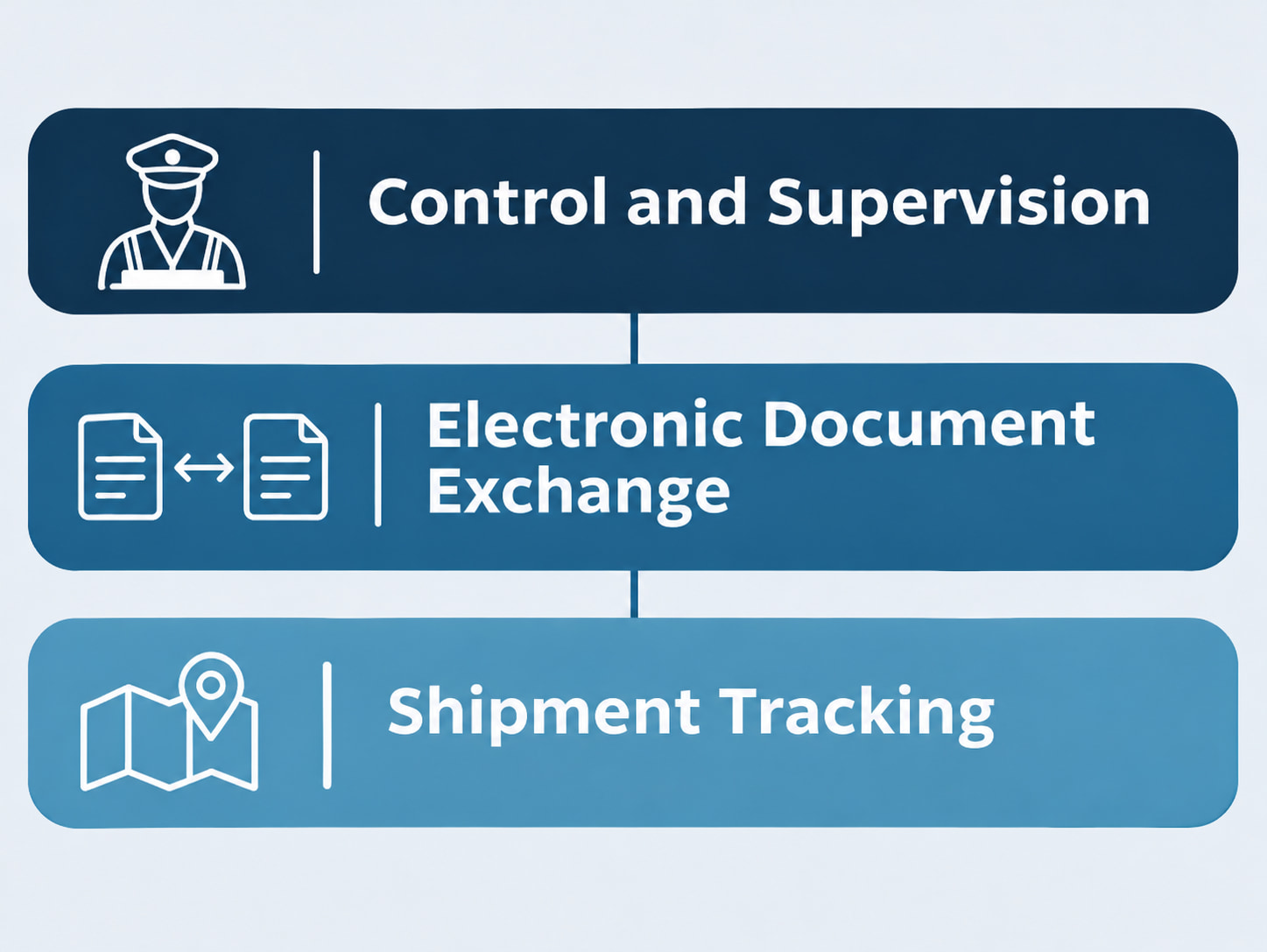
eCMR is the electronic consignment note under the 2008 Additional Protocol to the CMR Convention. The three-layer test: eFTI is the authority channel, eCMR the contract document, national mandates local law.
| Question | eFTI | eCMR | National mandates |
|---|---|---|---|
| Legal basis | The eFTI regulation | CMR Additional Protocol | e.g. Spain’s Ley 9/2025 on sustainable mobility (3 December 2025) |
| Data flow | Business to authority (B2A) | Business to business (B2B) | Operator to authority |
| Mandatory for companies? | No; authorities must accept from 9 July 2027 | No | Yes in Spain: domestic and cabotage haulage, from 5 October 2026 |
| Reference point | Obligation review by 21 February 2029 | UN register: 42 parties; IRU counts Serbia as 43rd | Spain excludes international journeys |
On a page updated 20 August 2026, Traficom, Finland’s transport agency, says adoption “remains voluntary” and eFTI “does not replace eCMR”.
eFTI talks to inspectors; eCMR talks to your contract partners.
Do you need to act before July 2027? Check your shipper profile
Five of the six profiles below carry no digital duty; what shippers need to do is preparation.
| Your profile | Must you act by 9 July 2027? | First step |
|---|---|---|
| Road general cargo via a forwarder | No | Clean booking data; ask about its eFTI plan |
| Dangerous goods consignor (ADR) | No new duty | Keep Chapter 5.4 data structured |
| Cross-border waste shipper | Already required since 21 May 2026 | Register in DIWASS |
| Air cargo known consignor | No | Confirm data exchange with your agent |
| Sea or LCL importer | Not for the sea leg | Check the road leg from the port |
| Shipper with own trucks | No, but you choose | If digital, use a certified eFTI platform |
Only waste carries an EU-wide digital duty already in force.
Paperless freight on Balkan and Türkiye routes in 2026
Four Western Balkan countries joined the eCMR Protocol in 2026, Serbia last on 4 August, per the UN depositary notification for Serbia.
| Country | Joined the eCMR Protocol | EU status for eFTI |
|---|---|---|
| Bulgaria | 2010 | EU; no public eFTI Gate status found (October 2026) |
| Romania | 2019 | EU |
| Greece | 2023 | EU; eFTI4ALL pilot coordinated by research centre CERTH, with Piraeus Container Terminal |
| Türkiye | 2018 | Non-EU |
| Albania | 7 April 2026 | Non-EU |
| North Macedonia | 27 April 2026 | Non-EU |
| Montenegro | 6 July 2026 | Non-EU |
| Serbia | 4 August 2026 (in force 2 November 2026) | Non-EU |
Non-EU trucks fall under eFTI only on EU territory, transit included (our reading of Art. 3(1)).
On Burgas to Western Europe groupage, we expect paper CMR and eFTI data to coexist well past July 2027. That is our lane view, not an official forecast. See how cargo moves from Türkiye to the EU through Bulgaria and Serbia.
eFTI timeline: from 2020 to the 2029 review
Article 5(1) sets 9 July 2027: 30 months after the first delegated and implementing acts took effect on 9 January 2025.
| Date | Milestone | Status on 20 October 2026 |
|---|---|---|
| 15 Jul 2020 | eFTI regulation adopted | Done |
| 21 Aug 2024 | Regulation applies | Done |
| 9 Jan 2025 | First delegated and implementing acts | Done |
| 6 Nov 2025 | Implementing Regulation (EU) 2025/2243 on platforms | Done |
| Jan 2026 | Voluntary preparation and acceptance open | Open |
| By Dec 2026 | Certification rules scheduled | Pending |
| 9 Jul 2027 | Authorities must accept eFTI data | Upcoming |
| 21 Aug 2027 | First Member State reports | Upcoming |
| 21 Feb 2029 | Commission review of a possible obligation | Upcoming |
More 2026 dates: EU freight rules 2026 timeline for shippers.
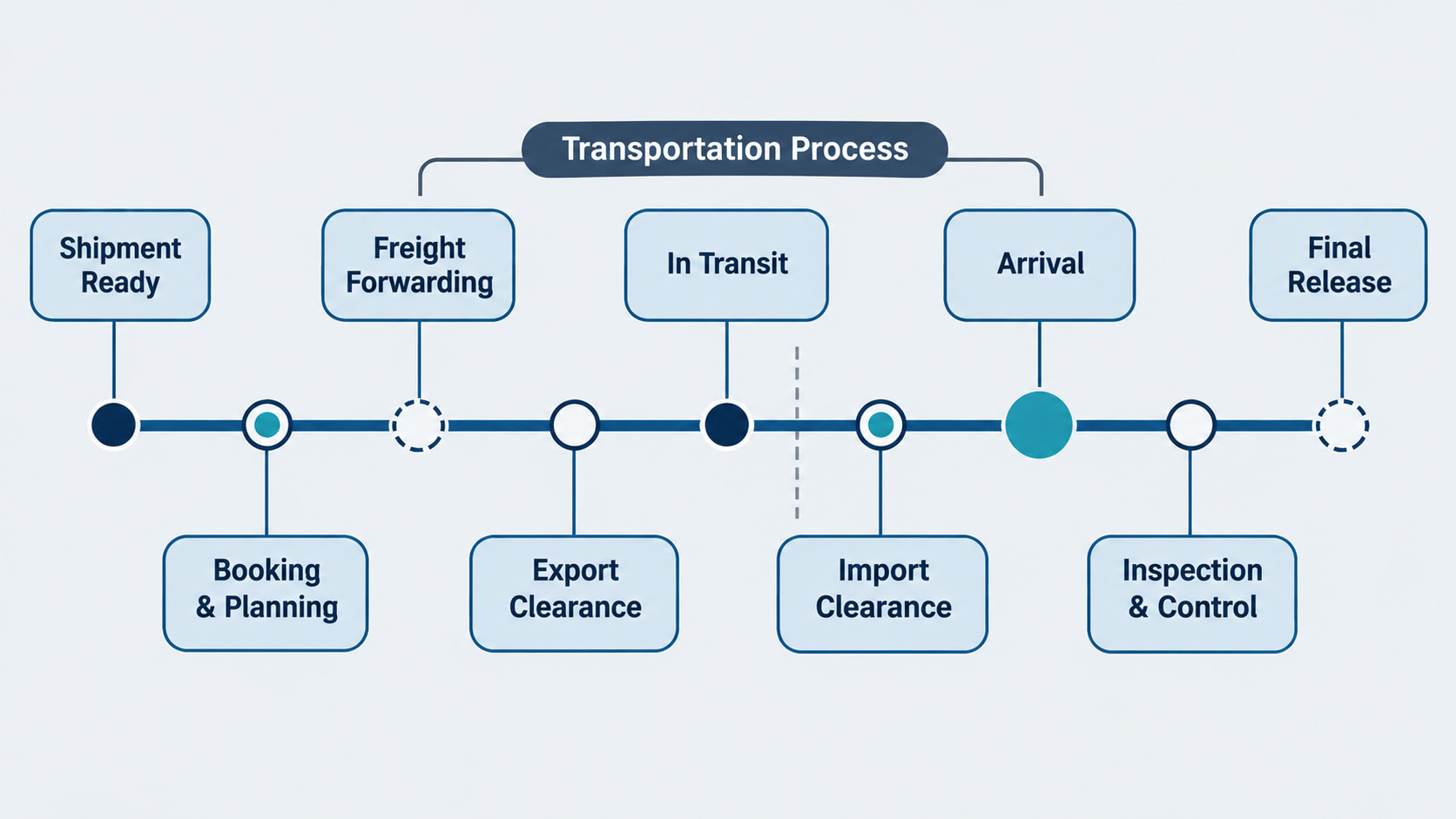
Preparing for the eFTI regulation: a six-step shipper checklist
The European Shippers’ Council calls 9 July 2027 the date digital submission “becomes a right” and encourages early preparation.
- Map regulated shipments: dangerous goods, waste, cabotage, combined transport and air cargo.
- Fix data at source: identical consignor, consignee, addresses, goods descriptions, gross weights and UN numbers everywhere.
- Ask your forwarder three questions: will it offer eFTI, on which certified platform, and how will it take your data?
- Check certification: certified platforms carry a certification mark (Art. 12(3)).
- Register in DIWASS if you ship waste: mandatory since 21 May 2026; green-list paper only until 31 December 2026.
- Expect paper CMR outside the EU unless both countries apply eCMR, and note the Commission’s 21 February 2029 review.
Frequently asked questions
Is eFTI mandatory for shippers?
No. Under the eFTI regulation, going electronic is optional, but only certified eFTI platform data counts EU-wide. The European Commission assesses a possible obligation by 21 February 2029.
Is a paper CMR still valid after 9 July 2027?
Yes at EU level: authorities can still receive paper, Finland’s transport agency Traficom confirms. In Spain, since 5 October 2026, domestic and cabotage road haulage needs a digital control document; international CMR journeys are excluded.
What is a certified eFTI platform?
A certified eFTI platform is a regulatory freight data system certified by an accredited conformity assessment body, valid EU-wide. No certified eFTI platform was publicly listed as of October 2026, by our check.
Does eFTI cover sea freight or customs?
No. Maritime reporting uses the European Maritime Single Window environment, customs the Union Customs Code; only the onward inland leg is in scope.
Does eFTI apply to Turkish trucks in the EU?
Yes, on EU territory, transit included (Art. 3(1)): on Sea Gate Logistics’ reading, a Turkish carrier checked in Bulgaria may use a certified eFTI platform or paper.
Will electronic freight documents become mandatory?
Not under eFTI’s current text, though DIWASS waste shipments and domestic haulage in Spain already need digital documents. Article 16 requires the European Commission to assess an obligation by 21 February 2029.
The bottom line on 9 July 2027
Nothing in the eFTI regulation forces shippers off paper on 9 July 2027. The useful work is clean shipment data, a talk with your forwarder, DIWASS registration for waste and a calendar note for the 2029 review.
If you ship road freight and groupage on Balkan or Türkiye lanes, ask our team how your documents travel.
About the author
This article was prepared by the Sea Gate Logistics editorial team, drawing on the company’s experience as an EU-registered freight forwarder in Burgas, Bulgaria, with 20+ years of collective logistics expertise across ocean, road, air, and consolidated (LCL) cargo.