Home » Cargo transportation from the Balkan countries » Freight transportation Bosnia and Herzegovina » Bosnia and Herzegovina-Tajikistan
Freight transportation Bosnia and Herzegovina – Tajikistan: fast, reliable, cost-effective
We organize all types of international shipments from Bosnia and Herzegovina to Tajikistan — road, air, container, and groupage cargo. We guarantee on-time delivery, safety, and full support.
International freight transportation between Bosnia and Herzegovina and Tajikistan requires well planned logistics and deep knowledge of the transport infrastructure across Europe and Central Asia. We provide comprehensive support at every stage — from route selection and documentation processing to on time delivery of the cargo to its final destination.
Our specialists take into account the specifics of each shipment: volume, cargo type, temperature requirements, speed, and safety. Thanks to partnerships with airlines, port operators, and trucking companies, we offer optimal transportation solutions with minimal risks and costs.
With us, clients receive transparent terms, fixed delivery times, and confidence that their cargo will arrive without delays or damage. We insure every shipment, provide online tracking, and assign a personal manager who monitors the process at every stage of delivery.
Road transportation
Fast and flexible delivery across Europe. We organize road transportation between cities in Tajikistan and Bosnia and Herzegovina — from 1 pallet to a full truckload.
We use:
- Curtainsider trucks
- Refrigerated trucks (or reefers) for perishable goods
- Light commercial vehicles for last-mile delivery
Air
delivery
For urgent and valuable cargo.
We transport documents, medical samples, electronics, and high-value goods.
Airports:
- In Bosnia and Herzegovina — Sarajevo (SJJ), Tuzla (TZL), Banja Luka (BNX)
- In Tajikistan — Dushanbe (DYU), Khujand (LBD)
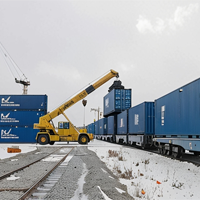
Container shipping
Ideal for bulky cargo: furniture, building materials, equipment.
Ports:
- In Bosnia and Herzegovina — Ploce
- In Tajikistan — Aktau
20′ and 40′ containers available. Delivery from port to warehouse possible.
Consolidated cargo
An economical solution for small batches. You pay only for the occupied volume — the cargo is consolidated with other shipments. Consolidations every week. Minimum volume — from 0.5 m³.
Delivery times: 10–15 days, express delivery possible.


We deliver cargo between the main industrial and commercial centers of both countries.
- Sarajevo → Dushanbe
- Tuzla → Khujand
- Mostar → Bokhtar
- Dushanbe → Sarajevo
- Khujand → Banja Luka
- Kulyab → Tuzla
Routes can be customized according to your order - there is door-to-door delivery available even to small towns.

Submit a request

Get a quote

Sign a contract
Cargo dispatch

Cargo tracking

Delivery and acceptance of cargo
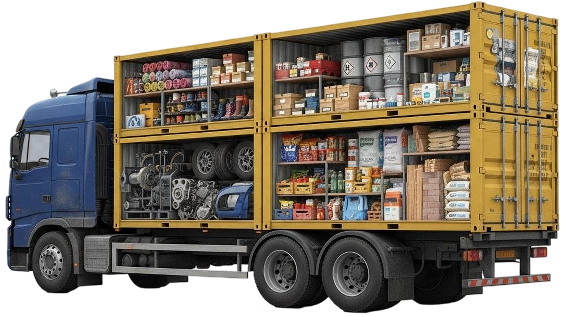
- Industrial equipment
- Auto components
- Textiles and footwear
- Food products
- Chemical products
- Medical supplies and pharmaceuticals
- Building materials
- Consumer goods
- Your choice of cargo
- Consultation and cost calculation
- Document processing
- Loading and unloading operations
- Cargo transportation
- Cargo insurance
- Forwarding and cargo escort
- Cargo integrity control
- Responsible storage at warehouses
- Cargo delivery and unloading
-
Truck (pallets) from 2 600 €
-
Air freight from 4 800 €
-
Container (20ft) from 3 900 €
-
Consolidated cargo from 450 €/m³

International freight transportation between Bosnia and Herzegovina and Tajikistan requires well planned logistics and precise handling of transit corridors, which is why we design multimodal solutions tailored to your SLA, combining air, road, container services, as well as flexible consolidated lines. For urgent shipments, we offer air transport from Sarajevo and Tuzla with transit through major European hubs and arrival in Dushanbe and Khujand, allowing for short delivery times while maintaining control over transshipments and rates. To optimize the budget, we use FCL/LCL container shipping through Adriatic and Mediterranean ports near Bosnia and Herzegovina, followed by rail and road legs to Tajikistan’s terminals, as well as pallet road transport and consolidated cargo on regular EU–Central Asia routes with door to door delivery.
When planning a route, we take into account seasonality, capacity availability, packaging and handling requirements, dimensions and weight, hazard class, Incoterms, and the specifics of customs regulations along each segment of the route. Our team handles pickup from the warehouse, consolidation, document preparation, cargo insurance, export-import and transit customs clearance, as well as last mile delivery in Tajikistan’s destination cities, including Dushanbe and Khujand. With alternative delivery scenarios — from fast air freight to economical LCL — we balance transit time and cost, reduce the number of transshipments, ensure KPI predictability, and provide a transparent quotation with no hidden markups.
If you need shipment from Bosnia and Herzegovina to Tajikistan or return delivery from Tajikistan, we will prepare a tailored proposal with multiple tariff and transit time options, including a detailed breakdown of charges by legs. For air freight, we offer competitive cargo rates considering minimum charges and volumetric weight; for FCL shipments, we select the optimal route through port infrastructure with slot coordination; for LCL and pallet road lines, we provide regular consolidation schedules and reliable delivery times. Each shipment comes with tracking, step by step updates, and support from a dedicated manager, enabling you to make timely decisions, control your budget, and maintain your supply chain schedule regardless of the complexity of the route between Bosnia and Herzegovina and Tajikistan.
What types of transportation are available between Bosnia and Herzegovina and Tajikistan?
Available options include air freight, road transport, FCL/LCL container shipping (as part of multimodal chains), and consolidated cargo. Combined routes are most commonly used: air transport via major European hubs to Dushanbe/Khujand with a ground leg, or container shipping through Adriatic/Mediterranean ports near Bosnia and Herzegovina followed by rail and road delivery to Tajikistan’s terminals.
Which airports are used for air delivery on this route?
On the Bosnia and Herzegovina side, the key airports are Sarajevo (SJJ) and Tuzla (TZL), with Banja Luka (BNX) and Mostar (OMO) used when required and depending on capacity availability. In Tajikistan, the main airports are Dushanbe (DYU) and Khujand (LBD), with Kulyab (TJU) and Bokhtar (KQT) used when needed, followed by distribution across the country by road transport.
How are container shipments organized if Tajikistan has no access to the sea?
The container is handled through ports located closest to Bosnia and Herzegovina (Ploče/Bar/Durres/Koper/Rijeka), then transported via an agreed land corridor to Central Asia, reaching Tajikistan’s terminals using a combination of rail and road legs. The choice of port and corridor is determined by transit time, cost, and the number of transshipments.
What are the estimated starting transit times and costs for each type of transport?
For air freight, starting rates may begin at low euros per kilogram for heavier shipments, depending on minimum charges and seasonality. For FCL 20ft containers, costs begin at several thousand euros, highly dependent on the chosen corridor and time of year. For LCL, rates start from several dozen euros per CBM plus terminal charges. For palletized consolidated road transport, prices start from a few hundred euros per Euro pallet for regular departures. An exact quote is prepared based on the cargo parameters and the selected logistics scheme.
What documents are required for export/import and transit?
You will need a commercial invoice, packing list, contract, HS codes, certificates/permits depending on the type of goods, as well as transit documents required for the selected corridors. For air freight, AWB data is required, along with dangerous goods documentation if applicable. For import/export, a customs declaration is issued in accordance with local regulations.
Is it possible to transport hazardous, temperature controlled, or high value cargo?
Yes, provided that ADR/IATA regulations and specific requirements for packaging, labeling, carrier certifications, and temperature control are met. For high value shipments, additional insurance is arranged and enhanced monitoring and security measures are applied throughout the entire route.
How are last mile delivery routes organized in Tajikistan?
A multimodal model is used: air/container/rail transport to a key hub (DYU/LBD or a rail terminal), followed by door to door road delivery to destination cities with prior coordination of delivery windows, unloading conditions, and site requirements.
What factors influence the choice between air freight, FCL, LCL, and consolidated road transport?
Key factors include time sensitivity, weight/volume and density, required shipping frequency, budget, temperature or fragility requirements, availability of direct capacity, and seasonal peaks. Air freight is used for urgent shipments, FCL for stable volumes, LCL for irregular and small batches, and consolidated road transport for pallet flows with regular schedules.
How are transparency and control ensured along the route?
Tracking is provided for key events, with updates at each stage (pickup, consolidation, dispatch, transit, arrival, customs, delivery). A dedicated manager also coordinates delivery windows and handles documentation and terminal related matters.
How can costs be reduced without significantly increasing transit times?
Optimize the corridor and the number of transshipments, use consolidated shipments (LCL/palletized groupage lines), schedule dispatches outside peak periods, package the cargo properly to improve chargeable density, and reserve capacity in advance on the selected transport legs.
What are the typical risks on this route, and how do you minimize them?
The risks are related to seasonality, capacity limits, transit formalities, and weather conditions. Mitigation is achieved through backup routes, early booking, proper documentation, insurance, and reducing the number of transshipments.
How do I request a quote and what information should be included in the inquiry?
Specify the origin and destination, Incoterms, dimensions/weight/packaging, cargo type and handling requirements, desired delivery time, readiness date, and preferred mode of transport. In response, you will receive 2–3 scenarios with a detailed breakdown of rates and transit times for each transport leg.
