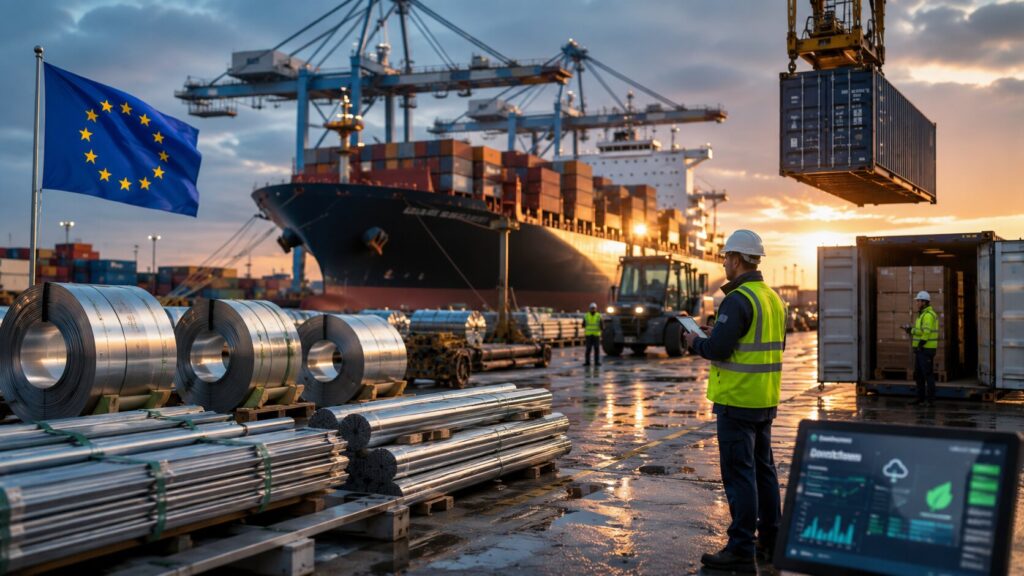
The Turkey–EU Customs Union modernization is back on the agenda in 2026, and for anyone shipping goods between Türkiye and Europe it matters more than the diplomatic headlines suggest. On 6 February 2026, in Ankara, the EU’s enlargement commissioner and Türkiye’s foreign minister put their names to a joint statement pledging to “pave the way for the modernisation of the Customs Union” (European Commission). Türkiye’s trade ministry says 15 of 29 problem areas are already resolved. But no formal negotiation has begun. That still needs a mandate the European Commission cannot issue until all 27 EU governments agree.
So the honest 2026 answer is “serious intent, no signed text yet.” The 1995 deal that scrapped duties on industrial goods is under review to add services, agriculture, public procurement, e-commerce, and green-transition rules. Full modernization could lift Türkiye’s GDP by 1.8–2.5% and its EU exports by 15–25%, on the institude.org modeling. Trade already runs at a record €217.6 billion a year (European Commission, 2025). Here is what is actually being discussed, what is stuck, and what it changes for an SME importer or exporter right now.
Key takeaways
- It’s a recommitment, not a signature. February 2026 produced a joint pledge to modernize; formal talks await a unanimous EU Council mandate.
- The 1995 deal only covers industrial goods. Services, agriculture, public procurement, and e-commerce sit outside it, and those are the additions on the table.
- Two gaps hit shippers today: road-transport permit quotas and CBAM carbon costs. Neither waits for modernization to land.
- The numbers are large but modeled. GDP +1.8–2.5% and exports +15–25% are forecasts, not results.
- What blocks it is political. Unanimity among 27 members, with Greece and Cyprus opposed, plus rule-of-law conditions.
Scope and audience: this guide explains the Turkey–EU Customs Union modernization and its 2026 status for SME importers and exporters who move goods on the lane — not for trade lawyers drafting the text. It covers what modernization would add, what still blocks it, and the practical customs and transport effects on a shipment. Duty mechanics (the A.TR certificate, HS classification, CBAM filing) live in our companion guides.
What the Customs Union does today — and what it leaves out
A customs union is more than a free-trade deal. Since 31 December 1995, industrial goods and processed agricultural products in free circulation move between Türkiye and the EU with no customs duty either way, and Türkiye applies the EU’s common external tariff to imports from the rest of the world (European Commission). That is why a Turkish exporter’s textiles or machined parts clear the tariff line at zero, travelling under an A.TR movement certificate rather than a rules-of-origin declaration.
The gaps are the whole story here. The 1995 agreement liberalised industrial goods and almost nothing else. Plain agriculture is excluded. Services are excluded. Public procurement is excluded. Road transport services (the trucks that carry the goods) were never freed either, which is why Turkish hauliers still queue for country-by-country permits. And there is a structural catch that shapes the politics: Türkiye adopts the EU’s external tariff but cannot sign its own free-trade agreements and has no seat at the EU trade-policy table. When the EU signs a deal with a third country, that country’s goods can reach Türkiye tariff-free through the EU, while Turkish exporters wait to negotiate reciprocal access. Türkiye currently holds around 23 FTAs against the EU’s 76 (institude.org). Modernization is, at heart, an attempt to close that 30-year-old gap between what the deal covers and what today’s trade actually looks like.
Why 2026 put it back on the table
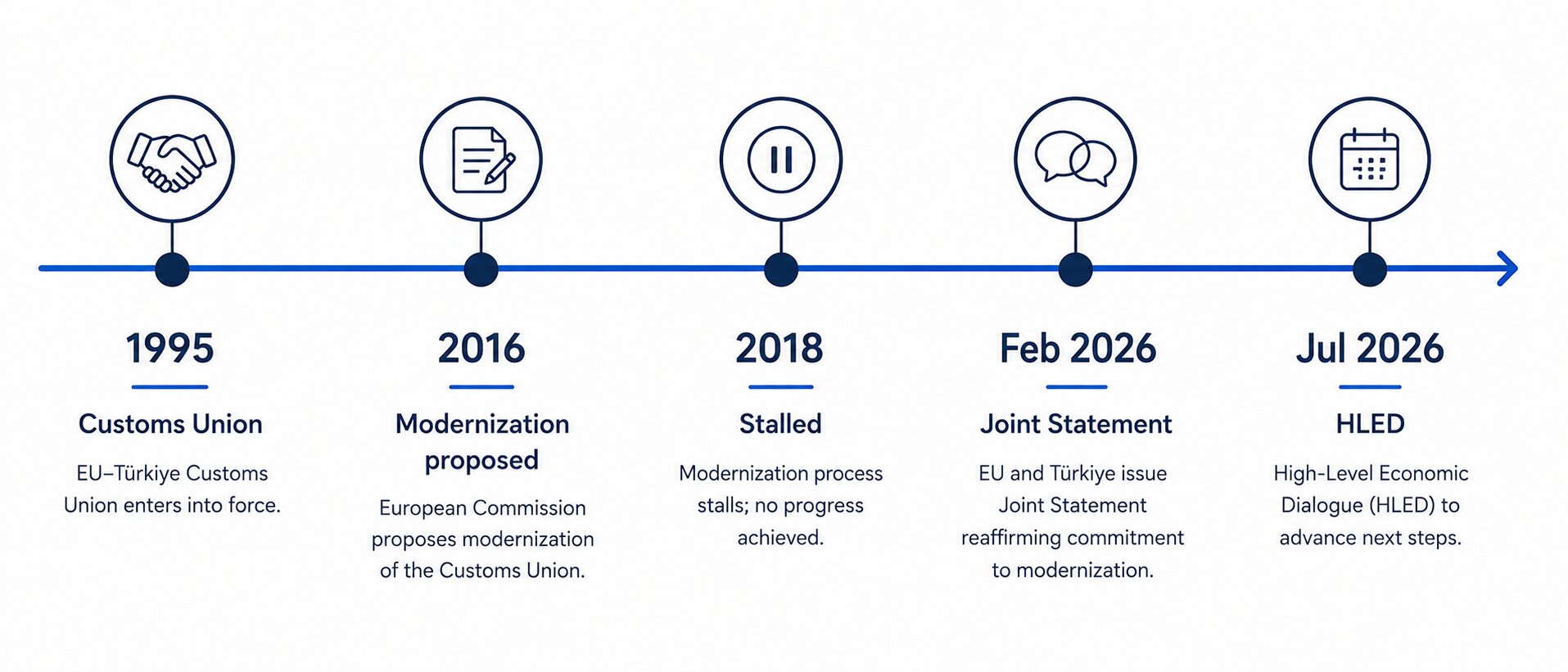
Modernization is not a new idea. The Commission first proposed it in December 2016, then the file stalled from 2018 (institude.org). What changed is the pressure around it. Foreign Minister Hakan Fidan framed the February statement around “the growing urgency of updating the Customs Union” in view of the green and digital transitions, supply-chain shocks, and a wave of new bilateral trade deals reshaping global commerce (European Commission). Five high-level dialogues in the past year have worked through the technical list: transport quotas, visas, carbon border taxation, and digital compliance.
The momentum carried into summer. At the EU–Türkiye High-Level Economic Dialogue in İstanbul on 2 July 2026, the two sides advanced practical connective tissue rather than the treaty itself. Türkiye submitted a letter of intent to join the Single Euro Payments Area (SEPA), which would make euro transfers faster and cheaper for traders, and both sides pushed a Connectivity Agenda covering transport, energy, and digital links (EEAS). Türkiye’s own business lobbies have been blunter, calling an overhaul “urgent” as trade strain builds. Notice what none of these meetings produced: a start date for formal negotiations. That gap between political warmth and legal process is the defining feature of the 2026 picture.
What’s actually on the table
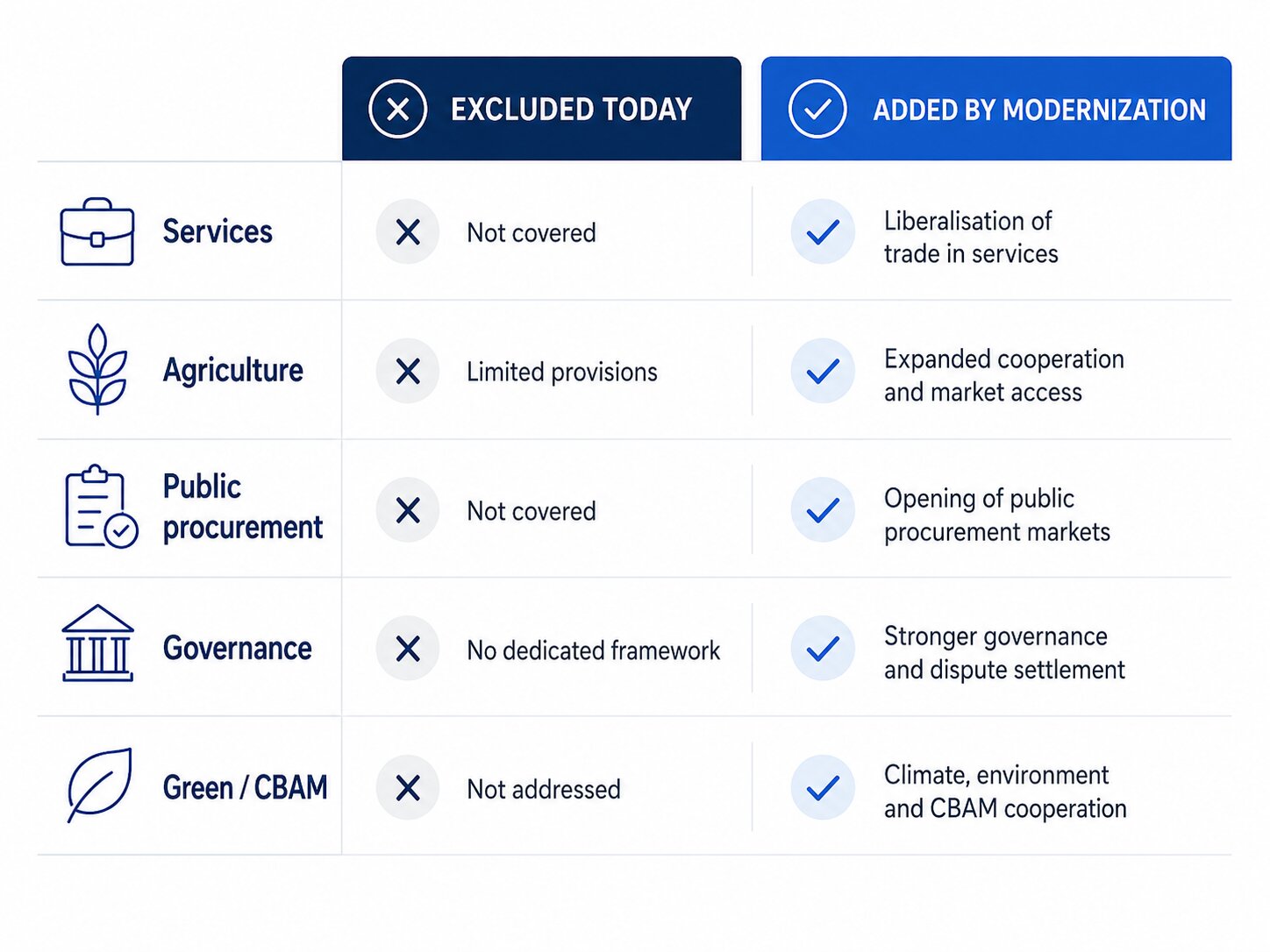
Modernization would stretch the Customs Union well past industrial goods. Four areas dominate the agenda, plus the green file that overlaps with everyone’s shipping costs.
| On the table | What it covers now | What modernization would change |
|---|---|---|
| Services | Excluded | Cross-border services, digital trade and e-commerce brought inside; alignment with the EU Digital Single Market |
| Agriculture | Only processed products | Broader farm-goods access — modeled to lift Turkish agri-exports sharply, though politically the touchiest item |
| Public procurement | Excluded | Mutual access to government tenders under common transparency rules |
| Dispute settlement & governance | Weak, bilateral | A modern mechanism, and a route for Türkiye to have more say on rules it already applies |
| Green transition (CBAM) | Not addressed in 1995 | Alignment with the EU Green Deal and a workable path for Türkiye’s carbon pricing to count against CBAM |
Two of these deserve a shipper’s attention. E-commerce inside a modernized union would matter for the small parcels and pallets that flow both ways since the EU began tightening low-value import rules, the same shift we cover in our [DDP vs DAP and de-minimis guide]. And the green file is not theoretical: it is already a line item on Turkish exporters’ invoices, which brings us to the two gaps that bite before any treaty is signed.
The road-permit and CBAM gaps that hit shippers today
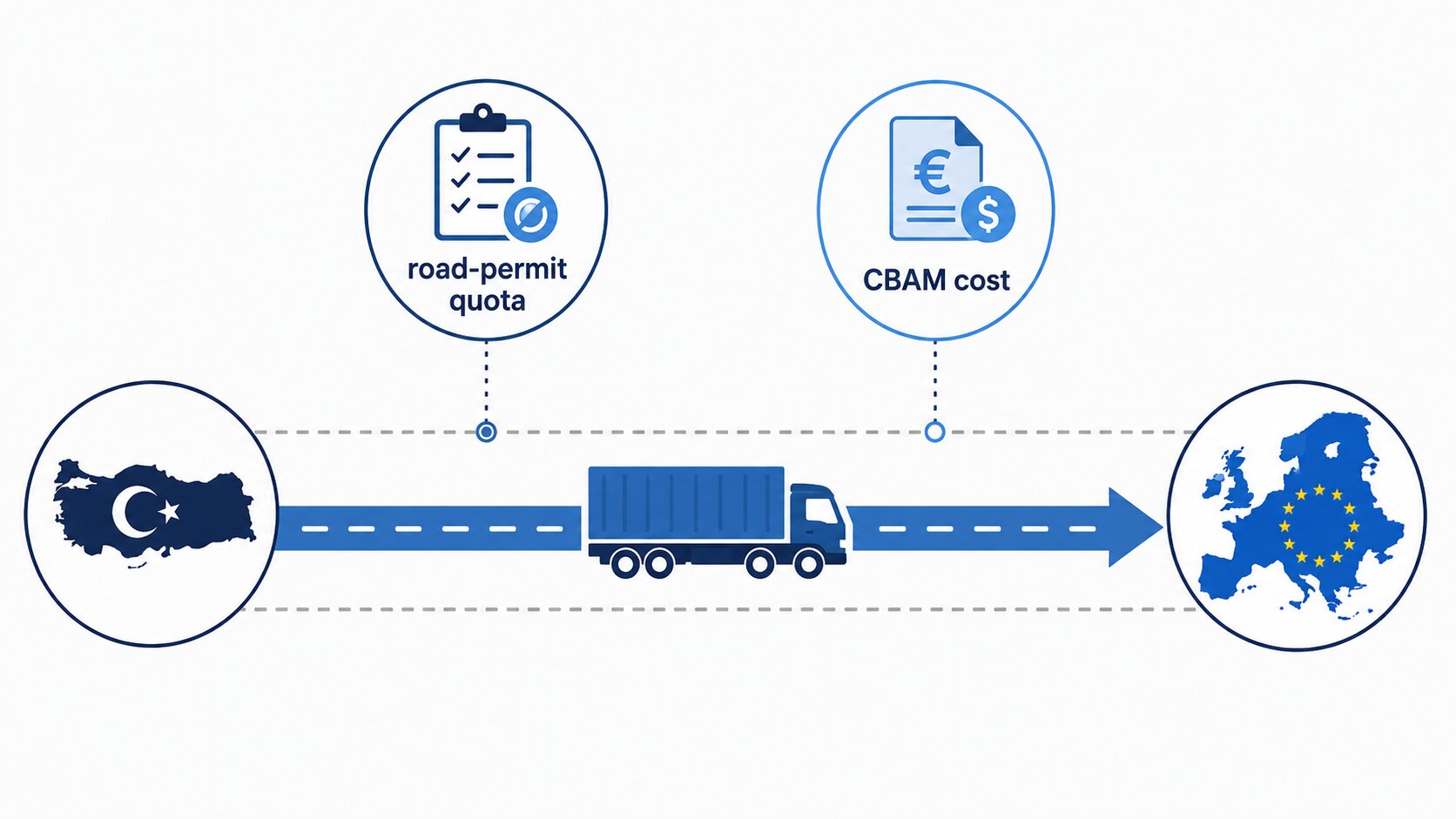
Here is the part the policy briefings skip. Whatever the negotiators eventually agree, two frictions are live on Turkey↔EU freight in 2026, and modernization is the eventual fix for both — not the current one.
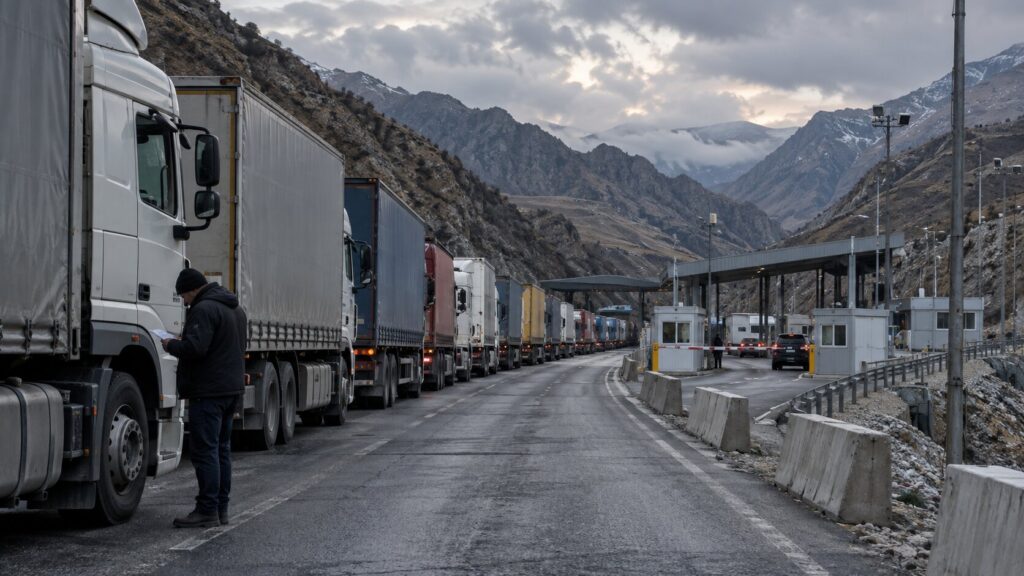
Road-transport permits. Because the 1995 union freed goods but not transport services, a Turkish truck bound for Germany still needs a transit permit for each country it crosses plus a bilateral permit for the destination, and member states cap how many they issue. When a country’s annual quota thins, capacity on that corridor tightens and rates climb, a hidden cost that never shows on a freight quote. We break down the mechanics, and the workarounds, in our [Turkey–EU road-permit guide]. Modernization’s transport-quota track aims to loosen this, but nothing has changed on the ground yet.
CBAM. The Carbon Border Adjustment Mechanism entered its definitive period on 1 January 2026; importers of iron and steel, aluminium, cement, fertiliser, electricity, and hydrogen now buy certificates for the embedded emissions in those goods. Türkiye’s CBAM-exposed exports run to roughly €19 billion a year (about 8% of its total exports), and Q1 2026 already showed volume dips into markets like Italy and Spain (SHURA Energy Transition Center). Türkiye is building an emissions-trading system, with a pilot slated for 2026–2027, so a domestic carbon price can be deducted from the CBAM bill. Until the two systems connect, the cost lands on the importer, and accurate [HS classification for goods from Turkey] is what decides whether a given consignment is even in scope. On the lanes we run, we see the same pattern: the paperwork question (“is this line CBAM goods or not?”) now moves the landed cost more than the freight rate does.
What still blocks a deal
If the economics are this attractive, why no signed text? Because the Customs Union sits on the EU’s political fault lines, and modernization has to clear three of them at once.
First, procedure. The Commission cannot even open formal negotiations without a mandate approved unanimously by all 27 member states, and Greece and Cyprus have long withheld that agreement over bilateral disputes (Turkish Minute; OSW). One veto is enough. Second, conditionality: the EU ties progress to rule-of-law and human-rights benchmarks, which keeps the file entangled with issues far from trade. Third, agriculture: the item with the biggest modeled upside is also the one EU farm lobbies resist hardest, as the fights over other EU trade deals have shown. Could a narrower “implementation and services first, agriculture later” package break the logjam? That is the pragmatic path most analysts now expect, and it would reach shippers in stages rather than one signing ceremony.
What it means for SME importers and exporters — and what to do now
For a small business shipping between Türkiye and Europe, the practical takeaway is patience with preparation. Modernization, when it comes, should mean easier services and e-commerce trade, looser truck quotas, and a cleaner carbon-cost mechanism — real savings on the lane. But it will likely arrive in phases over years, not in a single 2026 announcement, so plan around today’s rules while positioning for the change.
Three moves make sense now:
1. Treat CBAM as a live cost, not a future one. Get emissions data from Turkish suppliers in covered sectors and classify goods precisely — an in-scope line misfiled as out-of-scope is a compliance risk, and the reverse is money left on the table. Our covers the filing.
2. Build road-quota risk into your planning. On tight corridors, book ahead of quota exhaustion, and keep intermodal or consolidated (LCL) options open so one country’s permit crunch doesn’t strand your cargo. Consolidating part-loads also spreads the fixed customs and permit overhead across more freight.
3. Keep your customs house in order. A.TR certificates, correct HS codes, and clean origin documentation are what let you capture the zero-duty benefit the union already gives — modernized or not.
None of this needs a treaty. What would change with modernization is the ceiling: fewer transport bottlenecks and lower carbon friction on exactly the Türkiye freight lanes SME shippers use most. Want a read on how the current rules land on your specific shipment? Request a quote and we’ll map the duty, CBAM, and routing picture for your lane.
FAQ
Is the Turkey–EU Customs Union being modernized in 2026?
There is active political commitment but no formal negotiation yet. On 6 February 2026 the EU and Türkiye issued a joint statement pledging to work toward modernization, and Türkiye reports 15 of 29 issues resolved. Formal talks require a negotiating mandate approved unanimously by all 27 EU member states, which had not been granted as of mid-2026.
What would a modernized Customs Union cover?
The proposed scope adds services, agriculture, public procurement, and e-commerce to the current deal, which covers only industrial and processed-agricultural goods. It would also add green-transition alignment (including CBAM) and a stronger dispute-settlement mechanism.
Does modernization change my import duties today?
No. Industrial goods in free circulation already move duty-free between Türkiye and the EU under an A.TR certificate, and that stays the case. Modernization would mainly affect services, agriculture, transport quotas, and carbon costs — not the existing zero duty on industrial goods.
How does CBAM interact with the Customs Union?
CBAM sits outside the 1995 agreement. Since 1 January 2026 importers pay for the embedded emissions in covered goods (steel, aluminium, cement, fertiliser, and more), regardless of the Customs Union. Modernization is the channel through which Türkiye’s own carbon pricing could eventually offset the CBAM bill.
Why is it taking so long?
The Commission proposed modernization in December 2016, but the file stalled from 2018. Any formal start needs unanimity among the 27 member states (Greece and Cyprus have withheld it), and the EU links progress to rule-of-law conditions. Agriculture is the most politically sensitive chapter.
What should an SME shipper do while it’s negotiated?
Operate on today’s rules: file CBAM data accurately, get precise HS classification, keep A.TR and origin paperwork clean, and plan around road-permit quotas using consolidation or intermodal options. A modernized union would ease these frictions later, but they apply in full now.
About the author
This article was prepared by the Sea Gate Logistics editorial team, drawing on the company’s experience as an EU-registered freight forwarder in Burgas, Bulgaria, with 20+ years of collective logistics expertise across ocean, road, air, and consolidated (LCL) cargo on Türkiye–EU and Balkan lanes.