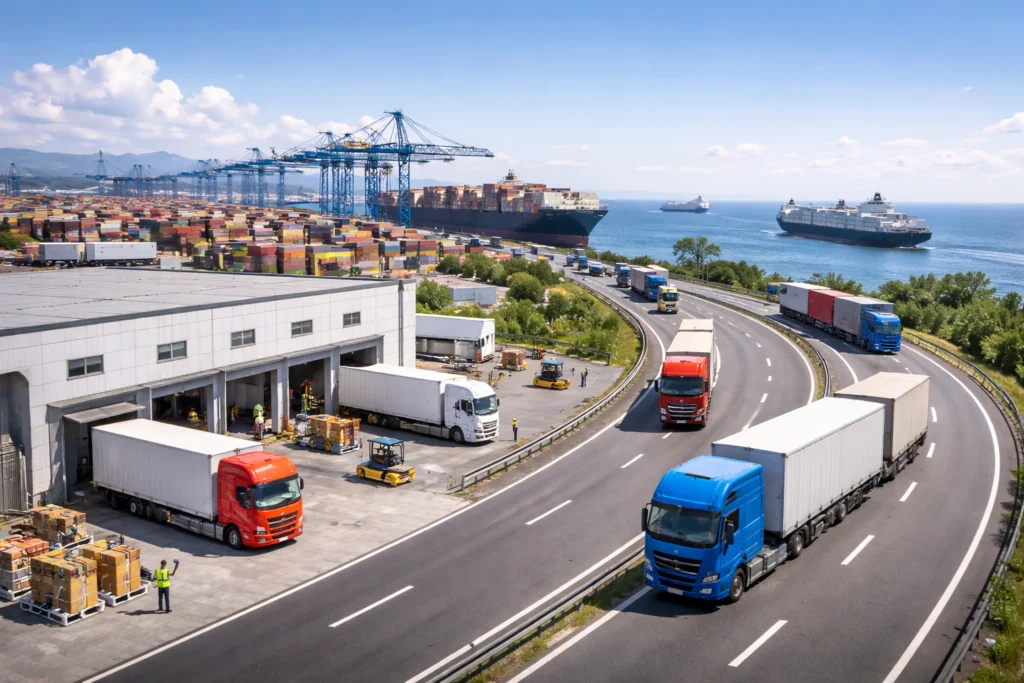
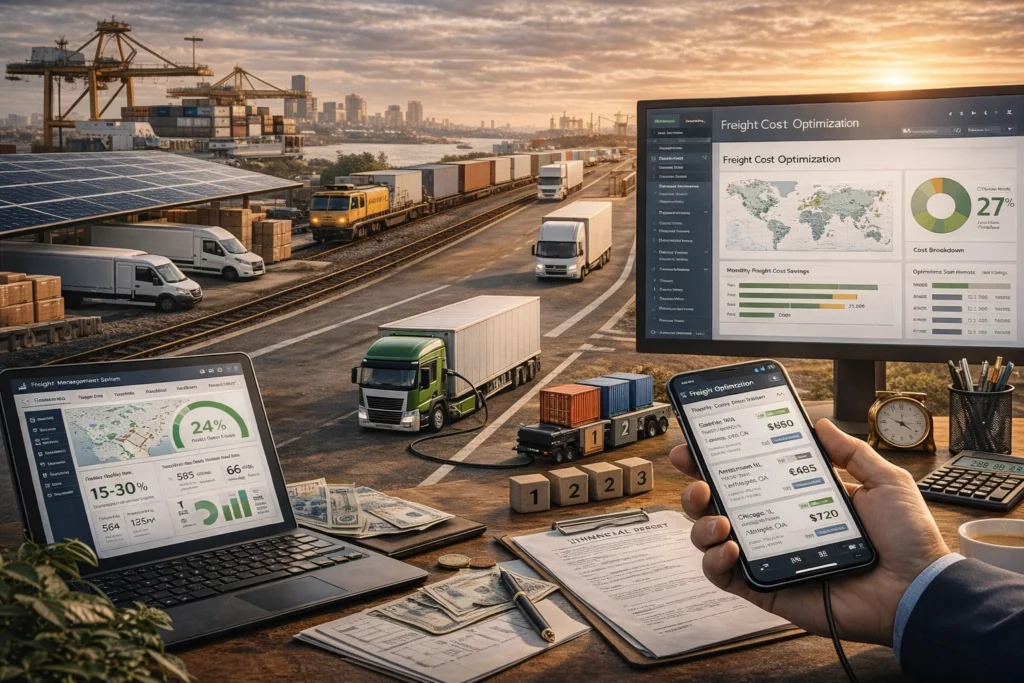
The European freight market stands at a critical juncture as it approaches 2026. Following the significant disruptions of recent years, including the COVID-19 pandemic, geopolitical tensions, and supply chain volatility, the continent’s logistics sector is undergoing profound transformation. Understanding these evolving dynamics is crucial for businesses operating in or planning to enter the European freight market.
Market Size and Growth Projections
The European freight and logistics market demonstrates robust resilience and growth potential. The market is estimated at USD 1.48 trillion in 2025 and is expected to reach USD 1.74 trillion by 2030, representing a compound annual growth rate (CAGR) of 3.31%. This growth trajectory reflects the fundamental strength of European trade and the continent’s position as a global logistics hub.
Road freight specifically shows strong performance within this broader market. The European road freight market was €372,350m in 2021, projected to be €390,754m in 2022, and is forecast to be €431,360m by 2026. This represents a projected real CAGR of 3.0% from 2021 to 2026, indicating steady expansion despite ongoing challenges.
The recovery pattern has been particularly notable. By 2026, the region’s total road freight market will be 23.1% larger in 2026 than it was in 2019 in real terms, demonstrating the market’s ability to not just recover but exceed pre-pandemic levels significantly.
Key Market Trends Shaping 2026
Digital Transformation and Technology Integration
The European freight sector is experiencing unprecedented digitalization. Advanced logistics platforms, route optimization technologies, and real-time tracking systems are revolutionizing supply chain transparency and efficiency. The integration of digital logistics platforms, route optimization technologies, and real-time tracking systems are significantly improving supply chain transparency and efficiency.
Intelligent Transportation Systems (ITS) and connected vehicle technologies are enhancing real-time fleet management, minimizing empty miles, and improving asset utilization. These innovations represent fundamental shifts in how freight operations are managed and optimized across Europe.
Sustainability and Environmental Compliance
Environmental considerations have moved from optional initiatives to regulatory requirements. The growing adoption of sustainable and eco-friendly logistics practices, including the deployment of electric and LNG-powered trucks, is aligning the market with Europe’s decarbonization goals.
EU policy incentives supporting green freight corridors, combined with infrastructure modernization projects, are accelerating the transition toward smarter, low-emission logistics solutions. This environmental focus is reshaping investment priorities and operational strategies across the industry.
E-commerce and Last-Mile Delivery Expansion
The e-commerce boom continues driving freight demand. European e-commerce continued its rapid growth, up 25.1% in 2021, creating sustained demand for efficient logistics solutions. The shift in consumer buying patterns toward online platforms has created an ongoing need for reliable, efficient, and flexible freight services, particularly in last-mile delivery segments.
Cross-Border Trade Growth
International trade recovery has been particularly strong. Intra-EU trade volume grew an average of 9.5% year-on-year, and total EU trade volume was up 9.6% in the latter half of 2021. International road freight is expected to grow faster than domestic during the 5-year period, although it will remain the smaller of the two markets, reaching €135,635m by 2026.
Cost Dynamics and Pricing Pressures
Fuel Cost Impact
Fuel costs represent one of the most significant cost pressures facing European freight operators. Diesel prices are a key cost component of European road freight, accounting for between 20% and 40% of the non-structural costs involved in long haul European trucking. Recent analysis suggests that fuel costs are approaching 50% of truck operating costs due to elevated energy prices.
The situation has been exacerbated by geopolitical tensions. The Russian invasion of Ukraine and the restriction of oil supplies from Russia into Europe has led to further upward pressure on prices. Data from the European Commission shows diesel prices in 2021 grew 16.7% year-on-year.
Rate Increases and Market Dynamics
The market has experienced significant rate increases in response to cost pressures and capacity constraints. For 2026, analysts forecast a 3% year-on-year increase in contracted prices across European markets. However, pricing in the European road freight market has continued to rise throughout 2021 in response to both falling capacity, rising demand, and increases in the cost base.
Spot rates have been consistently higher than contract rates, and the gap has widened, indicating ongoing market tightness. The digital trucking company Girteka has indicated a possible increase of 35.0% compared to the levels in mid-2020, though this represents peak volatility that has since moderated.
Regional Cost Variations
Cost structures vary significantly across European regions, with Central and Eastern European operators facing different challenges than their Western counterparts. Countries such as Bulgaria, Romania, Lithuania, and Latvia will likely lose market share to countries closer to the west such as Poland, the Czech Republic, Hungary, and Slovenia due to new regulatory requirements.
Major Challenges Facing the Market
Driver Shortage Crisis
The driver shortage represents perhaps the most critical challenge facing European freight markets. There is a shortage of around 400,000 drivers across the continent. A new report shows that truck, bus and coach driver shortages in Europe are spiraling out of control, fuelled by increased transport demand and an ageing workforce.
This shortage is expected to worsen significantly. Europe’s driver shortage is projected to triple by 2026 if no action is taken, creating substantial capacity constraints and upward pressure on wages and operational costs.
Regulatory Compliance Complexity
The European Union’s Mobility Package has introduced new operational requirements that significantly impact freight operations. The Mobility Package, which began to influence the market in 2022, will demonstrate its impacts more fully after 2023.
Key provisions include cooling-off periods for cabotage operations and return vehicle requirements mandating trucks return to their member state of establishment every 8 weeks. These regulations are designed to make life hard for so-called letterbox companies — businesses based in cheaper countries that operate more or less permanently in other nations.
Infrastructure and Capacity Constraints
European road freight faces ongoing infrastructure challenges. Road congestion, varying toll systems across countries, and inconsistent border protocols influence the fluidity of cross-border freight movement, impacting delivery timelines and service reliability.
European domestic prices have grown faster than international, at 5.3% and 2.8% respectively. Domestic markets have been faced with increasing capacity issues, giving more pricing power to hauliers.
Equipment and Technology Investment Requirements
The transition to sustainable operations requires significant capital investment. Logistics companies are investing in fleet upgrades, intermodal connectivity, and warehouse automation to meet environmental requirements and improve operational efficiency.
The global shortage of semiconductors caused major disruptions to truck production in 2021, highlighting technology dependency challenges that continue affecting equipment availability and costs.
Market Outlook and Strategic Considerations
Growth Opportunities
Despite challenges, the European freight market presents substantial opportunities. Central and Eastern Europe are expected to continue their rapid expansion, offering growth potential for companies that can navigate regulatory complexities and capacity constraints.
The air freight segment shows particular promise. The expansion of Europe’s e-commerce industry and a greater emphasis on adopting temperature-sensitive products are significant drivers driving the growth of the air cargo business.
Risk Mitigation Strategies
Successful navigation of the 2026 market requires comprehensive risk management approaches. Companies must address fuel cost volatility through hedging strategies, invest in driver recruitment and retention programs, and develop flexible operational models that can adapt to regulatory changes.
Collaborative logistics models, urban consolidation centers, and investment in autonomous vehicle research are being explored to overcome structural challenges. These innovative approaches represent potential solutions to persistent industry problems.
Investment Priorities
Strategic investments should focus on technology integration, sustainability initiatives, and operational efficiency improvements. The advancement of intelligent transportation systems (ITS) and connected vehicle technologies enhance real-time fleet management, minimize empty miles, and improve asset utilization.
Companies that successfully balance compliance requirements with operational efficiency while investing in sustainable technologies will be best positioned for success in the European freight market of 2026.
Conclusion
The European freight market approaching 2026 presents a complex landscape of opportunities and challenges. While growth projections remain positive, with the market expected to reach €431,360m by 2026, success will depend on effectively managing cost pressures, regulatory compliance, and capacity constraints.
The industry’s transformation toward digitalization and sustainability represents both a challenge and an opportunity. Companies that can adapt to new regulatory requirements, invest in technology and sustainable operations, and develop innovative solutions to capacity constraints will thrive in this evolving market.
The driver shortage crisis requires immediate attention, while geopolitical uncertainties and fuel cost volatility demand flexible operational strategies. However, the underlying growth drivers—e-commerce expansion, cross-border trade recovery, and digital transformation—provide a solid foundation for continued market expansion.
For businesses operating in or entering the European freight market, 2026 will be defined by the ability to balance growth opportunities with operational challenges while positioning for the sustainable, technology-driven future of European logistics.