Turkey to EU road transport permits are the reason your truck can be ready, your paperwork clean, and your freight still stuck: the 1995 EU–Türkiye Customs Union removed duties on goods but never freed the vehicles that carry them. A Turkish truck heading to Germany still needs a separate permit for every country it transits and one for the destination, and each member state caps how many it hands out. When a country’s annual quota runs thin, capacity tightens on that corridor, rates climb, and transit times start to swing.
The scale is easy to underestimate. Austria issues roughly 21,000 permits a year to Türkiye on the busiest route into Central Europe (IKV, 2025). Over 40% of Türkiye’s exports to the EU move by road, so the squeeze reaches a lot of cargo. Border waits for EU-bound Turkish trucks average about six hours and have been recorded as high as 72 (IKV, 2025). None of this shows on a freight quote, which is exactly why it catches SME importers off guard.
Key takeaways
- The Customs Union covers your goods, not your truck. Duties on industrial goods went to zero in 1995; road haulage stayed under member-state permit quotas.
- Permits stack. One shipment to Germany can need transit permits for Bulgaria, Romania, and Hungary plus a bilateral permit for Germany itself.
- Caps vary wildly by country. Austria allows Türkiye about 21,000 permits; Bulgaria allows 375,000. Same corridor, very different ceilings.
- The cost is hidden. When permits run short, hauliers switch to intermodal (about 56% dearer than road) or rail-carried Ro-La (around +€400 per truck), and that feeds into your rate.
- You can route around it. Consolidating loads, booking ahead of quota exhaustion, and using Ro-Ro via Trieste all cut your exposure to the bottleneck.
Scope and audience: this explains the Turkey–EU road-permit and transit-quota system for SME importers and exporters who buy or sell goods on the lane, not for hauliers applying for their own licences. It covers overland road freight and its intermodal alternatives into the EU and the Balkans. Customs duty mechanics (the A.TR certificate, IOSS, DDP vs DAP) sit in our companion guides.
On this page
- The bottleneck in plain terms
- Your goods are free. Your truck is not.
- Which countries cap Turkish trucks hardest
- How the permit crunch reaches your invoice
- ECMT permits, TIR, and what they fix
- How SME shippers beat the bottleneck
- What could change
- FAQ
The bottleneck in plain terms
A quota is a hard ceiling. Each EU member state decides, on its own terms, how many permits it will issue to Turkish-registered trucks in a given year, and Turkish hauliers draw down that pool as they run. Demand for those permits routinely exceeds the supply that some states set, with no shared, objective allocation standard behind the numbers (European Commission). So the constraint is not the road, the fuel, or the driver. It is a piece of paper that runs out.
When it runs out, the load still has to move. The haulier reroutes through a country with permits left, waits for the next allocation, or puts the truck on a train or a ferry at extra cost. Every one of those responses costs money or days, and the shipper who booked the freight ends up paying for it, usually without being told that a permit shortage was the cause. Understanding the system is the first step to not overpaying for it.
Your goods are free. Your truck is not.
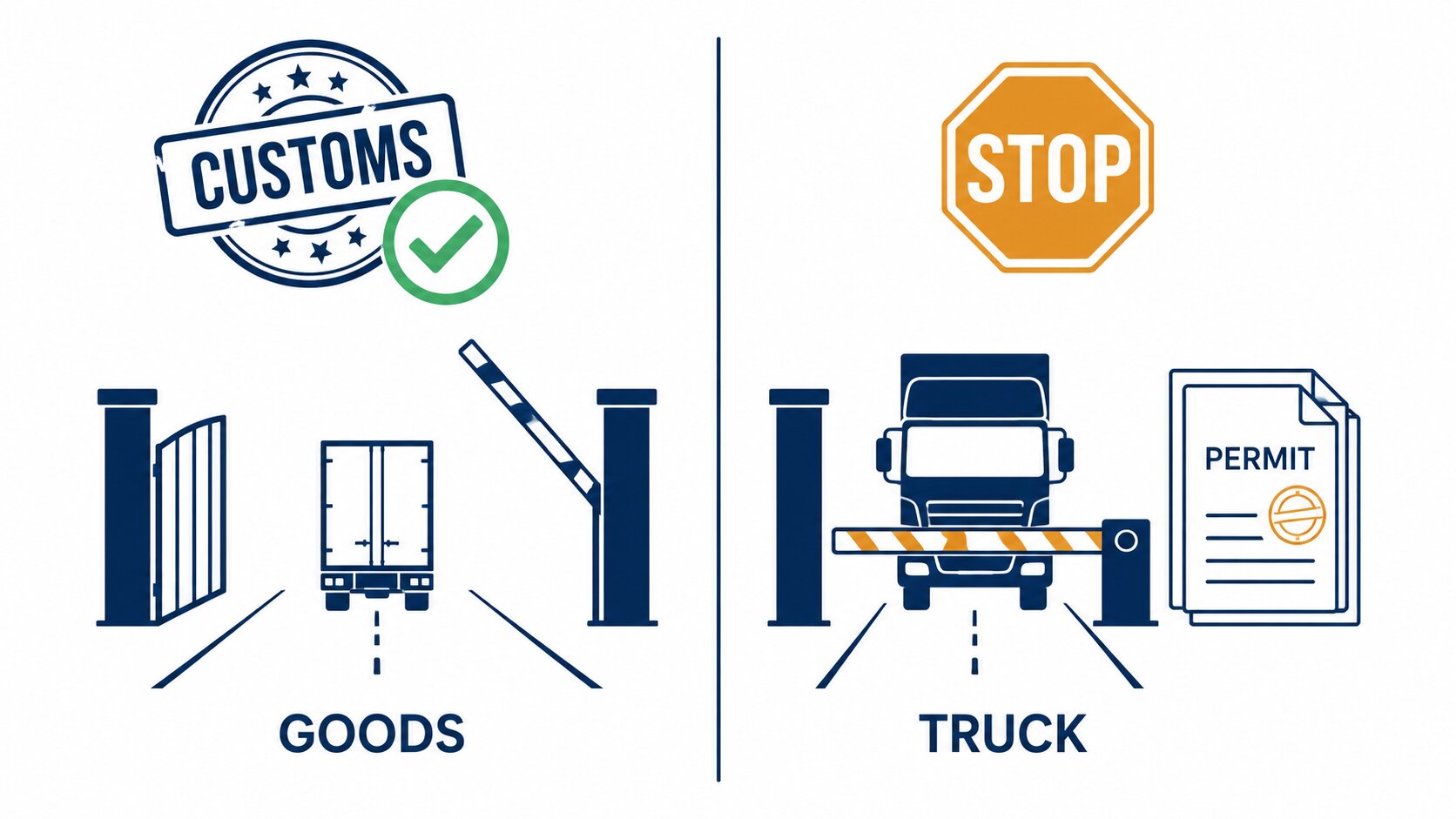
The EU–Türkiye Customs Union has been in force since 31 December 1995, and it did something real: industrial goods in free circulation cross between Türkiye and the EU with no customs duty in either direction (European Commission). That is why a Turkish exporter’s machined parts or textiles clear the tariff line for nothing. The catch is what the agreement left out. It liberalised the movement of goods, not the road transport services that move them. Vehicle access stayed a national matter, governed by bilateral agreements and permit quotas negotiated country by country.
Two permit types do the gatekeeping. A transit permit authorises a truck to pass through a country on its way somewhere else. A bilateral permit authorises it to load or unload in that specific destination. A single run from Türkiye to Germany can therefore need three or four transit permits (Bulgaria or Greece, then Romania, then Hungary, sometimes Slovakia or Austria) plus the German bilateral (IKV, 2025). Miss one and the route is closed until you find another. Analysts at Chatham House have called this gap one of the design flaws of the Customs Union, and it is the single fact most cost comparisons for the lane leave out. Free trade on the invoice does not mean free passage on the map.
Which countries cap Turkish trucks hardest
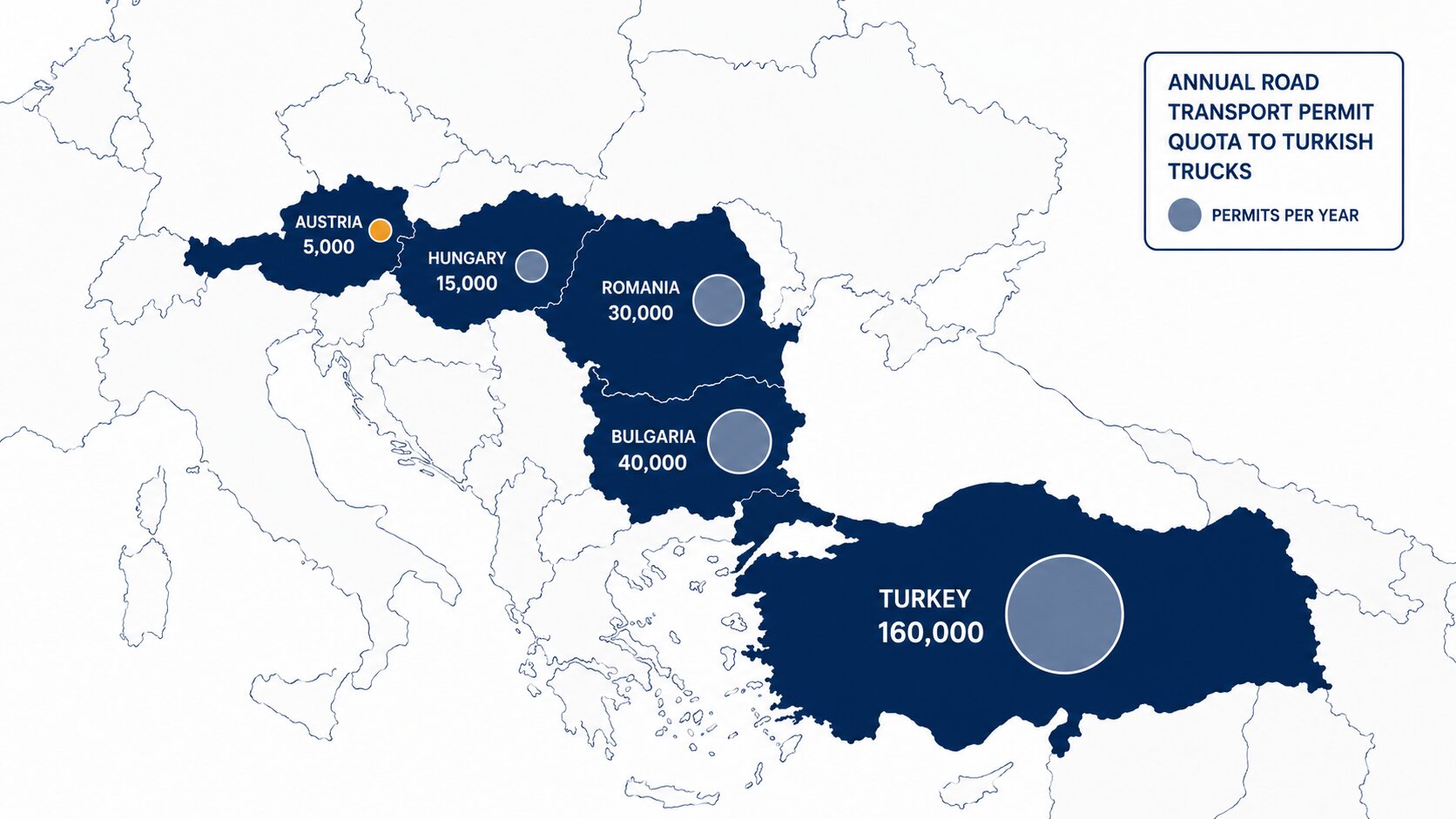
Not all borders squeeze equally. The permit ceiling that matters is the tightest one on your route, because that is where the queue forms.
| Country | Annual permits to Türkiye (Estimated) | Why it matters |
|---|---|---|
| Austria | ~21,000 | The chokepoint on the main road route to Germany; capped on “environmental protection” grounds |
| Hungary | ~110,000 (raised from 36,000 in 2020) | Key Central-Europe transit; eased after negotiation |
| Bulgaria | ~375,000 (raised from 250,000 in 2022) | The primary land gateway from Türkiye into the EU |
| ECMT multilateral | 7,688 permits (2023) | Türkiye’s whole multilateral allocation, the largest in the system yet still short of demand |
Sources: IKV Brief 2025; Anadolu Agency; ITF. Figures are the most recent published allocations and shift with bilateral negotiations.
The Austrian number is the one to watch. Austria sits on the direct road corridor to Germany, Türkiye’s biggest EU market, where about 73% of the trade moves by road (IKV, 2025). Roughly 21,000 permits against that demand is a narrow gate, and it is defended on environmental rather than trade grounds, which makes it slow to loosen. Bulgaria, by contrast, raised its transit quota to 375,000 in 2022, and Hungary tripled its own to 110,000 in 2020 after talks at the Turkish–EU Joint Transport Commission. The pattern is telling: quotas move, but only through slow diplomacy, and the tightest cap on your lane sets your real ceiling.
How the permit crunch reaches your invoice
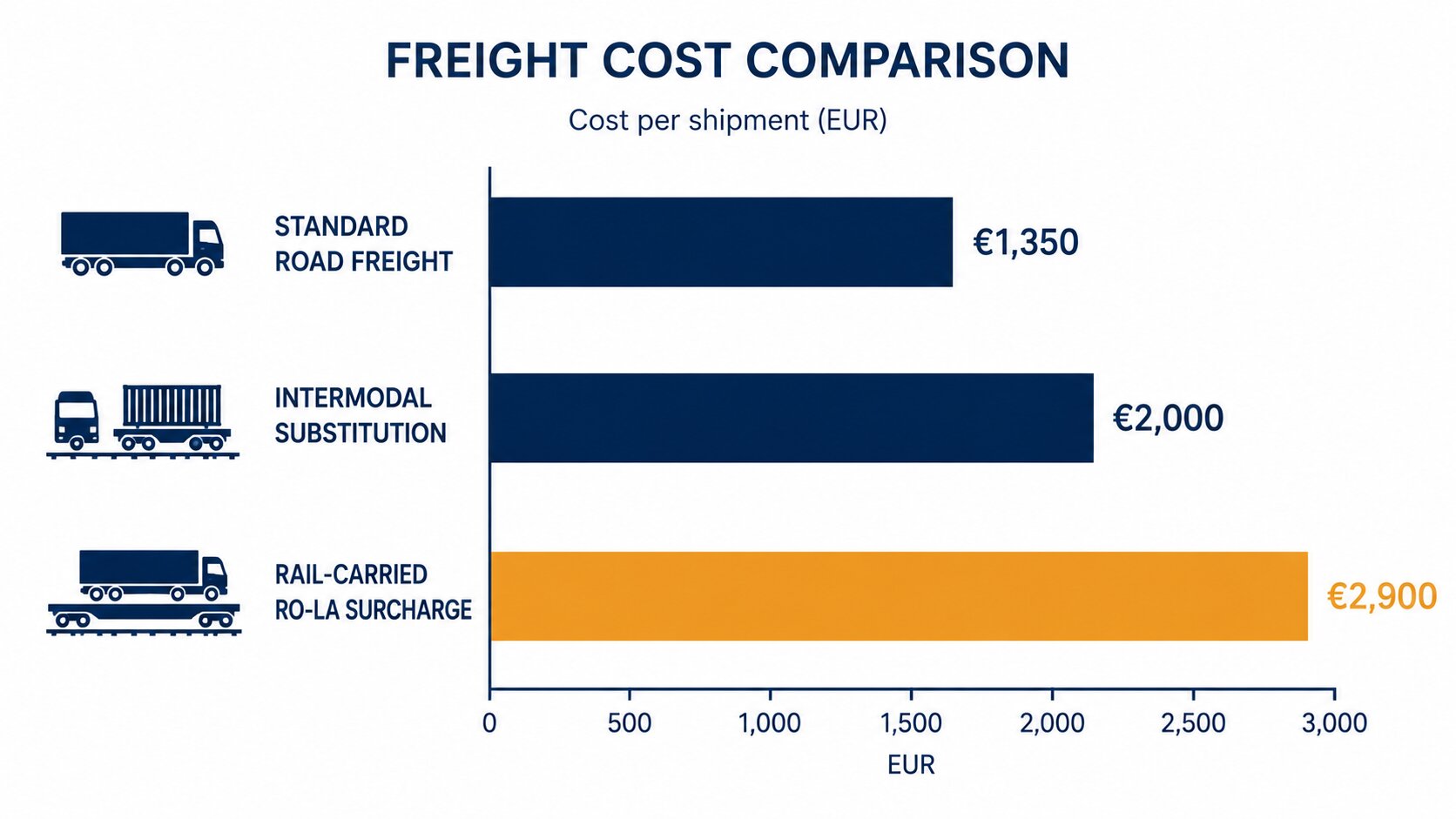
Here is the part that surprises shippers. You never buy a permit, so you assume the quota is someone else’s problem. It is not, because scarcity flows downhill into your rate and your transit time.
When a haulier can no longer get an overland permit, three things happen, and each carries a number:
- Intermodal substitution. Trucks move by rail or ferry for part of the trip. Intermodal transport runs about 56% more expensive than straight road freight (IKV, 2025), and that premium lands in the quoted rate.
- Ro-La surcharge. Putting a truck on a “rolling road” train adds roughly €400 per vehicle and can nearly double a journey that would take about four days by road (IKV, 2025).
- Border-wait variance. EU-bound Turkish trucks wait about six hours per crossing on average, but delays of up to 72 hours have been recorded (IKV, 2025). At the Bulgarian border, queues have reached around 17 kilometres. Waiting trucks are trucks you are paying for.
There is a second, quieter cost. Drivers need Schengen visas to run these routes, and the Turkish road sector spends over €4 million a year just obtaining them (European Commission). Add it up across the corridor and the barriers are estimated to cost roughly €3 billion a year in lost trade (European Commission; ICF study). For your one shipment, the effect is simpler: in a tight-quota month, the road rate you were quoted last quarter may not exist, and the cheaper number you find could be an intermodal leg in disguise. So which figure is your real freight cost? The all-in one, once the reroute is priced in. Ask what is actually carrying your freight.
ECMT permits, TIR, and what they fix
Two acronyms come up constantly, and both are widely misunderstood.
The ECMT permit, also written CEMT, is a multilateral licence issued under the International Transport Forum. One ECMT permit lets a truck operate across many member states without collecting a separate bilateral permit for each, which is why they are prized. The problem is volume. The whole system runs on an annual quota, and Türkiye’s 2023 allocation of 7,688 permits, the largest single share in the system, still falls far short of what its fleet needs (IKV, 2025; ITF). From 1 January 2026, all ECMT permits are issued and managed digitally, which speeds administration but does not add a single unit to the cap (ITF/IRU). A faster queue is still a queue.
The TIR carnet is the other one, and this is the misconception worth killing. TIR is a customs-transit system run under the IRU: it lets sealed goods cross multiple borders without paying or depositing duty at each one, which saves time at customs. It does not grant road access. A truck can hold a valid TIR carnet and still be turned back for want of a transit permit. TIR handles the goods side of the border; the permit handles the vehicle side. Confusing the two is how shippers assume a lane is open when the truck itself has nowhere legal to drive.
How SME shippers beat the bottleneck

You cannot change a member state’s quota. You can change how exposed your freight is to it. This is the shipper-side playbook that the policy papers and haulier-licensing pages never write down.
- Consolidate to fewer trucks. Every permit moves one vehicle, so the fewer vehicles your cargo needs, the less quota you consume. Grouping several orders or suppliers into one consolidated load (groupage or LCL) means you compete for one permit slot, not three. For low-volume shippers this is the single biggest lever, and it usually lowers the freight rate too.
- Book ahead of quota exhaustion. Permit pools thin out as the year runs and around peak seasons. Lock in capacity early on tight-cap corridors (anything routing through Austria into Germany) rather than spot-booking into a depleted pool.
- Use a forwarder that holds capacity. A forwarder with standing bilateral permits, an ECMT allocation, and an agent network can slot your load onto a vehicle that already has passage arranged. That is very different from a broker hunting for a truck the week you ship.
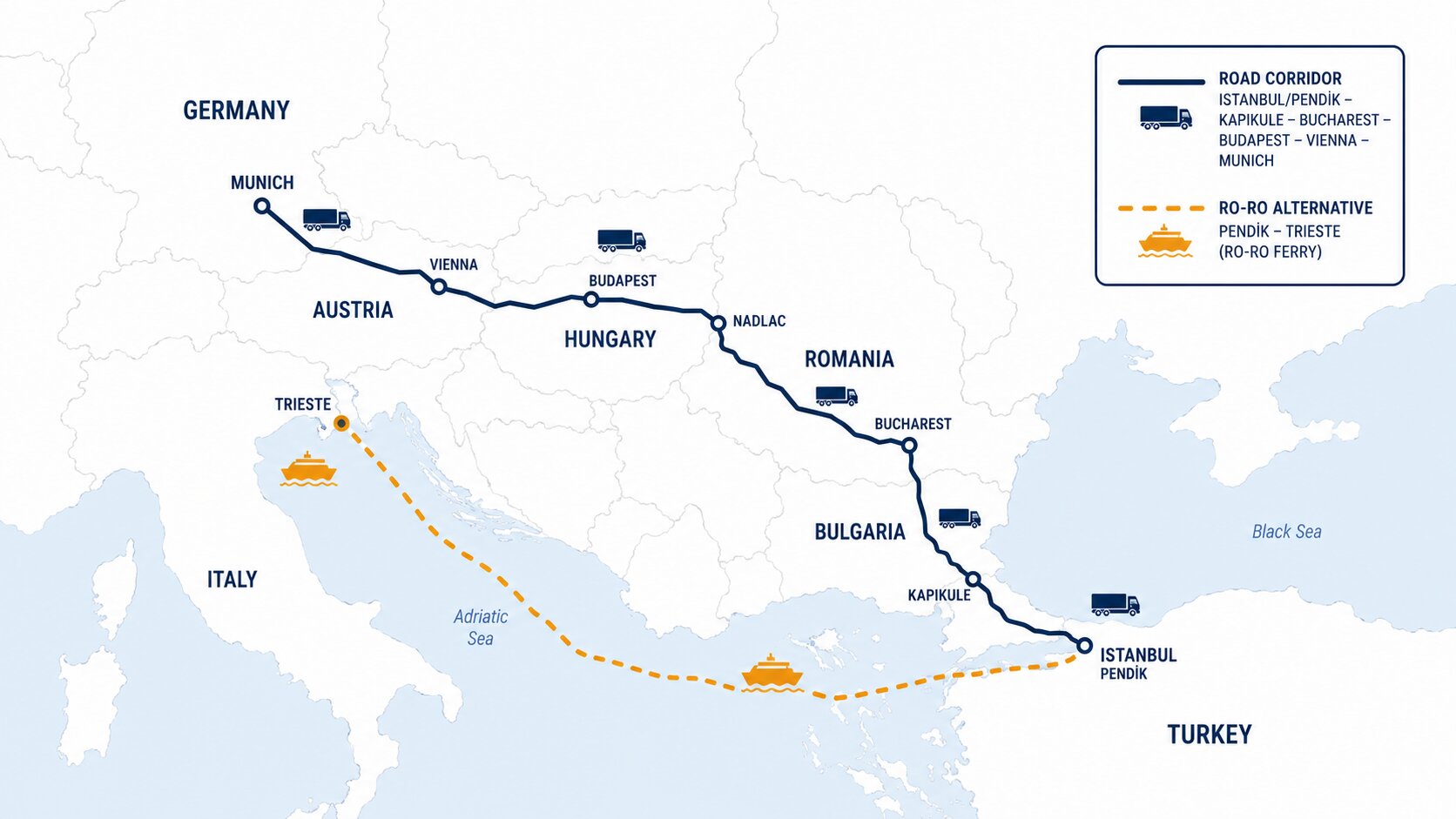
- Keep Ro-Ro in your back pocket. When overland caps bite, unaccompanied trailers on a Ro-Ro ferry from Pendik or Istanbul to Trieste skip the permit-heavy Balkan overland transit and re-enter road distribution inside the EU (DFDS; Port of Trieste). It is not always cheaper, but in a bad quota month it can be the difference between shipping and waiting.
- Watch the Balkan corridor calendar. On routes through Bulgaria we typically see the shortest customs queues when paperwork is clean and the crossing is timed away from the worst congestion at Kapıkule. A day’s flexibility on dispatch can save far more than the freight rate.
Is any single one of these a silver bullet? No. Used together, they take the quota from a risk you absorb blindly to one you plan around. [Case study placeholder: a real Sea Gate Türkiye→EU shipment rerouted via consolidation/Ro-Ro during a permit crunch, with the cost and days saved.]
What could change
The obvious fix has a name: modernising the Customs Union to finally cover transport, services, and agriculture. It has been discussed since 2016, and studies estimate that liberalising road transport alone could add around €3.5 billion to bilateral trade (Cross Border Advisory; European Commission). The reform is stalled on wider political grounds, and analysts note its benefits stay out of reach without progress on the surrounding conditions (Nordic Monitor, 2025). The courts have nibbled at the edges: in 2017 the European Court of Justice heard its first case touching Turkish hauliers, a preliminary ruling on transit fees levied by Hungary, but the quota system itself remains standing.
So for the next few years, plan for the world as it is, not the one the treaties promise. The digital ECMT switch in 2026 makes the paperwork faster. It does not make the ceiling higher. The shippers who move confidently on this lane are the ones who treat the permit quota as a fixed feature of the map and route around it, rather than discovering it at the border.
FAQ
Why do Turkish trucks need permits if the Customs Union means free trade?
The 1995 EU–Türkiye Customs Union removed customs duties on industrial goods but never liberalised road haulage. Vehicle access stayed under national bilateral agreements and permit quotas, so a Turkish truck still needs authorisation from each country it transits and from its destination, even when the cargo itself is duty-free.
Which EU country is the worst bottleneck for Turkish trucks?
Austria. It sits on the main road route to Germany, Türkiye’s largest EU market, yet issues only around 21,000 permits a year to Türkiye, capped on environmental grounds (IKV, 2025). By comparison, Bulgaria allows about 375,000. The tightest cap on your route is the one that sets your real capacity.
What is an ECMT permit, and does it solve the quota problem?
An ECMT (CEMT) permit is a multilateral licence that lets a truck operate across many member states without a separate bilateral permit for each. Türkiye holds the largest single allocation (7,688 in 2023), but the whole system is quota-limited, so it eases the paperwork rather than removing the ceiling. All ECMT permits went fully digital on 1 January 2026.
How long are the border waits for Turkish trucks entering the EU?
About six hours per crossing on average, with delays recorded up to 72 hours in bad periods (IKV, 2025). Queues at the Bulgarian–Turkish border have stretched to roughly 17 kilometres. Trucks leaving the EU for Türkiye generally wait far less, which is part of the asymmetry hauliers complain about.
Does the permit shortage make it more expensive to ship from Turkey to Europe?
Indirectly, yes. When overland permits run short, hauliers switch to intermodal (around 56% dearer than road) or rail-carried Ro-La (about +€400 per truck), and that premium shows up in your freight rate. A road quote in a tight-quota month can quietly become an intermodal leg, so ask what is actually carrying the load.
How can a small importer avoid the permit bottleneck?
Consolidate orders into fewer trucks so you use less quota, book capacity ahead of seasonal exhaustion, and work with a forwarder that already holds permits and an agent network rather than spot-hunting a truck. On tight corridors, keep a Ro-Ro option (Pendik/Istanbul to Trieste) ready as a fallback.
Is Ro-Ro cheaper than road for Turkey to Europe?
Not usually on price alone, but it can win on reliability when overland quotas are exhausted. A Ro-Ro ferry carries the trailer past the permit-heavy Balkan land route and drops it into EU road distribution. In a normal month, straight road groupage is typically the cheaper choice for palletised cargo.
Shipping on the Türkiye–EU lane and unsure whether a permit crunch is about to hit your rate? Send us the origin, destination, and volume, and we will price straight road groupage against a Ro-Ro routing with current permit availability in mind, so you see the real trade-off before you book, not at the border.
About the author
This guide was prepared by the Sea Gate Logistics editorial team, an EU-registered freight forwarder in Burgas, Bulgaria, drawing on 20+ years of collective experience across road, sea, air, and consolidated (LCL) cargo, with a working focus on the Balkan and Türkiye–EU corridors.