Freight forwarding represents a specialized logistics service where professional intermediaries coordinate the movement of goods across international borders on behalf of businesses that lack the expertise, infrastructure, or resources to manage complex shipping operations independently. These logistics experts serve as crucial orchestrators in global trade, arranging transportation through multiple carriers, navigating intricate customs regulations, preparing essential documentation, and ensuring cargo reaches its destination efficiently while minimizing costs and compliance risks. For European businesses engaged in international commerce, freight forwarders function as strategic partners who transform the overwhelming complexity of cross-border shipping into manageable, predictable processes that enable companies to focus on their core competencies rather than becoming entangled in the technical details of international transportation and regulatory compliance.
The Role and Core Functions of Freight Forwarders
Freight forwarders operate as licensed intermediaries who possess deep expertise in international shipping regulations, carrier networks, customs procedures, and documentation requirements that vary significantly across different countries and transportation modes. Unlike carriers who physically move goods using their own vessels, aircraft, or trucks, freight forwarders do not typically own transportation assets but instead leverage relationships with multiple carriers to arrange optimal shipping solutions tailored to each client’s specific requirements. Their value proposition centers on knowledge, connections, and coordination capabilities that enable them to negotiate favorable rates with carriers, select the most efficient routing options, offer Consolidated Cargo services to achieve economies of scale, and navigate the bureaucratic complexities that characterize international trade. This intermediary position allows freight forwarders to offer flexible, cost-effective solutions that would be impossible for individual businesses to replicate independently.
The operational responsibilities of modern freight forwarders extend far beyond simply booking cargo space on ships or aircraft, encompassing comprehensive supply chain management functions that include warehousing coordination, cargo insurance arrangement, packaging consultation, hazardous materials handling, and real-time shipment tracking through sophisticated digital platforms. In the European context, where businesses frequently ship goods both within the European Union’s Single Market and to external markets with varying regulatory frameworks, freight forwarders provide particularly valuable expertise in managing the documentation and compliance requirements that differ substantially between intra-EU movements and imports or exports involving non-EU countries. They maintain current knowledge of constantly evolving trade agreements, customs procedures, tariff classifications, and regulatory changes that individual businesses would find challenging to monitor comprehensively while managing their primary operations.
Transportation Modes and Multimodal Solutions
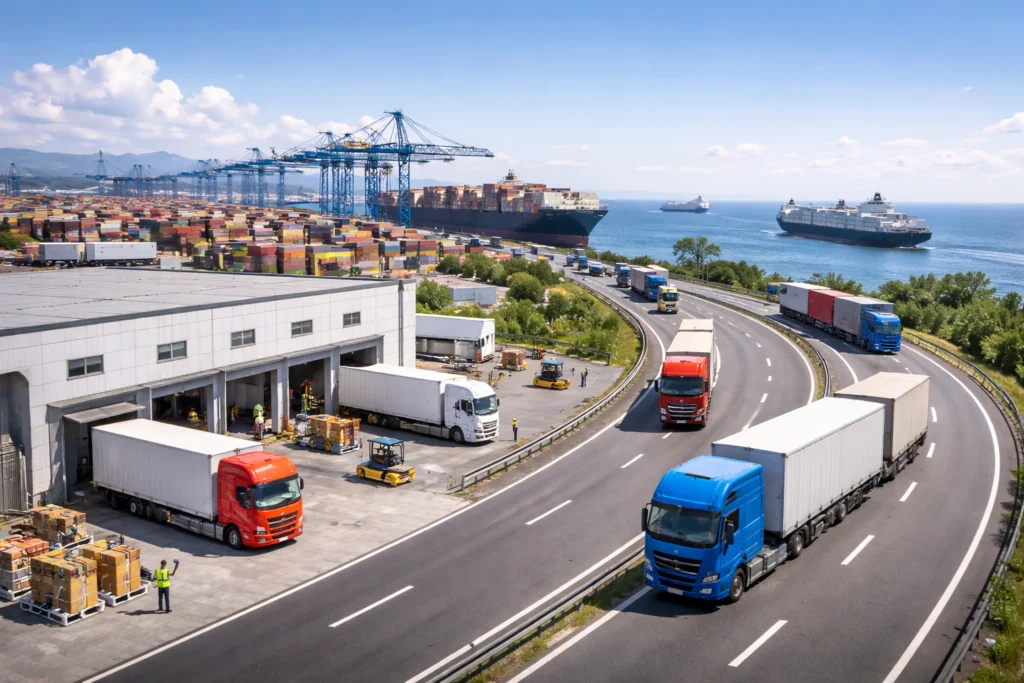
Freight forwarders coordinate shipments across multiple transportation modes including ocean freight, air cargo, road transport, and rail services, selecting and combining these options based on factors such as shipment urgency, cargo characteristics, destination accessibility, and budget constraints. Ocean freight remains the dominant mode for international trade due to its cost-effectiveness for large volumes, with forwarders arranging both full container transportation for businesses with sufficient cargo volume and less-than-container load services where multiple shippers’ goods are consolidated into shared containers. European businesses benefit particularly from the continent’s extensive maritime infrastructure, with major ports in Rotterdam, Hamburg, Antwerp, and other strategic locations providing efficient connections to global trade routes. Freight forwarders leverage their relationships with ocean carriers to secure competitive rates and reliable space allocation, particularly during peak shipping seasons when capacity becomes constrained and rates fluctuate significantly.
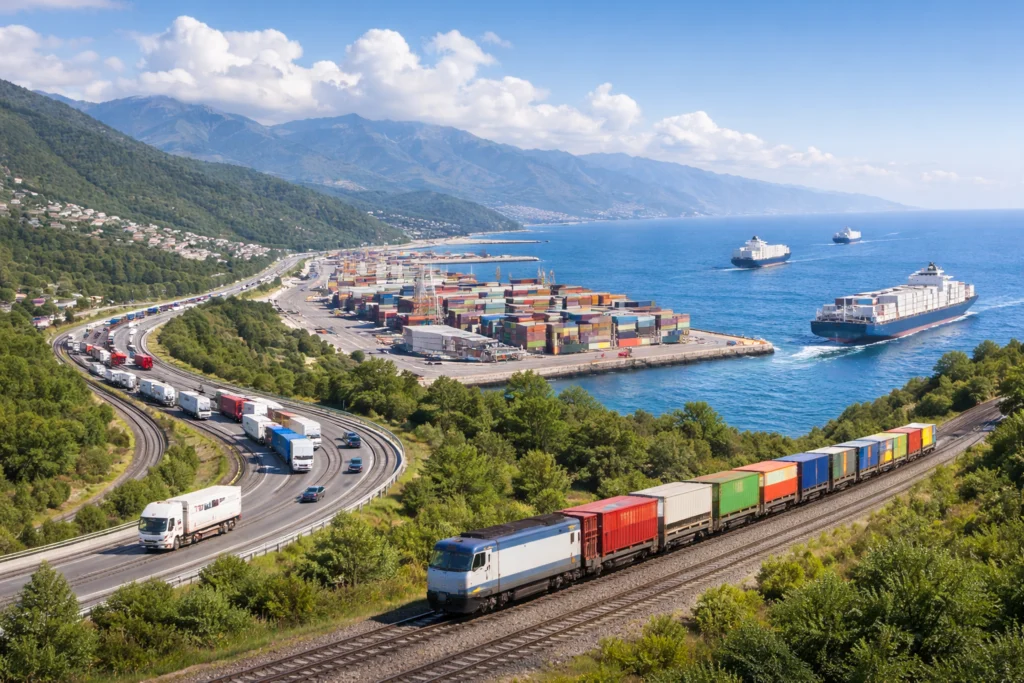
Air freight services arranged by forwarders provide expedited solutions for time-sensitive cargo, high-value goods, or products with short shelf lives where the premium cost of aviation transport justifies the speed advantage over maritime alternatives. European air cargo hubs such as Frankfurt, Paris Charles de Gaulle, Amsterdam Schiphol, and London Heathrow serve as critical nodes in global air freight networks, offering frequent connections to worldwide destinations with sophisticated handling facilities for various cargo types including temperature-controlled shipments and oversized items. Within Europe, freight forwarders increasingly utilize multimodal solutions that combine road and rail transport to optimize delivery efficiency while addressing sustainability concerns that have become increasingly important to European businesses and regulators. The continent’s well-developed rail infrastructure enables competitive alternatives to pure road transport for longer distances, with forwarders designing routes that balance transit time, cost, and environmental impact according to client priorities.
Customs Clearance and Regulatory Compliance
One of the most valuable services freight forwarders provide to European businesses involves managing customs clearance procedures that require specialized knowledge of classification systems, duty calculations, documentation requirements, and regulatory compliance protocols. When goods enter or exit the European Union, they must be declared to customs authorities using detailed documentation that accurately describes the cargo, states its value, identifies its country of origin, and classifies products according to the Harmonized System code that determines applicable duties and taxes. Freight forwarders employ licensed customs brokers who prepare and submit these declarations, calculate duty obligations, arrange payment of required fees, and coordinate inspections when customs authorities select shipments for physical examination. This expertise proves particularly valuable given that errors in customs documentation can result in significant delays, financial penalties, or even seizure of goods by regulatory authorities.
European businesses must obtain an Economic Operators Registration and Identification number before engaging in import or export activities, and freight forwarders typically assist with this registration process while ensuring clients understand their obligations under European customs regulations. The Single Administrative Document remains the standard customs declaration form for goods entering or leaving the European Union, containing comprehensive information about the shipment, parties involved, transportation details, and commercial terms that customs officials use to assess duties and verify compliance with trade policies. Freight forwarders navigate the complexities of preferential trade agreements that the European Union maintains with numerous countries, ensuring clients benefit from reduced tariff rates when shipments qualify under rules of origin provisions that require appropriate certificates of origin and supporting documentation. Additionally, forwarders manage compliance with product-specific regulations including safety standards, labeling requirements, import licenses, and sanitary certificates that apply to particular categories of goods such as food products, pharmaceuticals, electronics, or textiles.
| Service Component | Description | Key Benefit for European Businesses |
|---|---|---|
| Transportation Management | Coordinating carriers across ocean, air, road, and rail modes | Access to competitive rates and optimized routing options |
| Customs Brokerage | Preparing declarations, calculating duties, managing clearance procedures | Compliance assurance and faster border processing |
| Documentation Preparation | Creating commercial invoices, bills of lading, certificates of origin | Reduced administrative burden and error prevention |
| Cargo Consolidation | Combining smaller shipments into economical full loads | Lower per-unit freight costs for modest shipment volumes |
| Supply Chain Visibility | Real-time tracking and proactive status updates | Improved inventory planning and customer communication |
| Risk Management | Arranging cargo insurance and handling claims | Financial protection against loss or damage during transit |
Documentation Requirements for International Shipping
Freight forwarders prepare and manage the extensive documentation that international shipping requires, ensuring compliance with both origin and destination country requirements while facilitating smooth cargo movement through all transportation stages. The commercial invoice serves as the fundamental document describing the transaction between seller and buyer, containing detailed information about the goods including product descriptions, quantities, unit values, total invoice amount, payment terms, and parties’ complete contact information. Customs authorities in both exporting and importing countries rely on commercial invoices to assess duties, verify compliance with trade policies, and maintain statistical records of international commerce. Freight forwarders ensure these invoices contain accurate, complete information formatted according to requirements that vary across different jurisdictions, preventing delays or complications during customs processing.
The bill of lading represents another critical document in ocean freight operations, functioning simultaneously as a receipt for cargo received by the carrier, evidence of the transportation contract between shipper and carrier, and a document of title that controls possession of the goods during transit. Air freight utilizes air waybills that serve similar purposes though they are not documents of title, while road transport within Europe employs consignment notes that document carrier receipt and delivery obligations. Freight forwarders coordinate preparation of these transport documents, ensuring they accurately reflect shipment details and align with other documentation to prevent discrepancies that could trigger delays or inspection holds. Additionally, forwarders prepare packing lists that provide detailed inventories of shipment contents including package counts, dimensions, weights, and contents of individual packages, enabling customs inspectors, warehouse operators, and recipients to verify shipments efficiently without requiring physical inspection of every package.
Understanding Incoterms in European Trade
International Commercial Terms, commonly abbreviated as Incoterms, establish standardized definitions of responsibilities between buyers and sellers in international transactions, specifying which party bears costs and assumes risks at each stage of the shipping process from the seller’s premises to final delivery. Published by the International Chamber of Commerce and updated periodically to reflect evolving trade practices, Incoterms provide clear frameworks that prevent misunderstandings about obligations for arranging transportation, paying freight charges, obtaining insurance, managing customs clearance, and bearing risk of loss or damage during various transit stages. Freight forwarders guide European businesses in selecting appropriate Incoterms that align with their operational capabilities, risk tolerance, and commercial relationships, while ensuring shipments are executed according to the agreed terms to prevent disputes or unexpected cost allocations.
For intra-European Union trade where customs duties do not apply and border procedures are minimal due to the Single Market framework, certain Incoterms prove more practical than others despite goods moving freely without customs intervention. Terms such as Delivered at Place require sellers to arrange transportation and assume risks until goods reach the buyer’s specified location, offering convenience for buyers who prefer not to manage logistics but requiring sellers to coordinate delivery throughout the supply chain. Ex Works represents the opposite extreme, obligating buyers to collect goods from the seller’s premises and manage all transportation, which minimizes seller responsibilities but requires buyers to possess logistics capabilities or engage freight forwarders to coordinate collection and onward movement. Free Carrier and Carriage Paid To offer balanced alternatives where sellers deliver goods to carriers but transfer risk earlier than destination delivery terms, creating clear responsibility divisions that work effectively for European road and rail shipments. Freight forwarders caution against applying maritime-specific terms like Free on Board or Cost, Insurance and Freight to land transportation contexts, as these terms reference ship operations and create ambiguities when applied to truck or rail movements.
Digital Transformation in Freight Forwarding
The freight forwarding industry has undergone substantial digital transformation in recent years, with technology platforms becoming essential tools that enhance operational efficiency, improve customer experience, and enable data-driven decision-making across supply chains. Modern freight forwarders provide clients with sophisticated digital interfaces where businesses can request quotes instantly, compare rates across multiple carriers and service options, book shipments with a few clicks, upload required documentation, and track cargo movement in real-time through integrated systems that aggregate information from carriers, customs authorities, and warehouse operators. These platforms eliminate much of the manual communication that historically characterized freight coordination, replacing email chains and phone calls with automated workflows that reduce processing time, minimize errors, and provide comprehensive audit trails for every transaction. European businesses benefit significantly from these digital capabilities, gaining visibility and control over international shipments that enable better inventory planning, more accurate customer delivery promises, and proactive exception management when delays or issues occur during transit.
Advanced freight forwarders leverage artificial intelligence and predictive analytics to optimize routing decisions, forecast transit times more accurately, identify potential delays before they impact delivery schedules, and provide pricing intelligence that helps clients make informed decisions about shipping options. Electronic bills of lading have gained adoption as digital alternatives to traditional paper documents, streamlining processes by enabling instant document transfer without physical courier requirements while maintaining the legal validity needed for trade finance and cargo release. Cloud-based transportation management systems integrate with clients’ enterprise resource planning platforms, enabling seamless information flow between internal business systems and external logistics operations that reduces duplicate data entry and ensures consistency across all systems. As the freight forwarding sector continues its digital evolution throughout the year, businesses that partner with technologically sophisticated forwarders gain competitive advantages through enhanced supply chain visibility, faster response capabilities, and data-driven insights that inform strategic decisions about inventory positioning, sourcing strategies, and customer service commitments.
Selecting the Right Freight Forwarding Partner
Choosing an appropriate freight forwarding partner represents a critical decision that significantly impacts supply chain performance, cost efficiency, and a business’s ability to meet customer commitments reliably. European businesses should evaluate potential forwarders based on multiple criteria beyond simple rate comparisons, considering factors such as geographic expertise in relevant origin and destination markets, experience within specific industries that may involve specialized handling requirements or regulatory knowledge, technological capabilities that align with the client’s digital maturity and integration needs, and financial stability sufficient to support long-term relationship development. Forwarders with established presence in key markets typically provide more reliable service through direct relationships with local carriers, customs authorities, and service providers rather than relying on multiple subcontractors whose performance they cannot directly control. Industry specialization proves valuable when shipping products with unique characteristics such as temperature-sensitive pharmaceuticals, hazardous chemicals requiring special handling, oversized industrial equipment, or high-value goods demanding enhanced security measures.
The distinction between global freight forwarding giants and regional specialists presents European businesses with strategic choices about whether to prioritize worldwide network coverage or focused expertise in particular trade lanes. Large international forwarders offer comprehensive global reach with standardized service platforms that function consistently across all markets, which proves advantageous for businesses with diverse shipping needs spanning multiple continents and requiring uniform service experiences. However, regional forwarders frequently provide more personalized service, faster responsiveness to unique requirements, deeper knowledge of specific trade corridors, and often more competitive pricing for their specialized geographic focus areas. Many European businesses find optimal solutions through hybrid approaches where they engage different forwarders for distinct trade lanes based on each provider’s particular strengths, or by working with regional forwarders who participate in global logistics networks that provide international coverage through coordinated independent partners rather than wholly-owned infrastructure.
Cost Structures and Pricing Considerations
Freight forwarding costs comprise multiple components beyond the base transportation charges, including documentation fees, customs clearance charges, terminal handling fees at ports or airports, fuel surcharges that fluctuate with energy prices, security fees, and various accessorial charges for services such as storage, special handling, or delivery outside standard business hours. Understanding this cost structure enables European businesses to evaluate quotes accurately and identify where expenses can be optimized through strategic decisions about shipment timing, packaging efficiency, or transportation mode selection. Freight forwarders typically present pricing as all-inclusive quotes that consolidate these various charges, though clients should request detailed breakdowns to understand how costs distribute across different service components and carriers. Volume commitments can unlock preferential pricing when businesses can guarantee regular shipping volumes that enable forwarders to negotiate better rates with underlying carriers, though such arrangements require careful evaluation to ensure flexibility for business fluctuations and avoid penalties for shortfalls against committed volumes.
Freight rates fluctuate based on numerous factors including seasonal demand patterns, fuel price movements, carrier capacity availability, trade route imbalances, and geopolitical developments that disrupt established shipping patterns or increase risk premiums for certain origins or destinations. European businesses benefit from working with freight forwarders who provide market intelligence about rate trends and recommend optimal timing for major shipments when practical to avoid peak season surcharges that can increase costs substantially during high-demand periods. Additionally, forwarders offer valuable guidance about cost allocation under different Incoterms options, helping businesses understand how their choice of commercial terms affects who bears various expense categories and how total landed costs compare across different term selections. Smart businesses recognize that the cheapest freight quote does not always represent the best value when factors such as transit time reliability, cargo security, claims handling quality, and customer service responsiveness are considered comprehensively rather than focusing exclusively on rate comparisons.
Future Trends in European Freight Forwarding
The freight forwarding industry continues evolving rapidly in response to technological innovation, sustainability imperatives, changing regulatory frameworks, and shifting customer expectations that demand greater transparency, flexibility, and environmental responsibility. Digitalization remains the dominant trend, with leading forwarders investing heavily in platform capabilities that provide instant booking, comprehensive visibility, predictive analytics, and seamless integration with client systems that transform logistics from a back-office function into a strategic capability with real-time decision support. Artificial intelligence applications are expanding beyond routing optimization to encompass predictive exception management that identifies potential delays before they occur, automated documentation processing that reduces manual effort and error rates, and intelligent pricing engines that analyze historical patterns and current market conditions to recommend optimal carrier selections. European businesses should prioritize freight forwarding partners who demonstrate commitment to continuous technological advancement rather than relying on legacy systems and manual processes that limit visibility and responsiveness.
Sustainability has emerged as a critical consideration in freight forwarding as European businesses face increasing pressure from customers, investors, and regulators to reduce carbon footprints throughout their supply chains. Progressive forwarders offer carbon calculation tools that quantify emissions associated with different shipping options, enabling clients to make informed trade-offs between speed, cost, and environmental impact when selecting services. They also provide access to sustainable transportation alternatives including electric vehicle fleets for final-mile delivery, biofuel-powered ocean vessels, carbon offset programs, and optimized consolidation strategies that maximize load efficiency to reduce empty miles and overall transportation requirements. As the European Union implements increasingly stringent environmental regulations and carbon pricing mechanisms, freight forwarders who proactively address sustainability will deliver both compliance assurance and competitive advantages to their client partners who can demonstrate supply chain responsibility to stakeholders throughout their value chains.