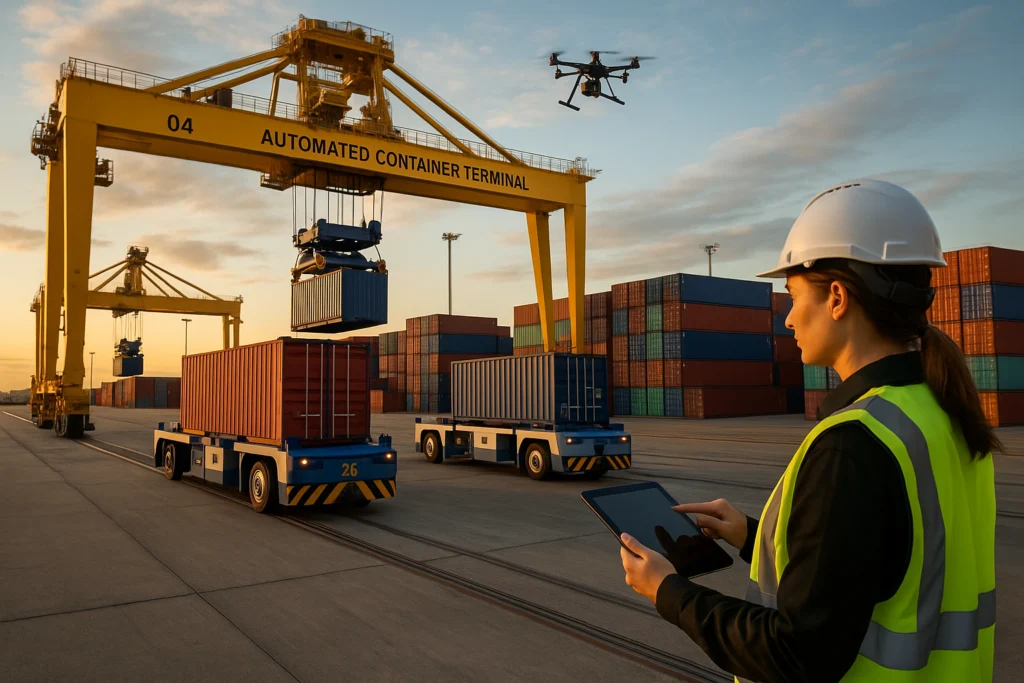
Consolidated cargo has become one of the most strategic approaches for businesses seeking to optimize their logistics expenses while maintaining operational efficiency. By combining multiple smaller shipments from different shippers into a single transportation unit, companies can achieve substantial cost reductions, improved delivery times, and enhanced supply chain performance. This logistics strategy addresses one of the most persistent challenges in modern freight transportation: the inefficiency of moving partially filled trucks and containers across vast distances while paying full transportation costs.
Understanding Cargo Consolidation Economics
The fundamental principle behind freight consolidation revolves around maximizing available cargo space and distributing transportation expenses among multiple shippers. When businesses ship less-than-container load (LCL) or less-than-truckload (LTL) freight individually, they often face premium charges for underutilized space, resulting in disproportionately high per-unit shipping costs. Consolidation services address this inefficiency by aggregating shipments at distribution centers or consolidation warehouses, where goods from various sources are combined into full container loads (FCL) or full truckloads (FTL) before being dispatched to their destinations. This approach allows each participant to pay only for the portion of container space their goods occupy, rather than bearing the entire cost of transportation, which can reduce freight expenses by up to 30% according to industry estimates.
The cost-sharing model inherent in consolidated shipping extends beyond basic freight charges to encompass multiple dimensions of the supply chain. Businesses benefit from reduced packaging material requirements, lower handling fees, and decreased storage costs at warehouse facilities. When shipments are consolidated, fewer individual packages need to be prepared, tracked, and managed throughout the logistics network, which streamlines administrative processes and reduces labor-intensive handling operations. Third-party logistics providers (3PL) who specialize in consolidation services leverage their extensive networks and economies of scale to negotiate better bulk rates with carriers, advantages typically available only to larger enterprises with substantial shipping volumes.
Operational Advantages Beyond Cost Reduction
While financial savings represent the primary motivation for implementing consolidated freight strategies, the operational efficiencies gained through this approach deliver substantial value across the entire supply chain. Consolidation warehousing allows companies to ship more frequently without waiting to accumulate enough inventory to justify a full truckload, which accelerates inventory turnover and enables more responsive supply chain management. This capability proves particularly valuable for businesses operating on just-in-time manufacturing principles or those serving markets with dynamic demand patterns. The increased shipping frequency reduces the need to maintain substantial safety stock across multiple storage locations, lowering inventory carrying costs and minimizing capital tied up in warehoused goods.
Transportation management systems (TMS) integrated with consolidation operations provide enhanced visibility and control over shipment scheduling and routing. Unlike traditional LTL methods where goods may sit idle waiting for available truck capacity, consolidated loads are typically sealed into containers and shipped directly to target regions through zone-skipping strategies. This direct routing minimizes the number of touchpoints where freight must be unloaded and reloaded during transit, reducing the risk of damage, loss, or delays while improving overall delivery reliability. Carriers also benefit from consolidation by reducing their overhead costs and achieving more predictable loading schedules, which strengthens shipper-carrier relationships and improves access to capacity during periods of high demand or tight market conditions.
Strategic Implementation of Consolidation Models
Different consolidation strategies serve specific logistics requirements and business models, allowing companies to select approaches that align with their operational needs. Buyer consolidation involves combining multiple shipments from various suppliers into a single delivery for one customer, which proves particularly effective for retailers or manufacturers sourcing components from diverse vendor networks. Supplier consolidation works inversely, where multiple suppliers ship goods to a consolidation hub that combines them into unified loads for distribution to various customers. Third-party consolidation services provided by specialized logistics providers aggregate shipments from multiple independent shippers, offering consolidation benefits to businesses that lack the volume or infrastructure to implement these strategies internally.
Multi-modal consolidation represents an advanced strategy that optimizes transportation costs by utilizing different transport modes—ocean, air, rail, and road—based on distance, urgency, and cost considerations. International shippers frequently employ this approach for cross-border logistics, consolidating freight at port facilities or inland distribution centers before final delivery. The selection of consolidation hubs requires careful consideration of geographic positioning, as centrally located facilities can reduce final-mile delivery distances and associated costs, while poorly positioned warehouses may increase transportation expenses by requiring longer hauls to reach customer destinations. Businesses must analyze their specific shipping patterns, customer locations, and supplier geography to determine optimal consolidation points that balance storage costs against transportation efficiency.
Key Consolidation Types Comparison
| Consolidation Type | Best Suited For | Primary Benefit | Typical Application |
|---|---|---|---|
| Buyer Consolidation | Single customers with multiple suppliers | Simplified receiving and reduced inbound costs | Retail distribution, manufacturing procurement |
| Supplier Consolidation | Multiple suppliers serving various customers | Optimized outbound shipping efficiency | Manufacturer distribution networks |
| Third-Party Consolidation | Small to medium businesses lacking volume | Access to bulk rates and professional management | SME logistics, occasional shippers |
| Multi-Modal Consolidation | International shipments requiring mode optimization | Cost and time balance across transport types | Cross-border trade, global supply chains |
Environmental and Sustainability Impacts
The environmental benefits of consolidated freight transportation have gained increasing importance as companies face growing pressure to reduce their carbon footprint and demonstrate commitment to sustainable business practices. By maximizing trailer and container utilization, consolidation directly reduces the number of trucks on roadways and vessels crossing oceans, which translates to substantial decreases in fuel consumption and greenhouse gas emissions. Industry analysis indicates that consolidation can significantly lower carbon emissions per shipment unit by ensuring that vehicles operate at or near capacity rather than traveling partially loaded. This efficiency aligns with corporate sustainability goals while simultaneously reducing fuel costs, creating a dual benefit that enhances both environmental responsibility and financial performance.
The reduction in packaging materials achieved through consolidated shipping further contributes to environmental sustainability by decreasing waste generation and resource consumption. When multiple small shipments are combined into larger consolidated loads, less individual packaging, labeling, and protective materials are required compared to shipping each item separately. Distribution centers handling consolidated freight can also optimize their operations to minimize energy usage and implement more efficient material handling systems that reduce environmental impact across the logistics network. For companies seeking to enhance their brand reputation among environmentally conscious consumers and stakeholders, the sustainability credentials of consolidated shipping provide tangible evidence of commitment to reducing ecological impact while maintaining operational efficiency.
Challenges and Risk Management Considerations
Despite the significant advantages of cargo consolidation, businesses must address several challenges and potential risks to ensure successful implementation. The consolidation process introduces additional touchpoints where freight must be handled during aggregation at distribution centers, which can extend lead times compared to direct shipment methods, particularly for customers located far from consolidated facilities. Time-sensitive or high-value goods may not be suitable candidates for consolidation if delivery speed takes priority over cost savings, requiring companies to carefully evaluate which shipments benefit most from consolidated transportation. The dependency on third-party logistics providers and consolidation warehouse operations also creates vulnerability to supply chain disruptions, as delays or issues at consolidation points can cascade through the entire distribution network affecting multiple shipments simultaneously.
Initial implementation costs for consolidation strategies can be substantial, encompassing expenses related to warehouse facility upgrades, transportation management system integration, and potential inventory repositioning. Businesses must also invest in coordination systems that synchronize shipments from multiple sources to optimize consolidation efficiency, which requires sophisticated planning and communication across supplier networks. The concentration of inventory at fewer consolidation points, while reducing storage costs, also increases risk exposure to localized disruptions such as natural disasters, labor strikes, or facility failures that could affect larger volumes of goods. Effective risk management requires developing contingency plans, maintaining backup consolidation facilities, and carefully selecting reliable 3PL partners with proven performance records in handling consolidated freight operations.
Maximizing Consolidation Benefits Through Strategic Planning
To fully realize the cost-reduction potential of consolidated cargo, businesses must approach implementation strategically by analyzing their shipping patterns, customer requirements, and supply chain characteristics. Understanding average shipment sizes, frequency of outbound loads, and geographic distribution of customers and suppliers enables companies to identify optimal consolidation opportunities and select appropriate service models. Data-driven decision-making supported by transportation management systems helps optimize routing, coordinate shipment timing, and determine when consolidation offers genuine advantages versus situations where direct shipping may be more appropriate. Companies should work with experienced carriers and logistics providers who demonstrate strong performance histories in meeting delivery timelines, maintaining proper cargo handling standards, and providing transparent communication throughout the consolidation process.
Successful consolidation strategies also require ongoing performance monitoring and continuous optimization based on changing business conditions and market dynamics. Regular analysis of transportation costs, delivery performance metrics, and customer satisfaction indicators helps identify areas where consolidation processes can be refined to enhance efficiency. Collaboration with suppliers and logistics partners to synchronize production schedules and shipment timing maximizes consolidation opportunities and improves utilization of truck and container space. As businesses scale their operations or enter new markets, periodic reassessment of consolidation strategies ensures that warehouse locations, carrier partnerships, and consolidation models continue to align with evolving logistics requirements and cost-reduction objectives.
The transformative impact of consolidated cargo on freight cost management stems from its ability to address fundamental inefficiencies in transportation economics while delivering operational improvements across multiple dimensions of supply chain performance. By enabling smaller businesses to access economies of scale previously available only to large enterprises, consolidation democratizes cost-effective shipping and levels the competitive playing field in global logistics. The combination of financial savings, operational efficiency gains, environmental benefits, and enhanced supply chain flexibility positions cargo consolidation as an indispensable strategy for companies navigating the complexities of modern freight transportation while maintaining pressure on operating costs and sustainability commitments.