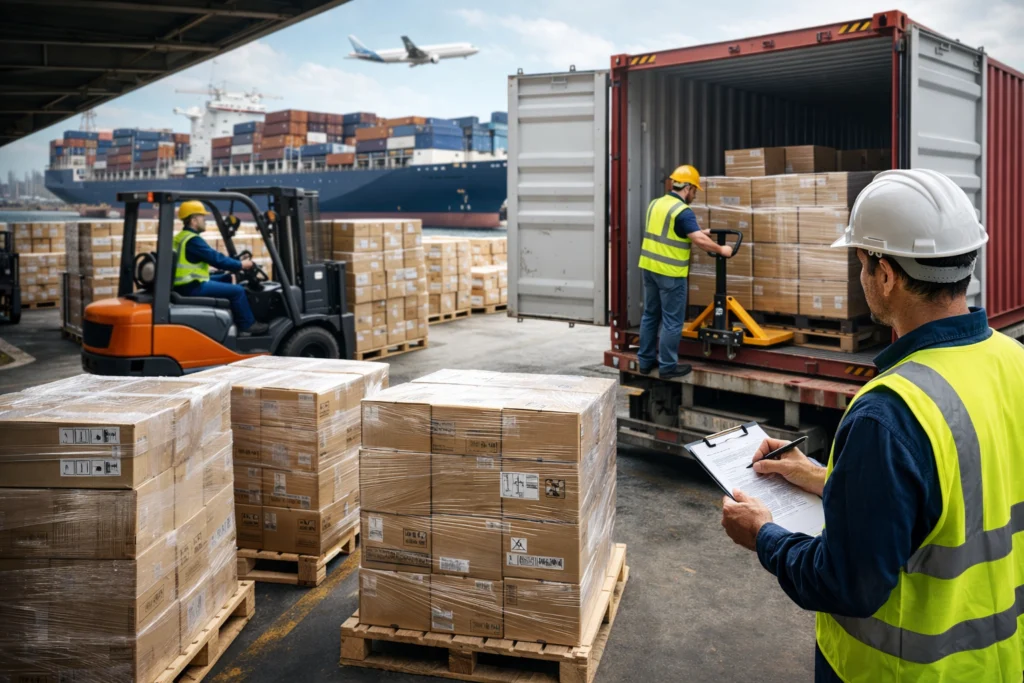
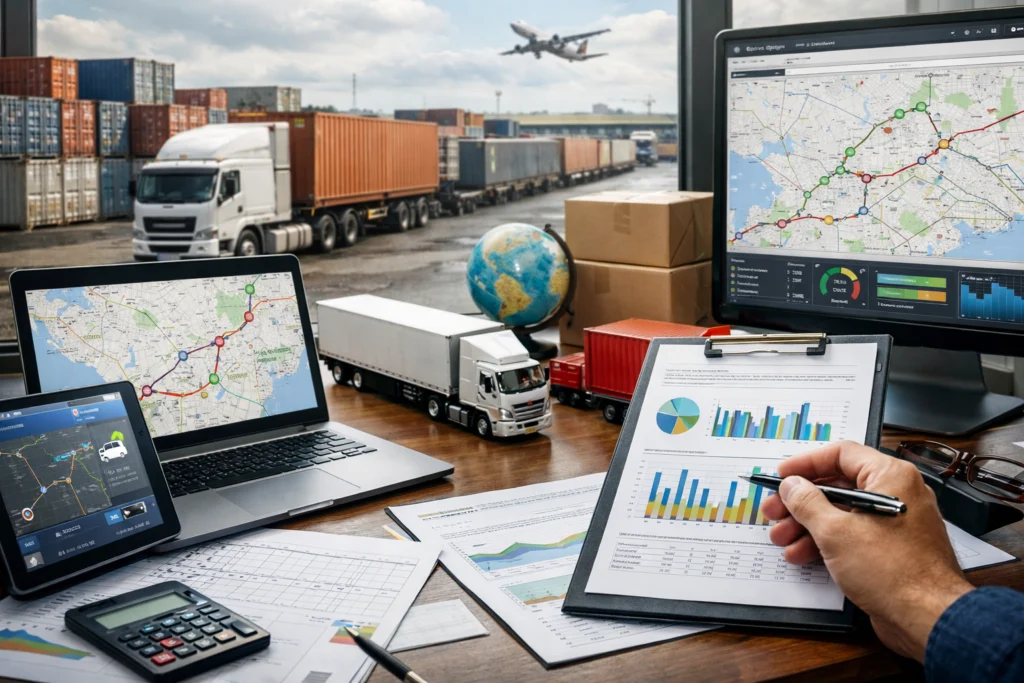
Choosing between road freight and rail freight represents one of the most consequential logistics decisions businesses face when designing their supply chain strategies. Each transportation mode offers distinct advantages and limitations that directly impact operational costs, delivery timelines, environmental footprint, and service flexibility. While road transport dominates short-haul logistics with its unparalleled door-to-door convenience and scheduling flexibility, rail freight excels in moving large volumes across long distances with superior fuel efficiency and cost-effectiveness. Understanding the nuanced differences between these two fundamental transportation modes enables companies to select the optimal solution aligned with their specific cargo characteristics, geographic requirements, budget constraints, and sustainability commitments, ultimately creating competitive advantages through smarter logistics choices.
Cost Analysis and Economic Considerations
The financial implications of selecting road versus rail freight extend far beyond simple rate comparisons, encompassing factors such as distance traveled, shipment volume, fuel consumption, labor costs, and infrastructure utilization. Rail transportation demonstrates remarkable cost efficiency for long-haul movements exceeding 500 miles, where economies of scale become pronounced and the per-ton-mile cost advantage over trucking reaches significant proportions. Industry data indicates that rail freight costs approximately 5.1 cents per ton-mile compared to road freight at 15.6 cents per ton-mile, representing a three-fold cost differential that translates to substantial savings for bulk shipments and high-volume freight movements across continental distances. This economic advantage stems primarily from rail’s superior fuel efficiency, with trains capable of moving one ton of freight nearly 500 miles on a single gallon of fuel, compared to trucks achieving roughly 145 ton-miles per gallon under similar conditions.
However, road transport maintains cost competitiveness for shorter distances and smaller shipment sizes where the fixed costs of rail terminal handling, intermodal transfers, and scheduling constraints outweigh the per-mile efficiency advantages. Trucking operations offer more adaptable pricing structures that can be tailored to specific shipment characteristics, with rates adjusting based on factors including urgency, special handling requirements, and delivery complexity. The elimination of drayage costs for first-mile and last-mile connections represents another economic benefit of direct truck transportation, as goods move seamlessly from origin to destination without intermediate transfers that add handling expenses and extend total transit time. Businesses must conduct comprehensive total cost analyses that account for all logistics components including packaging, loading, transportation, unloading, insurance, and potential damage risks to determine which mode delivers superior economic value for their specific circumstances rather than relying solely on advertised freight rates.
Speed and Transit Time Performance
Transit speed considerations encompass not only the velocity at which vehicles travel but also the complexity of routing, frequency of service, scheduling flexibility, and reliability of delivery windows that collectively determine door-to-door transportation timeframes. Road freight typically delivers faster performance for short to medium distances up to approximately 500 miles, where trucks can proceed directly from shipper to consignee without intermediate stops, terminal delays, or mode transfers that characterize rail movements. The ability of trucking operations to navigate traffic conditions, adjust routes dynamically, and provide expedited service options makes road transport the preferred choice for time-sensitive shipments requiring guaranteed delivery within tight windows, including just-in-time manufacturing support, emergency inventory replenishment, and perishable goods requiring rapid delivery to preserve product quality.
Rail freight demonstrates competitive transit performance on long-haul corridors where trains maintain consistent speeds over extended distances without the driver rest requirements, traffic congestion, and route circuity that can impact truck movements. Once loaded and dispatched, freight trains operate on dedicated infrastructure free from highway congestion, enabling predictable transit times that support supply chain planning and inventory management. However, the scheduling inflexibility inherent in rail operations, with trains departing on predetermined timetables regardless of individual shipper urgency, can extend total door-to-door transit times when shipments must wait for the next available departure. Intermodal transportation strategies that combine the long-haul efficiency of rail with the first-mile and last-mile flexibility of trucking increasingly represent optimal solutions for businesses seeking to balance speed, cost, and service reliability across diverse shipping lanes and distance ranges.
Flexibility and Service Customization
Operational flexibility encompasses the ability to accommodate variable shipping volumes, adjust delivery schedules, modify routing on short notice, and provide specialized handling services that address unique cargo requirements. Road freight excels across virtually all flexibility dimensions, offering door-to-door service that eliminates the need for shippers and receivers to access rail terminals or arrange separate drayage transportation. Trucks can navigate residential areas, urban centers, industrial parks, and remote rural locations that lack rail infrastructure, ensuring comprehensive geographic coverage that reaches virtually any destination accessible by paved or unpaved roadways. This accessibility advantage proves particularly valuable for businesses with dispersed customer bases, multiple delivery points, or locations in regions underserved by rail networks.
The scheduling autonomy inherent in trucking operations allows businesses to arrange pickups and deliveries according to their operational requirements rather than conforming to railroad timetables, enabling same-day service, weekend deliveries, and appointment-based scheduling that aligns transportation with production schedules, warehouse operations, and customer availability. Road transport readily accommodates partial loads and less-than-truckload shipments without the volume minimums that make rail freight impractical for smaller shippers, while providing equipment diversity including refrigerated trailers, flatbeds, specialized tankers, and oversized load capabilities that address specific cargo characteristics. Rail freight, by contrast, operates on fixed routes between terminal locations with predetermined schedules that offer limited customization, requiring shippers to consolidate sufficient volume to justify rail car allocation and coordinate timing with train departures that may occur only several times weekly on certain lanes.
Environmental Impact and Sustainability
Environmental considerations have evolved from peripheral concerns to strategic priorities as businesses face increasing pressure from regulators, investors, customers, and stakeholders to demonstrate measurable progress toward sustainability goals and carbon footprint reduction. Rail freight provides substantial environmental advantages over road transport, generating approximately 75% fewer greenhouse gas emissions per ton-mile according to authoritative industry analyses. Specific emission data indicates that rail produces roughly 21 metric tons of carbon dioxide per million ton-miles compared to 154 metric tons for trucking, a seven-fold difference that represents one of the most significant environmental disparities between major freight transportation modes. This dramatic efficiency advantage stems from the fundamental physics of steel wheels rolling on steel rails with minimal friction compared to rubber tires on pavement, combined with the ability of single trains to replace hundreds of individual truck trips.
Beyond direct emissions reduction, rail freight contributes to broader sustainability objectives by reducing highway congestion, decreasing road infrastructure wear, and lowering particulate matter and nitrogen oxide pollution that affects air quality in urban areas. A single freight train can carry the equivalent cargo of 280 trucks, dramatically reducing the number of diesel-powered vehicles operating on public roadways while achieving superior fuel economy that conserves finite petroleum resources. For businesses with corporate sustainability commitments, carbon reporting obligations, or brand positioning emphasizing environmental responsibility, the transition from road to rail for appropriate freight movements provides tangible, measurable improvements in environmental performance that can be communicated to stakeholders and incorporated into sustainability disclosures. However, the environmental calculus must consider the complete supply chain including drayage operations, as the trucks required for first-mile pickup and last-mile delivery in intermodal movements partially offset the rail efficiency gains.
Capacity and Volume Optimization
Transportation capacity considerations encompass both the physical cargo volume individual vehicles can accommodate and the aggregate capacity available across transportation networks to meet fluctuating demand patterns. Rail freight demonstrates overwhelming capacity advantages for bulk commodities, heavy industrial goods, and high-volume shipments where single rail cars carry 100 tons or more of cargo, with complete trains moving thousands of tons in unified operations. This massive capacity proves essential for industries including agriculture, mining, chemical manufacturing, and automotive production that generate consistent, large-volume freight flows between fixed origin-destination pairs. The ability to double-stack containers on rail cars further enhances capacity utilization, enabling efficient movement of containerized freight that would require numerous truck trips if transported individually by road.
Road transport offers superior capacity flexibility for variable shipment sizes, accommodating everything from small parcels to full truckload quantities without the volume minimums that make rail economically viable. The diversity of truck configurations including dry vans, refrigerated trailers, flatbeds, tankers, and specialized equipment provides capacity options tailored to specific cargo types, while the abundance of independent trucking companies and owner-operators creates a fragmented, competitive market with generally available capacity except during periods of extraordinary demand or seasonal peaks. However, ongoing driver shortages affecting the trucking industry create capacity constraints that elevate costs and reduce service reliability during tight market conditions, while rail operations maintain more consistent capacity availability given that single trains can move cargo equivalent to hundreds of trucks with minimal labor requirements.
Transportation Mode Comparison Matrix
| Evaluation Factor | Road Freight Advantages | Rail Freight Advantages | Optimal Use Case |
|---|---|---|---|
| Cost Efficiency | Lower costs for distances under 500 miles, smaller shipments, flexible pricing | Superior economics for long-haul movements, bulk cargo, high-volume freight | Road: Regional distribution; Rail: Cross-country bulk transport |
| Transit Speed | Faster for short distances, direct routing, no terminal delays, expedited options | Consistent long-haul performance, no driver rest requirements, dedicated infrastructure | Road: Time-sensitive deliveries under 500 miles; Rail: Scheduled long-distance freight |
| Service Flexibility | Door-to-door delivery, schedule customization, route adaptability, geographic coverage | Reliable capacity for volume shippers, predictable scheduling, bulk handling | Road: Variable delivery locations; Rail: Fixed-route high-volume lanes |
| Environmental Impact | Improving with electric vehicles, efficient for consolidated regional routes | 75% lower emissions per ton-mile, superior fuel efficiency, reduced highway congestion | Road: Final-mile delivery; Rail: Long-distance sustainability-focused transport |
| Cargo Capacity | Flexible load sizes, diverse equipment types, readily available capacity | Massive volume handling, container double-stacking, consistent capacity availability | Road: Variable shipment sizes; Rail: Bulk commodities and containerized freight |
Safety and Risk Management
Transportation safety considerations encompass accident frequency, cargo security, damage rates, and insurance costs that collectively influence total logistics risk exposure. Rail freight demonstrates superior safety performance with significantly lower accident rates compared to road transport, as trains operate on dedicated infrastructure isolated from other traffic, eliminate the human error factors associated with individual vehicle operation, and face fewer security vulnerabilities during long-haul movements. The reduced handling frequency inherent in rail transportation, where cargo remains in containers or rail cars from origin terminal to destination terminal without intermediate transfers, minimizes damage risks associated with loading, unloading, and transshipment operations that characterize multi-stop trucking movements. These safety advantages translate to lower insurance premiums and reduced claims expenses that contribute to rail’s total cost advantages for appropriate freight types.
However, road transport provides enhanced security for high-value shipments requiring dedicated vehicles, specialized security protocols, and continuous custody throughout the transportation process. The ability to seal trucks at origin and maintain driver custody until destination delivery offers security benefits for sensitive cargo including pharmaceuticals, electronics, and other theft-prone products. Advanced telematics and GPS tracking systems deployed across modern trucking fleets provide real-time location monitoring, route compliance verification, and immediate alert capabilities that enhance cargo security and enable rapid response to incidents or deviations from planned routings. Businesses must assess their specific risk profiles, including cargo value, theft vulnerability, damage susceptibility, and insurance requirements, when evaluating transportation mode selection to ensure adequate risk mitigation aligned with the nature of goods being shipped.
Infrastructure Requirements and Accessibility
The infrastructure dependencies of road and rail freight fundamentally shape their respective service capabilities and geographic reach. Road transport operates across extensive public highway networks that provide nearly universal accessibility throughout developed regions, requiring only paved or improved roadways to facilitate cargo movement between any origin and destination. This infrastructure advantage eliminates the need for specialized terminals, loading facilities, or dedicated rights-of-way, enabling businesses to ship and receive freight directly at their facilities regardless of location. The public nature of highway infrastructure also means transportation costs do not include capital investments in route development or maintenance obligations beyond fuel taxes and tolls that support general road upkeep.
Rail freight depends on fixed infrastructure including tracks, terminals, intermodal facilities, and specialized loading equipment that limit service availability to locations with rail access or requiring supplementary trucking for first-mile and last-mile connections. This infrastructure constraint particularly affects businesses in rural areas, peripheral regions, or locations distant from major rail corridors, necessitating drayage arrangements that add costs and complexity to rail-based transportation strategies. However, the concentration of rail infrastructure along major freight corridors connecting key economic centers ensures excellent service availability for businesses located in industrial areas, port zones, and manufacturing regions where rail access represents a deliberate site selection criterion. The capital-intensive nature of rail infrastructure creates barriers to entry that limit competition but also ensures consistent service availability from established rail carriers with long-term infrastructure commitments.
Intermodal Solutions and Hybrid Strategies
The recognition that road and rail freight each offer distinct advantages has driven widespread adoption of intermodal transportation strategies that combine multiple modes to optimize cost, speed, and service across complete supply chains. Intermodal shipping typically employs rail for long-haul line-haul movements exceeding 500 miles where cost efficiency and environmental benefits are most pronounced, while utilizing trucks for drayage operations that provide first-mile pickup from shippers and last-mile delivery to final destinations. This hybrid approach enables businesses to capture rail’s economic and environmental advantages for the majority of transportation distance while maintaining the door-to-door convenience and scheduling flexibility that make trucking indispensable for complete logistics solutions.
The standardization of shipping containers and development of sophisticated intermodal terminals with efficient transfer equipment have reduced the time, cost, and complexity associated with mode transitions, making intermodal solutions increasingly competitive with single-mode transportation. Advanced logistics providers offer integrated intermodal services with unified pricing, seamless information systems, and single-point coordination that eliminate the complexity of managing separate rail and trucking relationships. Businesses should evaluate intermodal options particularly for shipping lanes exceeding 500 miles where sufficient volume justifies container utilization and destination locations lie within reasonable drayage distances from intermodal terminals. The combination of rail line-haul efficiency with truck flexibility increasingly represents the optimal solution for businesses seeking to balance cost, speed, service quality, and environmental responsibility across diverse freight movements.
Making the Strategic Selection
Determining whether road freight or rail freight better serves specific business requirements demands comprehensive analysis extending beyond simple rate comparisons to encompass the complete range of factors including distance, volume, urgency, flexibility requirements, environmental objectives, and long-term strategic considerations. Companies shipping high volumes across long distances with predictable schedules and access to rail infrastructure should strongly consider rail freight given its substantial cost savings, environmental benefits, and capacity advantages. Conversely, businesses requiring rapid delivery, serving dispersed geographic markets, managing variable shipment sizes, or shipping time-sensitive cargo will find road transport better aligned with operational requirements despite potentially higher per-mile costs.
The optimal approach for many businesses involves developing multimodal transportation strategies that employ each mode for movements where its advantages are most pronounced, creating a diversified logistics network that balances cost efficiency with service requirements. Regular analysis of shipping patterns, cost performance, and service quality enables continuous optimization of mode selection as business conditions evolve, volumes change, and new infrastructure or service options become available. By understanding the fundamental characteristics, capabilities, and economic dynamics of both road and rail freight, businesses can make informed transportation decisions that enhance supply chain performance, control logistics costs, and support broader organizational objectives including sustainability commitments and customer service excellence.