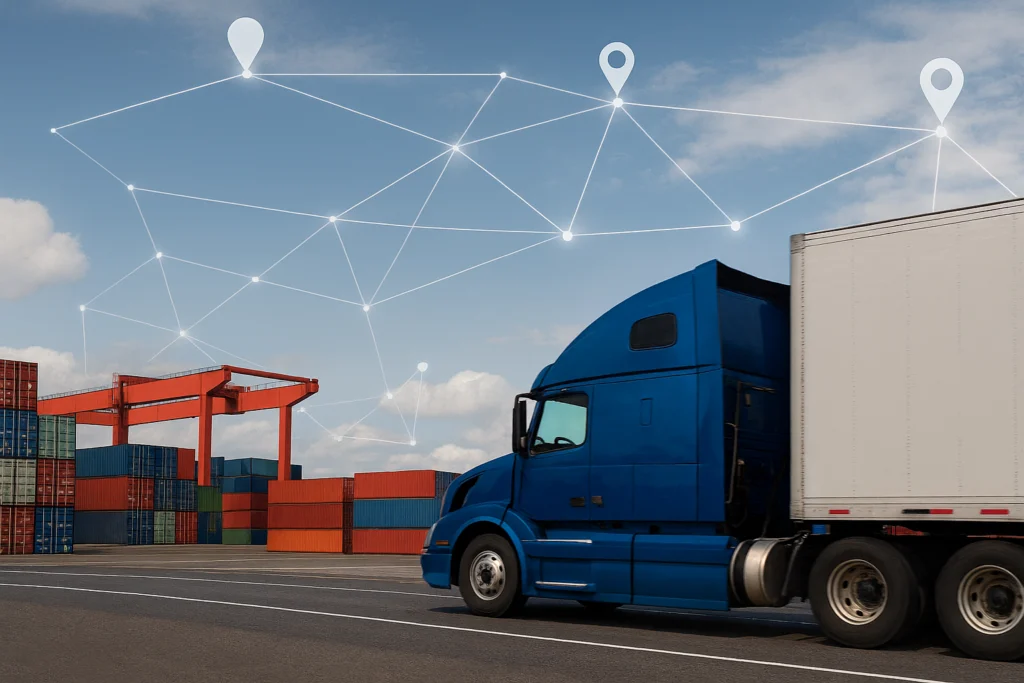
The container shipping industry stands at a pivotal crossroads as it enters 2026, facing transformative challenges and opportunities that will fundamentally reshape how global trade operates. The confluence of record vessel overcapacity, accelerating decarbonization mandates, rapid technological advancement, and shifting trade dynamics creates both significant headwinds and strategic advantages for businesses navigating international supply chains. With global container shipping demand forecast to grow just 3% against fleet expansion of 3.6%, the market faces structural imbalances that will pressure freight rates while simultaneously incentivizing carriers to compete aggressively for volumes. Understanding these emerging trends and positioning strategically to capitalize on evolving market conditions separates successful shippers and logistics providers from those struggling to adapt in an environment where yesterday’s strategies no longer deliver competitive results.
Fleet Overcapacity and Rate Market Dynamics
The container shipping industry confronts unprecedented fleet overcapacity that will dominate market dynamics throughout 2026 and potentially extend through 2028. The current orderbook stands at approximately 9.6 million TEU, representing over 30% of the existing active fleet, with 3.3 million TEU scheduled for delivery in 2028 alone creating sustained pressure on vessel utilization rates and freight pricing structures. This massive influx of new tonnage arrives into markets already saturated with capacity, as the global containership fleet has expanded by 5.1 million TEU or 19% since the third quarter of 2023 when the Red Sea crisis initially disrupted traditional shipping lanes. Industry analysts project average overcapacity hovering around 27% through 2028, creating a shipper-favorable environment where carriers must compete intensely for cargo volumes to fill their expanding fleets.
The orderbook composition reveals strategic shifts in carrier investment patterns, with ultra-large container vessels exceeding 14,000 TEU capacity continuing to attract significant orders while smaller feeder vessels up to 4,000 TEU experienced remarkable growth with 74 units ordered in the first half of 2025 alone, nearly matching the entire 2024 total for this vessel class. This investment in regional and feeder capacity reflects carriers’ recognition that supply chain resilience increasingly depends on flexibility across multiple vessel sizes and service configurations rather than concentrating exclusively on mega-ships serving major trunk routes. However, the troubling reality remains that nearly one-third of the world’s smaller vessels already exceed 20 years of age, a proportion expected to reach approximately 50% by 2030, creating questions about scrapping rates and whether aging tonnage removal can meaningfully offset newbuild deliveries flooding the market.
For shippers, the overcapacity environment presents significant opportunities to negotiate favorable contract rates, secure volume commitments with service level guarantees, and leverage competitive dynamics among carriers desperate to fill vessels. The short-term spot rate spikes that periodically emerge should not obscure the fundamental structural reality that carriers will be fighting hard for volumes throughout 2026, creating negotiating leverage that shippers have not enjoyed since pre-pandemic market conditions. However, this opportunity requires sophisticated procurement strategies that balance rate competitiveness against service reliability, as carriers under financial pressure may reduce service frequencies through blanked sailings, consolidate routes, or decrease operational investments in ways that impact schedule integrity and transit time performance. Shippers should approach 2026 contract negotiations with comprehensive service level agreements that contractually bind carriers to performance standards, not just attractive rates that prove meaningless if vessels consistently miss schedules or cargo gets rolled to later sailings.
Decarbonization Mandates and Sustainability Compliance
Environmental regulations transforming container shipping represent far more than aspirational sustainability initiatives, having evolved into mandatory compliance requirements with substantial financial implications and operational impacts. The International Maritime Organization’s revised 2023 greenhouse gas strategy establishes ambitious targets including 20% emissions reduction from shipping by 2030, at least 70% reduction by 2040, and complete decarbonization by or around 2050, all measured against 2008 baseline levels. The proposed Net-Zero Framework, scheduled for potential adoption in October 2026, would introduce progressively stricter greenhouse gas fuel intensity targets annually, fundamentally affecting technology choices, vessel operations, shoreside infrastructure development, and low-emission fuel availability across global shipping networks.
The European Union’s emissions trading system directly impacts container operations, requiring vessels to surrender allowances covering increasing proportions of their reported emissions: 40% for emissions in 2024, escalating to 70% in 2025, and reaching 100% for all reported emissions from 2027 onwards. These carbon costs pass through supply chains as environmental surcharges that shippers must budget for as standard components of ocean freight expenses rather than temporary fees subject to eventual elimination. The transition to alternative fuels accelerates dramatically, with liquefied natural gas emerging as the dominant choice among container operators who nearly doubled their LNG-fueled vessel orders from 194 ships in late 2023 to 362 by mid-October 2025. LNG delivers immediate benefits including approximately 20% carbon emission reductions compared to conventional marine fuels, widespread bunkering infrastructure availability, and operational flexibility through dual-fuel configurations enabling vessels to switch between fuel types as prices, availability, and routing requirements dictate.
However, LNG represents a transitional solution rather than the ultimate decarbonization answer, as the industry simultaneously explores methanol, ammonia, hydrogen, and onboard carbon capture technologies that may achieve deeper emissions reductions aligned with 2050 net-zero targets. Methanol-powered vessels face challenges including limited production capacity, high fuel costs relative to LNG, and infrastructure gaps at many ports, though several carriers have committed to methanol newbuilds betting on future supply chain development. The uncertainty surrounding which alternative fuel or combination of fuels will dominate the long-term maritime energy mix creates strategic complexity for both carriers making multi-decade vessel investments and shippers evaluating supply chain environmental impacts and sustainability reporting obligations.
Shippers must proactively address decarbonization in their ocean freight strategies through multiple approaches. Requesting and analyzing carrier environmental performance data enables informed selection of shipping partners aligned with corporate sustainability commitments and provides the transparency needed for scope 3 emissions reporting increasingly demanded by investors, customers, and regulatory frameworks. Accepting that green shipping now represents a cost of doing business rather than optional premium service helps in budgeting and customer pricing discussions, as environmental fees will only increase as regulations tighten and carbon costs rise. Exploring modal shifts where rail or other lower-emission transportation alternatives can serve appropriate shipping lanes reduces overall supply chain carbon footprints while potentially delivering cost savings. Ultimately, container shipping’s environmental transformation proceeds whether individual shippers enthusiastically embrace it or not, making proactive engagement and strategic planning essential for businesses seeking to navigate rather than simply react to sustainability’s reshaping of ocean freight economics and operations.
Digital Transformation and Smart Container Technology
Technology integration accelerates across container shipping as digital capabilities evolve from competitive differentiators to fundamental operational requirements enabling supply chain visibility, efficiency optimization, and customer service excellence. Smart containers equipped with Internet of Things sensors revolutionize cargo monitoring by transmitting real-time data on container location, temperature, humidity, shock events, door openings, and other critical parameters throughout multimodal transportation journeys. These IoT-enabled devices installed on standard shipping containers create unprecedented supply chain transparency, enabling proactive intervention when conditions threaten cargo integrity, optimizing routing based on actual transit performance rather than theoretical schedules, and providing customers with visibility previously impossible in traditional container shipping’s opaque operations.
Industry projections indicate smart container deployment will expand approximately eightfold over the next five years according to Drewry’s analysis, driven by ocean carriers recognizing that data-driven services and enhanced visibility create competitive advantages in increasingly commoditized freight markets. Major shipping lines including Hapag-Lloyd have implemented comprehensive sensor technology programs monitoring location, status, and movement of standard containers in real-time, establishing benchmarks that competitors must match to meet customer expectations shaped by transparency leaders. The data generated by smart containers extends beyond immediate operational benefits to enable strategic supply chain optimization by identifying persistent bottlenecks, routes experiencing frequent delays or cargo damage, and operational patterns that reveal opportunities for service improvements or cost reductions.
Beyond physical container tracking, digital transformation encompasses booking platforms enabling instant rate quotes and capacity reservations, electronic bills of lading replacing paper documentation that historically delayed cargo releases and created administrative burdens, and artificial intelligence-powered predictive analytics anticipating schedule disruptions before they occur. Transportation management system integration connecting shipper enterprise resource planning platforms with carrier operational systems creates seamless information flows eliminating manual data entry, reducing booking errors, and providing the real-time status updates that modern supply chain management demands. However, digital adoption remains uneven across the industry, with many traditional freight forwarders and smaller carriers continuing to rely on email, spreadsheets, and phone calls for operations that digital-first competitors handle through automated platforms delivering superior speed, accuracy, and customer experience.
For shippers, digital capability evaluation must become a standard criterion in carrier and freight forwarder selection processes alongside traditional factors of price, schedule, and service coverage. Requesting demonstrations of online platforms, API integration capabilities, and data reporting functionality reveals whether potential logistics partners possess the technology infrastructure supporting modern supply chain requirements. Prioritizing digitally advanced providers positions businesses to leverage real-time visibility, predictive analytics, and automated processes that reduce supply chain uncertainty and administrative overhead while improving responsiveness to changing conditions. However, technology alone cannot overcome fundamental service failures or operational incompetence, making digital capabilities one important element within comprehensive partner evaluations rather than the sole determining factor in vendor selection decisions.
Container Shipping Market Outlook 2026
| Trend Category | Key Developments | Impact on Shippers | Strategic Recommendations |
|---|---|---|---|
| Fleet Capacity | 9.6M TEU orderbook (30% of fleet), 3.6% growth vs 3% demand increase, 27% average overcapacity through 2028 | Favorable rate environment, increased negotiating leverage, but service reliability risks from blanked sailings | Negotiate comprehensive contracts with service level guarantees, diversify carrier relationships, monitor performance metrics |
| Decarbonization | IMO targets (20% by 2030, 70% by 2040), EU ETS (100% emissions coverage 2027), LNG vessel orders doubled to 362 units | Rising environmental surcharges, sustainability reporting requirements, green shipping as standard cost component | Request carrier environmental data, budget for carbon costs, explore modal alternatives, align with corporate sustainability goals |
| Digital Technology | Smart container deployment expanding 8x over five years, IoT sensors providing real-time tracking, AI predictive analytics | Enhanced visibility expectations, operational efficiency improvements, data-driven decision-making capabilities | Prioritize digitally advanced carriers, invest in TMS integration, leverage real-time data for proactive management |
| Trade Dynamics | Red Sea disruptions persisting, geopolitical tensions affecting routes, nearshoring and supply chain regionalization | Route uncertainty, transit time variability, need for supply chain flexibility and resilience | Diversify sourcing and routing, maintain safety stock buffers, develop contingency plans for disruption scenarios |
Geopolitical Disruptions and Trade Route Evolution
The container shipping industry’s operational landscape remains fundamentally altered by persistent geopolitical disruptions that show no signs of resolution as 2026 approaches. The Red Sea crisis that began with Houthi attacks in late 2023 continues forcing vessels on lengthy diversions around Africa’s Cape of Good Hope, adding approximately 3,500 nautical miles and 10-14 days to Asia-Europe trade lane transits while consuming additional fuel and tying up vessel capacity in extended voyage cycles. This route disruption partially explains how the container fleet has grown 19% since the crisis began yet markets still experience periodic capacity constraints, as the same physical vessels complete fewer annual voyages when sailing extended distances. The knock-on effects ripple throughout global supply chains, creating schedule unreliability, increasing inventory carrying costs for goods in transit, and complicating production planning for manufacturers dependent on just-in-time component deliveries.
Broader geopolitical tensions including US-China trade relationships, potential tariff modifications, and economic fragmentation create additional uncertainty affecting container shipping demand patterns and route economics. The post-pandemic trend toward supply chain regionalization and nearshoring continues reshaping trade flows, with manufacturers diversifying sourcing away from concentrated geographic dependencies that proved vulnerable during COVID-19 disruptions. Mexico, Southeast Asian nations, and Eastern European countries increasingly capture manufacturing investment previously concentrated in China, creating new trade lane development opportunities while potentially reducing demand on traditional Asia-Europe and Asia-North America routes that have historically dominated container shipping volumes. Container carriers respond by adjusting service networks, launching new routes connecting emerging manufacturing centers with consumption markets, and redeploying capacity from lanes experiencing declining demand to growth corridors aligning with evolving trade patterns.
The implications for shippers extend beyond simply booking space on vessels to encompass fundamental supply chain design questions about sourcing strategies, inventory positioning, and operational resilience. The conventional wisdom that lowest unit cost manufacturing should always determine sourcing decisions faces challenges when transportation unreliability, extended lead times, and geopolitical risks create hidden costs exceeding apparent savings from lowest-cost-country sourcing. Diversifying supplier bases across multiple geographic regions provides resilience against localized disruptions but increases supply chain complexity and potentially raises unit costs through reduced volume concentration. Near-sourcing strategies accepting modestly higher manufacturing costs in exchange for shorter transportation distances, reduced lead times, and enhanced supply chain responsiveness gain appeal particularly for products where time-to-market, demand variability, or customization requirements justify premium positioning over low-cost approaches.
Shippers navigating geopolitical uncertainty and trade route evolution require scenario planning capabilities modeling supply chain performance under various disruption conditions, diversified routing options avoiding dependence on single chokepoints or politically volatile regions, and collaborative relationships with logistics providers possessing global network flexibility to rapidly adjust when conditions change. The capacity to quickly shift between Asia-Europe routes via Suez or Cape, utilize alternative gateway ports when primary facilities experience congestion, or reconfigure supply chains around nearshore suppliers represents valuable operational agility in an environment where yesterday’s optimal configuration may prove suboptimal tomorrow when geopolitical winds shift direction.
Automation and Operational Efficiency
Automation technologies continue advancing across container shipping ecosystems, from vessel operations and port handling to inland transportation and documentation processing. Semi-autonomous and fully autonomous vessel developments progress through testing phases, with artificial intelligence and advanced sensor systems enabling ships to operate with reduced crew requirements or potentially without onboard personnel for specific short-sea routes. While widespread autonomous deep-sea container shipping remains years away pending regulatory approvals, liability frameworks, and technology maturation, the direction of travel toward increased vessel automation appears inevitable driven by chronic crew shortages, human error reduction opportunities, and operational cost pressures facing carriers in overcapacity markets.
Port automation delivers more immediate impacts, with automated stacking cranes, autonomous vehicle systems moving containers within terminals, and AI-optimized berth allocation improving cargo handling efficiency and reducing vessel turnaround times. Rotterdam, Hamburg, Singapore, and numerous other major container ports have implemented extensive automation programs increasing throughput capacity while reducing labor requirements and operational costs. However, automation investments require substantial capital commitments and can face resistance from labor organizations concerned about employment impacts, creating political and social dimensions beyond purely technical and economic considerations. The most successful implementations typically involve gradual adoption allowing workforce adjustment, retraining programs creating higher-skilled positions operating and maintaining automated systems, and transparent stakeholder engagement addressing concerns while demonstrating long-term benefits.
Documentation automation through blockchain technology, electronic bills of lading, and digital customs platforms streamlines information flows throughout international supply chains, reducing the paper documentation historically causing delays, errors, and administrative burdens. The shipping industry’s transition from physical documentation to digital equivalents accelerates as legal frameworks in major trading nations increasingly recognize electronic bills of lading as equivalent to traditional paper documents for cargo title transfer and customs clearance purposes. Smart contracts executing automatically when predefined conditions occur can trigger payments, notify stakeholders, and initiate subsequent supply chain steps without manual intervention, creating seamless processes replacing email chains, phone calls, and manual data entry characterizing traditional operations.
For shippers, automation trends primarily impact service reliability and operational efficiency rather than requiring direct technology investments. Carriers and ports implementing effective automation generally deliver more consistent schedule performance, reduced cargo handling times, and lower operational costs potentially translating to competitive freight rates. However, automation implementations experiencing technical difficulties or inadequate planning can create service disruptions worse than pre-automation operations, making carrier and port automation track records important considerations in routing and vendor selection decisions. The transparency and efficiency gains from documentation automation benefit all supply chain participants, with electronic processes reducing administrative workload, accelerating customs clearance, and minimizing the documentation errors that historically caused shipment delays and customs penalties.
Strategic Positioning for 2026 Success
The container shipping landscape entering 2026 presents both significant challenges and compelling opportunities for businesses willing to move beyond reactive approaches toward strategic positioning capitalizing on industry transformations. The fleet overcapacity creating shipper-favorable rate environments requires sophisticated procurement strategies capturing cost advantages while ensuring service reliability through comprehensive contracts, diversified carrier relationships, and performance monitoring systems identifying problems before they escalate into supply chain crises. The lowest rate means nothing if containers consistently arrive late, miss connection windows, or suffer damage from poor handling, making total cost of ownership analyses incorporating service quality essential for sound decision-making.
Sustainability transitions from optional corporate social responsibility initiatives to mandatory compliance obligations and competitive differentiators demand proactive engagement rather than passive acceptance of whatever environmental surcharges carriers impose. Understanding regulatory requirements, requesting transparent environmental performance data, exploring lower-carbon transportation alternatives where appropriate, and incorporating sustainability considerations into supply chain design decisions position businesses to meet stakeholder expectations while potentially reducing costs through efficiency improvements and modal optimization. The companies treating environmental performance as strategic priority rather than regulatory burden often discover that sustainability and operational excellence align more often than conflict.
Digital transformation separates industry leaders from laggards increasingly unable to meet customer expectations shaped by technology-enabled transparency and responsiveness. Prioritizing logistics partners offering robust digital capabilities, investing in transportation management systems enabling integration and automation, and leveraging real-time data for proactive decision-making create operational advantages compounding over time as supply chains become more complex and customer service requirements more demanding. However, technology represents an enabler rather than a solution itself, requiring combination with process excellence, skilled personnel, and strategic planning to deliver sustained value.
The convergence of overcapacity, decarbonization mandates, technological advancement, and geopolitical uncertainty creates a dynamic environment where adaptability and strategic foresight deliver competitive advantages while rigid adherence to historical approaches courts obsolescence. Container transportation in 2026 will reward businesses that view logistics as strategic capability enabling market responsiveness, customer satisfaction, and operational resilience rather than simply as cost center to be minimized through lowest-rate selection. The trends shaping the coming year present challenges certainly, but more importantly opportunities for companies positioned to navigate complexity, embrace transformation, and build supply chains capable of thriving amid continued disruption and change that increasingly characterize global trade.