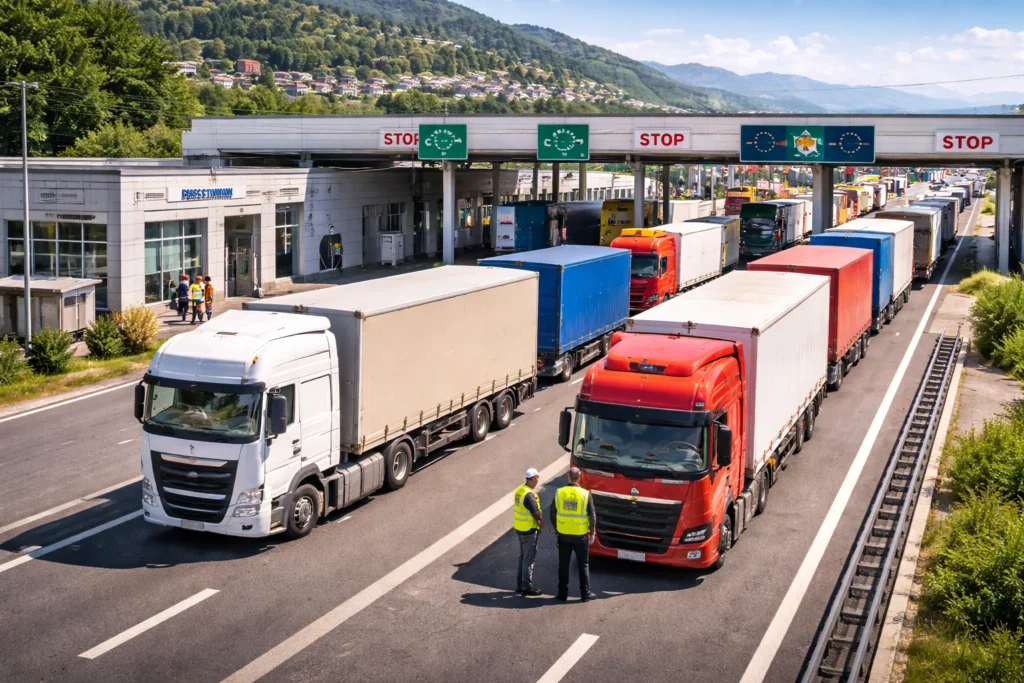
Most businesses do not fail at logistics because they lack ambition or resources. They fail because their logistics operations have grown organically over time – adding a carrier here, a warehouse provider there, a customs broker in one market, a different one in another – until what was once a manageable set of supplier relationships has become a fragmented, opaque, and expensive patchwork that no single person in the organization can see clearly from beginning to end. The purchase order leaves the buyer’s desk and then disappears into a sequence of handoffs between parties who do not share systems, do not communicate proactively, and do not feel accountable for the outcome at the destination. When things go wrong – and in a fragmented supply chain, things go wrong far more often than they should – it takes days just to identify where the problem occurred and who is responsible for resolving it. This is the operational reality that end-to-end, streamlined logistics solutions are designed to replace, and understanding what they genuinely offer – and what they require from your business in return – is the essential first step toward building a supply chain that works as a competitive asset rather than a source of constant cost and frustration.
What End-to-End Logistics Actually Means
The phrase “end-to-end logistics” is used widely in the industry, but its meaning is not always as comprehensive as it sounds. In its truest and most commercially meaningful form, an end-to-end logistics solution covers every physical and informational step in the journey of goods from the supplier’s production floor to the end customer’s location – including origin freight management, export customs clearance, international transport by whatever combination of road freight, sea, air, or rail the route requires, import customs clearance at the destination country, domestic distribution, and, increasingly, the reverse logistics process for returns. The defining characteristic of a genuine end-to-end solution is not just that a single provider handles multiple steps in this sequence, but that there is unified accountability, unified visibility, and a single contractual relationship that eliminates the gaps between services where delays, damage, and documentation errors most commonly occur. When your end-to-end logistics partner tells you where your cargo is, they mean at any point in that entire journey – not just within their own segment of it.
It is worth distinguishing this concept clearly from simple freight consolidation or multi-service outsourcing. A company that books separate contracts for warehousing, international freight, and domestic delivery – even with the same logistics group – does not necessarily have an end-to-end solution if those services operate on independent systems, issue separate invoices with separate tracking references, and resolve problems through separate customer service channels. True supply chain integration requires shared data flows, common performance metrics, unified reporting, and a single operational team that views the entire journey as one continuous process rather than a series of discrete transactions. This distinction matters in practice because the value of an integrated solution lies not primarily in the cost of any individual service but in the systemic reduction of errors, delays, and management overhead that comes from eliminating the interfaces between disconnected providers – and that value only materializes when the integration is genuine rather than cosmetic.
The Building Blocks of an Integrated Supply Chain
Understanding what an end-to-end logistics solution is built from requires looking carefully at each functional component of the supply chain and how those components interact with each other when they are properly integrated. The sourcing and procurement stage – where purchase orders are raised and supplier lead times are confirmed – feeds directly into the freight forwarding and origin services stage, where cargo is collected from suppliers, consolidated into efficient cargo flows if necessary, documented for export, and booked onto the appropriate transport service. In a fragmented supply chain, these two stages are typically managed by completely different teams using different systems, and the handoff between them is often no more sophisticated than an email thread and a spreadsheet. In an integrated solution, purchase order data flows automatically into the freight management system, triggering booking requests, generating pre-shipment documentation, and updating expected arrival windows in real time as supplier readiness information is confirmed – all without manual re-entry of data that has already been captured upstream.
Warehousing and inventory management represent the next critical node in the chain. Whether goods are moving through a cross-dock facility, being held in a bonded warehouse awaiting customs release, or being stored in a regional distribution center before last-mile delivery, the warehouse operation must be directly connected to the transport management layer in both directions – receiving inbound shipment notifications in advance so that dock assignments and labor resources can be planned, and generating despatch confirmations and shipping documents automatically when outbound loads are released. The adoption of Warehouse Management Systems (WMS) that integrate bidirectionally with Transport Management Systems (TMS) and with customers’ own Enterprise Resource Planning (ERP) platforms has been one of the most transformative developments in supply chain technology over the past decade, because it is this integration that turns a collection of separately managed facilities and services into a genuinely coordinated logistics network. Without it, every step in the supply chain requires manual data transfer, manual reconciliation, and manual exception management – a model that is both slow and error-prone at any scale, and that becomes commercially unsustainable as volumes grow.
The final-mile delivery stage – the last and often most expensive leg of the journey, from a distribution hub to the end customer’s address – has risen to strategic prominence in recent years driven largely by the explosive growth of e-commerce and the consumer expectation of next-day or same-day delivery that it has established across European and global markets. Last-mile logistics typically accounts for 40 to 53 percent of the total cost of a shipment, according to consistently reported industry data, and it is the stage where service failures are most visible to end customers and most damaging to brand reputation. An end-to-end logistics provider that manages last-mile delivery as part of an integrated solution can offer proactive delivery exception management – rerouting a failed delivery attempt before the customer notices, for example, or triggering an automated notification when a shipment is running late – in ways that a standalone last-mile carrier with no upstream visibility simply cannot replicate.
Key Components and Their Integration Points
| Supply Chain Stage | Core Function | Integration Requirement | Impact When Disconnected |
|---|---|---|---|
| Procurement and order management | Purchase order creation, supplier confirmation, lead time tracking | PO data feeds into freight booking system automatically | Manual re-entry delays, booking errors, missed ETAs |
| Origin freight and consolidation | Cargo collection, export documentation, consolidation, carrier booking | Real-time shipment status shared with importer’s WMS and ERP | Delayed documentation, missed vessel departures, blind spots |
| International transport (sea/air/road/rail) | Physical movement of goods between origin and destination country | Milestone events update TMS and customer visibility portal | No proactive exception management, reactive problem-solving |
| Customs clearance (import and export) | Declaration filing, duty payment, regulatory compliance | Customs status integrated with arrival planning and inventory system | Clearance delays hold cargo, trigger demurrage charges |
| Warehousing and distribution | Inbound receipt, storage, pick and pack, outbound despatch | WMS connected to TMS and customer ERP with advance ship notices | Labour planning failures, stock discrepancies, late despatches |
| Last-mile delivery | Customer or retail delivery, proof of delivery, exception handling | Delivery status shared with customer in real time | Failed deliveries go unresolved, customer service escalations |
| Reverse logistics and returns | Returns collection, inspection, restocking or disposal | Returns data feeds into inventory system and replenishment planning | Inventory inaccuracies, cash flow delays, customer dissatisfaction |
The Technology Layer: Visibility, Data, and Automation
No discussion of end-to-end supply chain solutions is complete without addressing the technology infrastructure that makes genuine integration possible. The past decade has seen a profound shift in what logistics technology can deliver – not just in terms of the capabilities of individual software platforms, but in the openness of those platforms to exchange data with each other through Application Programming Interfaces (APIs) in real time. Where logistics software systems once operated as closed silos that required expensive and time-consuming custom integration projects to connect, the leading Transport Management Systems, Warehouse Management Systems, and supply chain visibility platforms of today are built on open API architectures that allow them to exchange data bidirectionally with ERP systems, carrier platforms, customs portals, and e-commerce platforms with far less technical friction than was possible five years ago. This shift has dramatically lowered the cost and complexity of achieving genuine supply chain integration, and it has made end-to-end visibility a realistic objective for mid-sized businesses that would previously have required the technology budgets of a large multinational to pursue it seriously.
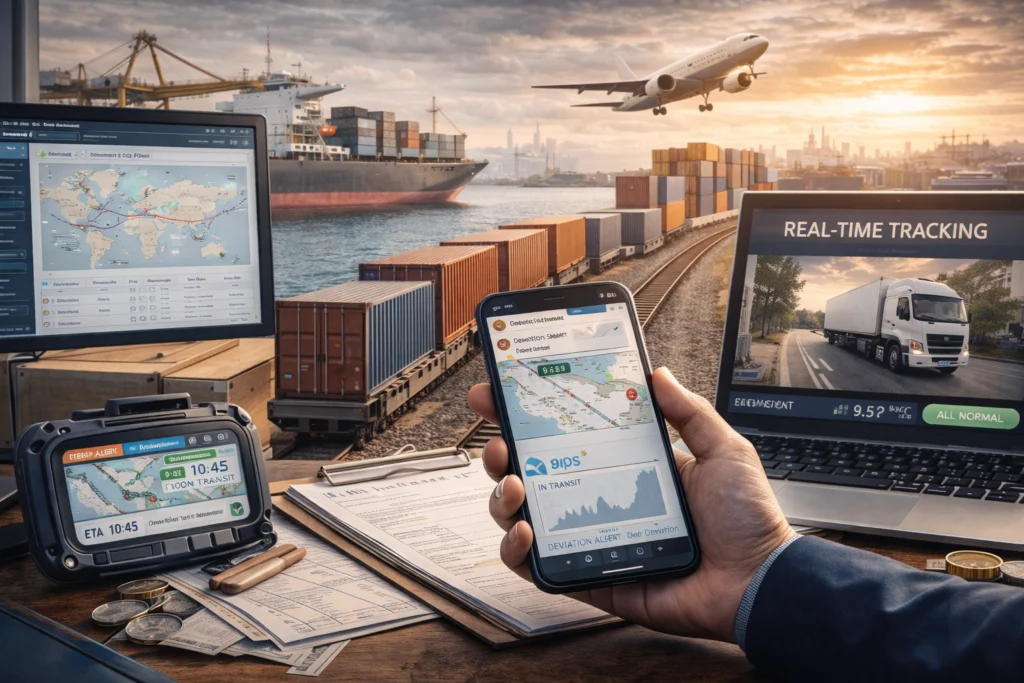
Real-time supply chain visibility – the ability to know where every shipment is at every point in its journey, without having to make a phone call or send an email to find out – is the foundational data capability on which all other supply chain optimization activities depend. You cannot optimize what you cannot see, and you cannot see what your systems are not measuring and reporting. The implementation of IoT tracking devices on shipments, GPS telematics on vehicles, RFID tags on pallets and cartons, and sensor-equipped smart containers has created an unprecedented volume of location and condition data that, when properly captured and analyzed, gives logistics managers the situational awareness they need to manage exceptions proactively rather than reactively. Machine learning algorithms applied to this data are now capable of predicting delivery delays before they occur – identifying, for example, that a shipment currently at a particular port is statistically likely to miss its vessel departure based on historical congestion patterns at that terminal – and generating automated alerts that allow intervention while there is still time to act. This shift from reactive to predictive supply chain management is one of the defining characteristics of genuinely advanced logistics operations, and it is becoming an increasingly standard expectation among sophisticated shippers evaluating third-party logistics providers.
Third-Party Logistics Versus Fourth-Party Logistics
When businesses decide to outsource their logistics operations rather than managing them entirely in-house, they typically begin with a Third-Party Logistics provider – commonly referred to as a 3PL. A 3PL owns or directly manages specific logistics assets and services: warehouse space, a fleet of vehicles, freight contracts with carriers, customs brokerage licences, or some combination of these. The shipper contracts the 3PL to execute defined logistics activities on their behalf, and the 3PL is accountable for the operational performance of those activities. This model works well for companies whose logistics requirements fall clearly within a 3PL’s operational scope, and it can deliver significant cost and efficiency advantages over managing the same activities with in-house resources, particularly for businesses that lack the volume to justify the fixed overhead of their own warehouse infrastructure or carrier procurement team.
A Fourth-Party Logistics provider – a 4PL – takes a fundamentally different approach. Rather than owning physical assets, a 4PL acts as a supply chain orchestrator: designing, managing, and continuously optimizing the entire end-to-end supply chain on behalf of the client by coordinating a network of specialized 3PLs, carriers, customs brokers, and technology platforms. The 4PL’s value is not in the assets it operates but in the intelligence, systems, and management capability it brings to bear on a supply chain that is too complex or too geographically dispersed for the client to manage efficiently in-house. A 4PL is, in essence, an outsourced supply chain management function – a dedicated team of logistics professionals that sits between the client’s business and the operational execution layer, ensuring that every component of the supply chain is performing to standard and that the overall system is continuously improving. For large companies managing global supply chains across multiple sourcing regions, product categories, and customer markets, the 4PL model offers a compelling combination of specialist expertise, technology investment, and operational flexibility that is genuinely difficult to replicate internally.
Common Supply Chain Inefficiencies and How Integration Resolves Them
The most honest and instructive way to explain the value of supply chain streamlining is to look at the specific inefficiencies that businesses most commonly experience before they implement integrated solutions – and to explain precisely how each of those inefficiencies is addressed by genuine end-to-end integration. Excessive inventory is the most universal symptom of a poorly integrated supply chain: when visibility into inbound shipments is limited and demand forecasting is disconnected from procurement, businesses compensate for uncertainty by holding larger safety stocks than they actually need, tying up working capital in warehouses and generating carrying costs that compound quietly over time. When real-time inbound visibility is connected to demand planning and inventory replenishment systems, safety stock requirements fall consistently – typically by 20 to 35 percent according to data compiled across multiple supply chain transformation programs – because the system is responding to actual information rather than to uncertainty-driven caution.
Demurrage and detention charges – the fees levied by shipping lines and port operators when containers are not collected from the port, or not returned empty after unpacking, within the free time window – are another category of avoidable cost that integrated supply chain management eliminates at source. These charges are almost always the product of disconnection between the freight arrival notification and the warehouse or transport planning that needs to respond to it. When a container arrives at port and nobody in the receiving operation has been notified in time to arrange collection, the clock starts running on demurrage charges that can easily reach several hundred dollars per container per day – on busy lanes during peak periods, the cumulative cost across a moderate-volume operation can represent a significant and entirely unnecessary annual expense. An integrated TMS that automatically triggers a collection booking and warehouse arrival slot the moment a container discharges at port eliminates this failure mode by removing the human communication step where the information gap most commonly occurs.
Practical Steps to Streamline Your Supply Chain
For businesses at the beginning of a supply chain transformation journey, the sheer breadth and complexity of the subject can make it difficult to know where to start. The most effective approach is almost never to attempt a wholesale system replacement or a simultaneous reorganization of multiple supply chain components at once. Supply chain transformations that try to change everything at the same time consistently underperform relative to those that are staged carefully, beginning with the areas of highest pain and clearest measurable impact. A detailed supply chain audit – mapping every step in your current logistics process, measuring the cost and time associated with each, and honestly identifying where the most significant failures, delays, and hidden costs are concentrated – is the essential foundation from which a practical improvement plan can be built. This audit should be based on actual operational data rather than on how the process is supposed to work in theory, and it should involve the operational staff who manage the day-to-day realities of the supply chain, not just the senior managers who designed it.
Once the audit has identified the highest-priority improvement areas, the following sequence of actions reflects the approach taken by the most successful supply chain transformation programs across industries:
- Consolidate your carrier and provider base – reducing the number of logistics providers you work with to a manageable core, and replacing transactional spot relationships with structured partnership agreements that include defined service levels, performance reporting, and continuous improvement obligations, is one of the fastest ways to improve consistency and reduce management overhead across your supply chain.
- Invest in a unified visibility platform – implementing a single supply chain visibility tool that aggregates tracking data from all your carriers, freight forwarders, and warehouse providers into one dashboard gives your operations team the situational awareness they need to manage exceptions proactively, and it creates the data foundation on which all subsequent optimization activities depend.
- Align customs compliance with freight planning – customs delays are among the most common and most expensive sources of supply chain disruption, and they are almost always preventable with better documentation preparation, advance ruling requests, and the integration of customs clearance workflows into your freight booking process rather than treating them as a separate downstream activity.
Measuring the Performance of Your Logistics Operation
A streamlined supply chain is not a one-time achievement – it is a continuously managed system that requires ongoing measurement, analysis, and adjustment to maintain its performance as volumes change, markets evolve, and external conditions shift. The Key Performance Indicators (KPIs) that give the most accurate and actionable picture of supply chain health include On-Time In-Full (OTIF) delivery performance, measured against the committed delivery date and the full quantity ordered; Perfect Order Rate, which captures the percentage of orders that are delivered on time, in full, undamaged, and with correct documentation in a single measure; total landed cost per unit shipped, which includes all freight, customs, handling, and inventory carrying costs rather than just the visible transport invoice; and Cash-to-Cash Cycle Time, which measures the number of days between paying your suppliers and receiving payment from your customers and directly reflects the efficiency of your inventory and fulfillment operations. These metrics should be reviewed at defined regular intervals – typically weekly for operational KPIs and monthly for financial and strategic indicators – and the review process should be structured to drive specific corrective actions rather than simply to report on what has already happened.
The relationship between supply chain performance and overall business competitiveness is often underestimated by senior leaders who view logistics as a cost function rather than a value driver. In practice, companies with consistently reliable and efficient supply chains are able to carry less inventory, offer more competitive lead times to customers, respond more flexibly to demand fluctuations, and build a level of operational trust with retail and commercial partners that directly supports their ability to win and retain contracts. The investment required to move from a fragmented, reactive logistics operation to an integrated, visibility-driven supply chain is real – in technology, in provider relationships, in internal process redesign, and in management attention – but the return on that investment, measured both in direct cost savings and in the commercial advantages that operational excellence creates, consistently justifies the commitment for businesses that approach the transformation with clarity of purpose and the patience to see it through properly.