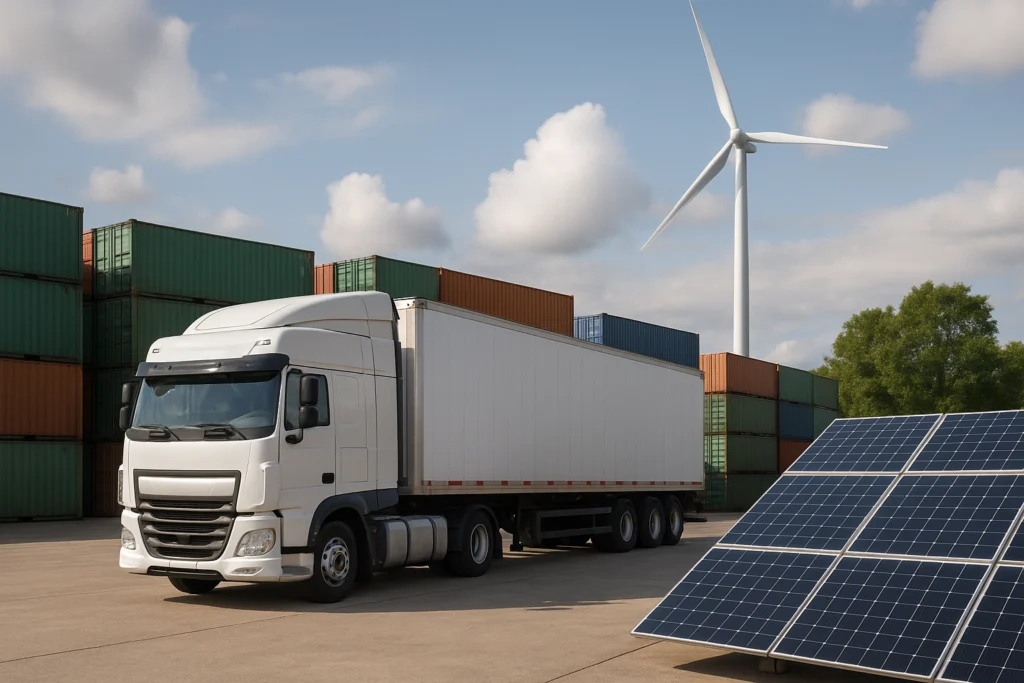
Container transportation enters 2026 in a state of genuine structural transformation. After two years defined by supply chain disruptions, record freight rates, and extraordinary carrier profits, the global container shipping market has shifted decisively in a new direction — one characterized by capacity surplus, moderating freight costs, evolving trade routes, and an accelerating push toward digitalization and environmental compliance. For businesses that rely on container transportation services to move goods across international trade lanes, understanding what is actually driving these changes is not merely an academic exercise. It is the difference between making logistics decisions based on market reality and making them based on assumptions that were accurate two years ago but no longer hold today. The trends reshaping container transportation in 2026 are complex, interconnected, and in several cases pulling in opposing directions simultaneously — which makes the ability to read the market clearly more valuable than ever.
A Market Under Structural Overcapacity
The single most consequential force shaping container shipping in 2026 is structural overcapacity, and its implications cascade through every other aspect of the market. Since 2021, ocean carriers reinvested the extraordinary profits generated during the pandemic-era freight boom into a record wave of newbuild vessel orders. Those deliveries are now arriving in force. Approximately 1.5 million TEU of new container capacity is scheduled for delivery in 2026 alone — equivalent to nearly 6% of the entire existing global fleet added in a single year — and the total orderbook currently stands at between 26% and 30% of the active fleet, the highest level seen since 2010. Meanwhile, global container demand growth is projected at just 2.5% to 4% in TEU volumes for the year, creating a supply-demand imbalance that the market will need several years to fully absorb.
The practical consequence of this overcapacity for shippers is significant and largely favorable in the short term. Freight rates that surged to historic highs in 2021 and remained elevated through much of 2024 are expected to soften further in 2026 as carriers compete intensely to fill expanding fleets. Shipper leverage in contract negotiations has definitively improved, and annual service contracts signed in 2026 are offering substantially better value per TEU than those of recent years. However, the situation is not without complexity. Carriers are deploying blank sailings — scheduled voyages that are canceled to artificially reduce available capacity — and slow steaming strategies to prevent rates from collapsing entirely. The market is not in freefall; it is in a managed downcycle where the balance of power has shifted meaningfully toward shippers without producing the catastrophic rate environment that characterized 2015 and 2016. Businesses that understand this dynamic and approach carrier negotiations accordingly are well-positioned to lock in favorable long-term rate structures before any geopolitical or demand-side shock resets the balance.
Red Sea Disruptions and the Question of Route Normalization
The Houthi attacks on commercial vessels in the Red Sea that began in late 2023 fundamentally altered the routing geometry of global container shipping, forcing carriers to divert services from the Suez Canal around the Cape of Good Hope and adding thousands of nautical miles — and two to three weeks of transit time — to Asia-Europe and some Asia-North America trade lanes. This extended routing absorbed enormous effective capacity from the global fleet, which partially offset the growing overcapacity problem and helped sustain freight rates above their natural market floor through 2024 and into early 2025. As of early 2026, meaningful Red Sea transit volumes have not returned, and the security situation remains unresolved, though it continues to be monitored closely by carriers and their customers.
The potential normalization of Suez Canal transits represents one of the most significant binary risk factors in the 2026 container market outlook. A broad return to Suez Canal routing — even a partial one — could reduce effective global vessel demand by up to 10% virtually overnight, as shorter voyage distances free up capacity that the rerouting had been absorbing. For shippers currently benefiting from the cost and schedule certainty of Cape of Good Hope services, a sudden route normalization would require rapid adjustment of transit time assumptions, safety stock calculations, and supplier lead time buffers. Conversely, a continuation of Red Sea disruptions extends the natural capacity buffer that has prevented the worst of the overcapacity consequences from materializing in freight rates. Either outcome requires a logistics strategy that is genuinely flexible and built around scenario planning rather than a single assumed routing baseline – precisely the type of approach delivered by integrated Streamline Logistics solutions that can dynamically rebalance routings, lead times, and inventory buffers.
Carrier Alliance Restructuring and Its Market Effects
2025 and 2026 have brought the most significant restructuring of ocean carrier alliance arrangements in over a decade, and the ripple effects are still being absorbed across global service networks. The dissolution of established alliances and the formation of new groupings — most notably the Gemini Cooperation between Maersk and Hapag-Lloyd and the Premier Alliance combining Ocean Network Express, HMM, and Yang Ming — has reshuffled port call sequences, service strings, and vessel deployment patterns on nearly every major trade lane. For shippers, this restructuring translates into a period of schedule disruption and reduced port coverage on certain services as carriers realign their networks to match their new partnership structures, which in practice means some ports and inland destinations that previously enjoyed weekly direct sailings now face less frequent coverage or require transshipment routing.
Beyond the short-term disruption, the alliance restructuring is reshaping competitive dynamics in ways that will define the container shipping landscape for the next five to seven years. The Gemini Cooperation has explicitly positioned schedule reliability as its core competitive differentiator, targeting an industry-leading on-time performance rate that would represent a significant departure from the historically poor schedule reliability that has plagued container shipping and frustrated shippers for decades. If this commitment translates into consistently delivered performance, it could force competing alliances to prioritize reliability over pure cost and network scale — a shift that would genuinely benefit shippers across all trade lanes. However, the track record of carrier commitments to service quality is mixed, and shippers are rightly cautious about adjusting their supply chain planning assumptions based on performance targets rather than demonstrated operational results.
Decarbonization Mandates: Real Costs, Real Compliance
The regulatory environment governing container shipping’s carbon emissions has moved from a distant future consideration to an immediate operational and financial reality in 2026. Under the European Union’s Emissions Trading System, which was formally extended to cover maritime shipping, ocean carriers operating voyages into and out of European ports are now required to purchase carbon allowances corresponding to 70% of their verified 2025 emissions — a substantial increase from the 40% obligation that applied to their 2024 emissions. This compliance cost is not abstract: it represents a direct addition to the cost of moving containers on Europe-touching trade lanes, and carriers are incorporating these charges into their rate structures through newly introduced Environmental Compliance Surcharges that shippers are beginning to encounter in their freight invoices throughout 2026.
Alongside the EU ETS, the International Maritime Organization’s Carbon Intensity Indicator regulations are placing operational constraints on vessel deployments, effectively penalizing older, less fuel-efficient tonnage and accelerating the commercial preference for newer, cleaner vessels. This regulatory pressure is one of the primary drivers behind the surge in liquefied natural gas-powered vessel orders that has characterized the container shipping newbuild orderbook over the past three years. LNG-powered containership capacity is expanding rapidly, with major carriers including CMA CGM and MSC leading the transition to alternative marine fuels. For shippers with environmental, social, and governance reporting obligations or Science Based Targets initiative commitments on Scope 3 supply chain emissions, the carrier you choose and the fuel profile of the vessel your cargo moves on is increasingly a material input to your sustainability disclosures — not simply a logistics footnote.
Digital Transformation and the Rise of Smart Container Technology
The digitalization of container transportation has been a recurring theme in logistics industry discussions for many years, but 2026 represents a genuine inflection point where digital capabilities are transitioning from competitive differentiators for leading carriers to baseline operational requirements across the industry. Smart containers equipped with Internet of Things sensors are at the center of this transformation, transmitting real-time data on container location, internal temperature and humidity, shock and vibration events, door-opening alerts, and other critical parameters throughout multimodal transportation journeys. Hapag-Lloyd’s large-scale deployment of sensor technology across its standard dry container fleet has established a market benchmark that competing carriers are under growing pressure to match, not because of regulatory requirement but because customers are increasingly selecting carriers based on the quality of visibility and real-time exception management their technology platforms can deliver.
Industry analysis projects that smart container deployment will expand approximately eightfold over the next five years, driven by the recognition among ocean carriers that data-driven services create defensible competitive advantage in markets where base freight rates are commoditizing rapidly. Beyond the container itself, artificial intelligence and predictive analytics platforms are transforming how shippers procure capacity, manage freight spend, and respond to supply chain disruptions in real time. Digital freight platforms that provide instant rate comparison across multiple carriers, AI-powered demand forecasting tools that optimize booking timing, and integrated transportation management systems that connect ocean freight visibility with warehouse management and inventory planning are no longer the exclusive domain of large multinational shippers. They are increasingly accessible to mid-sized businesses, and those that invest in these capabilities in 2026 are building a material operational advantage over competitors who continue to manage container shipping through legacy manual processes.
The 2026 Container Market at a Glance
Given the number of simultaneous forces shaping the market, a structured overview of the key dynamics and their practical implications for shippers provides useful context for strategic planning and procurement decisions in the year ahead.
| Trend | Current Status in 2026 | Practical Impact for Shippers |
|---|---|---|
| Fleet overcapacity | ~27% overcapacity projected through 2028; 1.5M TEU new deliveries in 2026 | Improved negotiating leverage; more competitive long-term contract rates |
| Freight rate trajectory | Softening from 2024 highs; rates normalizing with continued downward pressure | Better cost visibility; opportunity to lock in favorable annual contract rates |
| Red Sea disruptions | Cape of Good Hope routing persists; Suez Canal return remains uncertain | Extended Asia-Europe transit times; scenario planning essential for inventory buffers |
| Alliance restructuring | Gemini Cooperation and Premier Alliance operational; networks realigning | Short-term schedule disruption on some lanes; new focus on reliability metrics |
| EU ETS compliance | 70% carbon quota obligation in effect for 2025 emissions; surcharges applied | New environmental surcharges on Europe-linked voyages; rising compliance costs |
| Smart container technology | IoT deployment accelerating; 8x growth projected over five years | Greater real-time visibility; stronger cargo integrity monitoring and claims prevention |
| Nearshoring and supply chain diversification | China+1 strategies maturing; Mexico, Southeast Asia, Eastern Europe gaining volume | New trade lanes emerging; sourcing diversification reducing single-origin risk |
Geopolitical Trade Policy and Supply Chain Realignment
The geopolitical environment shaping container transportation in 2026 is arguably more complex and consequential than at any point in the past two decades. The ongoing evolution of US trade policy — including tariff regimes that have elevated the cost of importing goods from China and created powerful economic incentives for supply chain diversification — has materially accelerated the nearshoring and China-plus-one sourcing strategies that many businesses began exploring during the pandemic years but are now implementing at scale. Mexico, Vietnam, India, Indonesia, and Eastern European countries are attracting manufacturing investment that was previously concentrated in China, and the container shipping industry is actively restructuring its service networks to connect these emerging production centers with North American and European consumption markets.
For shippers, this realignment creates both opportunity and operational complexity. On the opportunity side, diversified sourcing reduces the concentration risk that left many businesses catastrophically exposed during the supply chain disruptions of 2020 and 2021 — when dependence on a single origin country or a single ocean trade lane proved to be an existential vulnerability. The operational complexity arises from the fact that newer supply origins in Southeast Asia or Latin America are often served by thinner, less mature shipping networks with fewer weekly sailings, smaller port infrastructure, and less reliable inland connectivity than the established China trade lanes that most supply chains were originally built around. Navigating this transition effectively requires freight forwarders and logistics partners with genuine on-the-ground expertise in these emerging sourcing markets, not simply carriers with peripheral service strings into regional hub ports.
Intermodal Container Transportation and Domestic Network Evolution
The trends shaping container transportation in 2026 are not confined to deep-sea ocean freight — they extend with equal force into the domestic intermodal networks that connect port terminals with inland distribution centers and manufacturing facilities. In the United States, improving rail network performance and increasingly truck-competitive intermodal service offerings on long-haul lanes are creating meaningful opportunities for shippers to shift volume away from over-the-road trucking on corridors above 750 miles. Truckload capacity, while broadly balanced in early 2026, is expected to tighten selectively as the freight cycle turns, making the development of intermodal as a strategic routing option in shipper routing guides — rather than an emergency fallback — a prudent supply chain investment for the year ahead.
The critical insight for logistics managers evaluating their domestic intermodal strategy in 2026 is that the operational and financial benefits of intermodal container services compound with familiarity and integration. Shippers that practice intermodal routing in their steady-state operations — rather than activating it only when trucking capacity tightens — build institutional knowledge of terminal procedures, equipment availability patterns, and drayage provider relationships that translate directly into more reliable performance and fewer costly exceptions. This institutional competence becomes disproportionately valuable when trucking markets tighten or when a disruption event forces rapid network reoptimization, because the shipper who has been running intermodal routinely is far better prepared to scale it quickly than one encountering the service mode for the first time under pressure.
What This Means for Your Logistics Strategy
The convergence of these trends — capacity surplus, softening rates, route uncertainty, regulatory cost increases, digital acceleration, and supply chain realignment — creates a logistics environment in 2026 that is simultaneously more favorable for shippers in terms of pricing leverage and more demanding in terms of the analytical rigor required to navigate it effectively. The businesses best positioned to extract value from this environment are those that approach their container freight procurement strategically: using the current shipper-favorable window to negotiate well-structured annual contracts with reliable carriers, building flexibility into their inventory models to accommodate transit time variability on disrupted trade lanes, investing in digital tools that provide the real-time supply chain visibility needed to manage exceptions proactively rather than reactively, and working with logistics partners who have the market intelligence to help them make routing and sourcing decisions based on current commercial reality rather than historical convention.
Container transportation in 2026 is not a market that rewards passivity or inertia. The same dynamics that create cost-saving opportunities for attentive, data-driven shippers create disproportionate costs and service failures for those who manage their freight spend on autopilot. The structural shifts underway in ocean carrier alliances, routing networks, environmental compliance frameworks, and digital service capabilities are not temporary noise in the market — they are permanent changes to how global container transportation operates. Businesses that invest the time and expertise to understand and adapt to these changes in 2026 are building the supply chain resilience and cost efficiency that will compound into sustainable competitive advantage over the years to come.