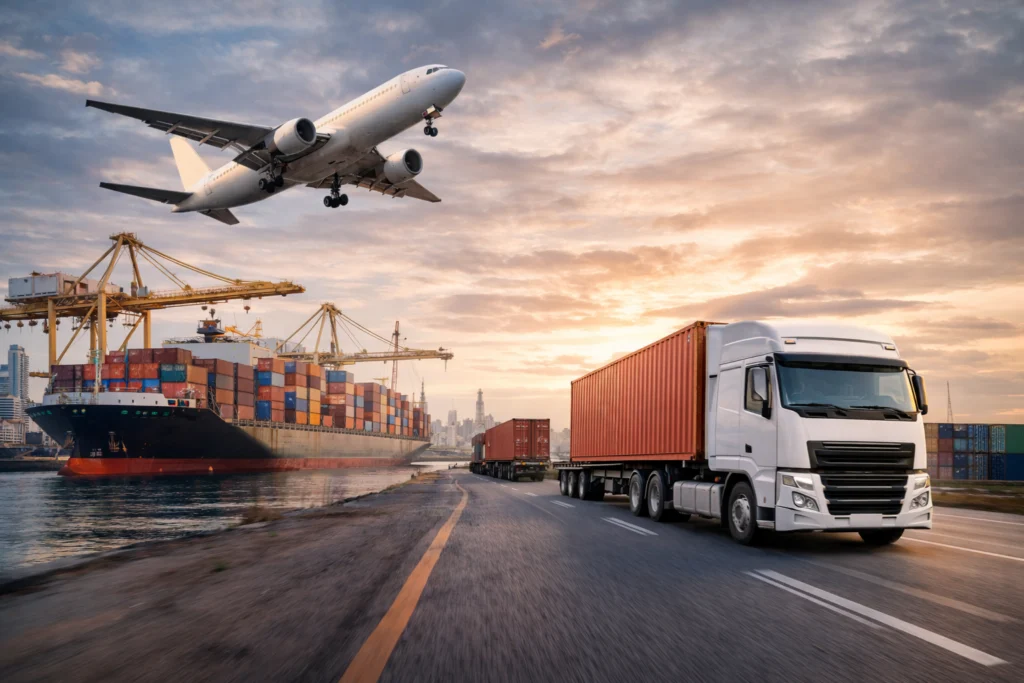
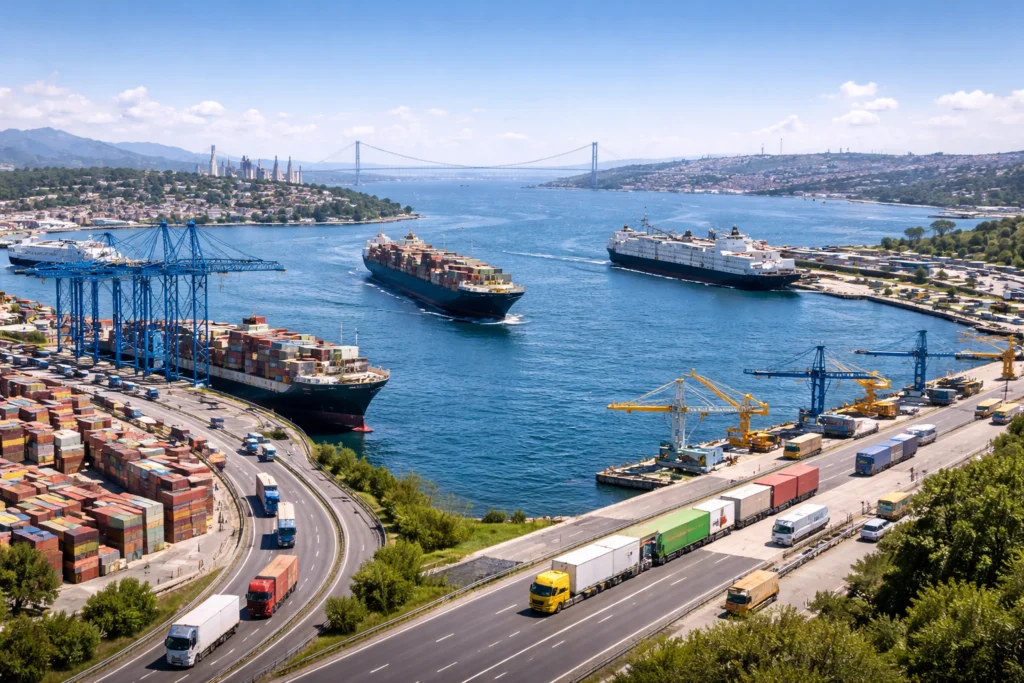
Multimodal transport has emerged as one of the most transformative logistics solutions in the global supply chain landscape, enabling businesses to move goods efficiently by combining multiple transportation modes under a single contract and unified management structure. Unlike traditional single-mode shipping approaches that rely exclusively on Road Freight, rail, sea, or AIRFREIGHT, multimodal services strategically integrate these different modes to create optimized shipping solutions that balance cost efficiency, delivery speed, environmental sustainability, and operational flexibility.
As international trade continues growing and supply chain complexity increases, companies across manufacturing, retail, food and beverage, and e-commerce sectors are increasingly adopting multimodal transportation strategies to address challenges such as port congestion, capacity constraints, rising fuel costs, and stringent environmental regulations. This comprehensive guide examines the fundamental principles of multimodal transport services, explores the technological innovations reshaping the industry in 2026, analyzes the economic and operational benefits these services provide, and offers practical implementation strategies that businesses can use to optimize their international logistics operations and gain competitive advantages in today’s demanding global marketplace.
Understanding Multimodal Transport: Definition and Core Principles
Multimodal transport is formally defined as the carriage of goods using at least two different modes of transportation under a single contract with one transport operator who assumes complete responsibility for the entire journey from origin to final destination. This operational model fundamentally differs from traditional intermodal transport, where separate contracts govern each transportation leg and different carriers handle individual segments of the journey with distinct liability arrangements. The defining characteristic of genuine multimodal transport is the use of a single unified transport document, typically the FIATA Multimodal Transport Bill of Lading, which serves as both a receipt for goods and a contract covering the complete door-to-door movement regardless of how many different transport modes are utilized along the route.
Throughout the multimodal journey, container transportation cargo typically remains intact within standardized containers or loading units that move seamlessly between ships, trains, trucks, and aircraft without requiring goods to be unpacked, repackaged, or handled individually at transfer points. This containerization approach dramatically reduces handling time, minimizes the risk of damage or loss, enhances security by keeping shipments sealed throughout transit, and enables faster mode transitions at multimodal logistics hubs and transfer terminals. The single-contract structure provides shippers with simplified administrative processes, clear accountability with one responsible party, streamlined communication channels, and unified liability coverage that eliminates the complexity of managing multiple carriers and navigating different legal frameworks across various transportation segments.
The Evolution to Synchromodal Transport Systems
The logistics industry is witnessing a significant evolution from traditional multimodal transport to advanced synchromodal systems that represent the next generation of integrated shipping solutions. While conventional multimodal transport predetermines the specific modes and routes before shipment departure, synchromodal transport introduces dynamic flexibility that allows transportation modes and routing decisions to change in real-time based on current conditions, available capacity, weather disruptions, traffic patterns, and priority requirements. This revolutionary approach utilizes artificial intelligence, predictive analytics, Internet of Things sensors, and digital freight platforms that continuously monitor conditions across the entire transportation network and automatically recommend or implement mode switches to optimize delivery performance.
For example, if rail congestion unexpectedly develops on a planned route, the synchromodal system can instantly reroute containers to available truck capacity or alternative rail corridors without requiring manual intervention or causing significant delays. The synchromodal model is experiencing annual growth rates of six and a half to twelve percent, making it the fastest-growing segment within multimodal transport as businesses recognize the operational advantages of systems that adapt dynamically rather than following rigid predetermined plans. Shippers utilizing synchromodal services specify only their fundamental requirements such as delivery deadline, maximum acceptable cost, and sustainability preferences, then allow the transport operator’s intelligent systems to determine the optimal combination of modes and routes that satisfy these parameters while maximizing efficiency across the network. This flexibility enables logistics providers to fully utilize underused transport capacity, such as North American rail networks currently operating at only sixty-five percent capacity and inland waterways running at just forty percent utilization, creating opportunities for cost reduction and improved service reliability.
Economic Benefits and Cost Optimization Strategies
The financial advantages of multimodal transport services have become increasingly compelling as businesses seek ways to reduce logistics expenses without compromising service quality or delivery reliability. By strategically selecting the most cost-efficient transportation mode for each segment of the journey, companies can achieve overall logistics cost reductions ranging from fifteen to thirty percent compared to single-mode alternatives. Ocean freight offers the lowest per-kilogram costs for international movements and bulk commodities, rail provides economical long-distance inland transport with rates significantly below road haulage, Road Freight delivers flexibility and door-to-door convenience for shorter distances and final mile delivery, and AIRFREIGHT serves time-critical shipments where speed justifies premium pricing. Multimodal operators leverage these mode-specific advantages by designing integrated solutions that maximize value across the complete supply chain rather than optimizing individual segments in isolation.
The standardized containerization inherent in multimodal systems generates additional savings through faster loading and unloading operations, reduced labor requirements at transfer points, decreased cargo handling damage, and improved asset utilization rates that allow transport equipment to move more freight with fewer empty repositioning movements. Companies also benefit from reduced inventory carrying costs because multimodal transport typically provides more predictable and reliable delivery schedules compared to single-mode alternatives, allowing businesses to operate with leaner stock levels and lower working capital requirements. The manufacturing sector, which represents one of the largest users of multimodal rail-road combinations, is experiencing annual growth of five and a half to ten percent as just-in-time production systems increasingly depend on reliable multimodal services that balance cost efficiency with delivery precision.
Environmental Sustainability and Carbon Reduction
Environmental considerations have become central drivers of multimodal transport adoption as corporations face mounting pressure from regulators, investors, customers, and sustainability commitments to reduce their supply chain carbon footprints. Multimodal strategies create substantial opportunities for modal shift away from high-emission road freight toward lower-emission alternatives such as rail transport and short-sea shipping, which generate significantly less carbon dioxide per ton-kilometer of cargo movement. European demand for multimodal services is growing at four to nine and a half percent annually, heavily influenced by the European Green Deal policies that incentivize shifting freight from roads to railways to meet ambitious emission reduction targets. Rail transport produces approximately seventy-five percent fewer greenhouse gas emissions than equivalent road haulage for comparable distances, while ocean shipping generates even lower emissions for international movements despite longer transit times.
Companies that implement certified carbon reporting for their entire multimodal journey are gaining market share from sustainability-conscious corporations that require detailed environmental impact documentation from their logistics providers. Beyond emission reductions, multimodal transport contributes to broader environmental benefits including reduced traffic congestion on highway networks, decreased road infrastructure wear and maintenance requirements, lower noise pollution in urban areas, and reduced accident rates associated with long-haul trucking operations. The retail and e-commerce sectors, projected to grow at five to ten and a half percent annually, are particularly focused on multimodal solutions that combine environmental responsibility with the operational agility needed to meet customer expectations for fast, reliable delivery. Forward-thinking logistics providers are adopting hybrid approaches that use ocean freight for long-distance international movements to minimize emissions, leverage rail and eco-friendly vehicles for inland distribution, and deploy electric or low-emission trucks for urban last-mile delivery, creating comprehensive solutions that optimize both environmental impact and operational performance.
| Multimodal Configuration | Typical Mode Combinations | Annual Growth Rate | Primary Use Cases |
|---|---|---|---|
| Two-Mode Transport | Sea-Road, Rail-Road, Air-Road | 4.5%–9.5% | Standard international shipments with last-mile road delivery from ports or rail terminals |
| Three-Mode Transport | Sea-Rail-Road, Air-Rail-Road | 6.5%–12.0% | Complex landlocked regional trade and routes requiring multiple transfer points |
| Synchromodal Transport | Dynamic mode selection | 6.5%–12.0% (fastest growing) | High-priority shipments requiring real-time optimization and maximum flexibility |
Documentation Requirements and Regulatory Compliance
Proper documentation represents a critical success factor in multimodal transport operations, as the complexity of moving goods across multiple modes and international borders requires comprehensive paperwork that satisfies diverse regulatory requirements. The cornerstone document in multimodal shipping is the Multimodal Transport Bill of Lading, which serves multiple essential functions including acting as a receipt confirming the carrier has taken possession of goods, functioning as a contract that defines the terms and conditions governing the transport, and operating as a document of title that enables ownership transfer while goods remain in transit. The FIATA Multimodal Transport Bill of Lading has become the internationally recognized standard for these transactions, accepted by financial institutions for letters of credit and providing legal framework under the UNCTAD/ICC Rules for Multimodal Transport Documents.
Beyond the transport document itself, multimodal shipments require a commercial invoice detailing the transaction value and cargo description, customs declarations for each country where goods cross borders, packing lists specifying the contents and weights of individual packages, certificates of origin proving where goods were manufactured, and potentially specialized documents such as dangerous goods declarations, phytosanitary certificates for agricultural products, or import licenses for restricted commodities. The multimodal bill of lading must clearly indicate the name of the carrier and bear proper signature or authentication, specify the place where goods were taken in charge and the place designated for delivery, include an “on board” notation or similar confirmation when goods are loaded onto vessels, and avoid any notations regarding defective condition of goods or packaging that could create discrepancies in letter of credit transactions.
Article nineteen of the Uniform Customs and Practice for Documentary Credits provides detailed requirements for transport documents covering at least two different modes of transport, establishing the examination standards that banks use when processing multimodal shipping documents presented under letters of credit. Businesses can streamline their documentation processes by working with experienced multimodal transport operators who understand these complex requirements and provide integrated documentation services that ensure compliance across all jurisdictions and transport modes involved in the shipment journey.
Technology Integration and Digital Innovation
Digital technologies are fundamentally transforming multimodal logistics operations, enabling levels of visibility, coordination, and optimization that were impossible with traditional manual management approaches. Real-time tracking systems utilizing GPS technology, Internet of Things sensors, RFID tags, and cellular connectivity provide continuous location monitoring throughout the multimodal journey, allowing shippers and consignees to track containers as they move between ships, trains, and trucks across international supply chains. Advanced container tracking systems incorporate tamper-resistant embedded controllers with wireless networks and environmental sensors that not only monitor location but also track temperature, humidity, shock events, and door opening incidents, providing comprehensive cargo condition monitoring essential for high-value or sensitive goods.
Digital freight matching platforms function as online marketplaces that connect shippers with available carrier capacity in real-time, addressing persistent challenges such as less-than-truckload consolidation and empty backhaul movements that reduce transport efficiency and increase costs. These platforms provide shippers with access to diverse carrier networks, transparent real-time pricing, and instant booking capabilities, while carriers benefit by finding loads that optimize their equipment utilization, reduce idle time, and improve return-trip revenue generation. Artificial intelligence and predictive analytics systems analyze historical performance data, current network conditions, weather forecasts, and demand patterns to recommend optimal mode selections, routing decisions, and capacity allocation strategies that improve delivery reliability while reducing costs.
Augmented reality applications are beginning to appear in multimodal logistics operations, with smart glasses and heads-up displays providing warehouse workers with visual picking instructions, real-time location information, and automated tracking capabilities that reduce errors and accelerate goods handling at multimodal transfer terminals. The integration of these digital technologies creates end-to-end supply chain visibility that eliminates the information gaps and communication delays traditionally associated with multimodal transport, where cargo often disappeared from tracking systems during mode transitions and transfer operations. Companies investing in comprehensive digital freight management platforms report that they can process multimodal shipments two to three times faster than manual workflows while achieving measurably better on-time performance and customer satisfaction scores.
Key Multimodal Corridors and Regional Opportunities
The global multimodal transport network is structured around strategic corridors that connect major manufacturing centers with consumption markets through integrated land, sea, and air links. Asia-Europe corridors represent the backbone of international multimodal trade, with Chinese manufacturing hubs in Shanghai, Shenzhen, and Ningbo serving as critical origin points for ocean freight that increasingly combines with rail and road transport to reduce transit times and improve delivery predictability compared to ocean-only routing. The Belt and Road Initiative has dramatically expanded rail connectivity between Asia and Europe, creating land-bridge routes that offer faster transit than sea freight and lower costs than air cargo, particularly attractive for mid-value goods where the speed-cost trade-off favors this multimodal combination. North American multimodal transport is projected to grow at four and a half to ten percent annually, driven by highly developed intermodal rail networks and nearshoring trends that are increasing multimodal traffic flows from Mexico into the United States via integrated rail-road services. European multimodal operations center on key logistics hubs in Germany, the Netherlands, and Poland that serve as critical transfer points for Asia-Europe land-bridge rail routes and provide sophisticated infrastructure for seamless mode transitions. Emerging opportunities exist in developing regions where new trade agreements and infrastructure investments are creating multimodal networks that can bypass underdeveloped road systems and connect inland markets to global shipping gateways.
The African Continental Free Trade Area and the Regional Comprehensive Economic Partnership in Southeast Asia are stimulating demand for multimodal services that can navigate infrastructure limitations while providing reliable connectivity to landlocked countries and interior production centers. Latin American corridors present significant growth potential as manufacturing diversification strategies drive increased trade flows and infrastructure improvements enable more efficient multimodal operations connecting Pacific ports, Andean production zones, and Atlantic shipping lanes. Understanding these regional dynamics and corridor characteristics helps businesses identify optimal multimodal routing strategies, select appropriate service providers with strong presence in relevant regions, and anticipate capacity availability and pricing trends that affect logistics performance and costs.
Challenges and Risk Management Strategies
Despite the numerous advantages multimodal transport provides, businesses must understand and actively manage several operational challenges inherent in these complex integrated systems. Infrastructure dependency represents a fundamental constraint, as multimodal transport effectiveness relies heavily on the availability and quality of ports, rail terminals, intermodal transfer facilities, and connecting road networks that enable efficient mode transitions. Coordination complexity increases substantially when managing shipments that involve multiple carriers, transfer points, and transportation modes, each operating on different schedules and potentially experiencing independent delays or disruptions. The mode transition process itself introduces potential delays, as containers must be transferred between ships and trains, trains and trucks, or other combinations, with each handoff creating opportunities for scheduling conflicts, equipment availability issues, or processing bottlenecks at transfer terminals.
While multimodal transport often provides cost advantages for overall shipments, businesses must consider that initial investments in specialized containers, handling equipment, and technology systems can be substantial, and the operational planning required for effective multimodal management is significantly more complex than single-mode alternatives. Capacity limitations on certain transport modes, particularly rail and ocean shipping, can affect delivery timelines during peak seasons when demand exceeds available infrastructure and equipment, potentially forcing shipments onto more expensive alternatives or causing delays until capacity becomes available.
The food and beverage sector, growing at four and a half to nine percent annually, faces particular challenges in maintaining integrated cold-chain integrity across multiple transport modes to preserve product quality over long international distances. Effective risk management strategies include developing contingency routing plans that provide alternatives when primary corridors experience disruptions, maintaining relationships with multiple carriers across different modes to ensure capacity access, implementing comprehensive tracking systems that provide early warning of potential delays, and working with experienced multimodal operators who have the expertise and network presence to navigate challenges effectively. Companies should also consider cargo insurance arrangements that provide appropriate coverage across all transport modes and transfer points, as liability frameworks can vary between different segments of multimodal journeys.
Implementation Strategies for Business Success
Successfully implementing multimodal transport services requires strategic planning, careful partner selection, and systematic performance management to realize the full potential benefits these integrated solutions offer. The first critical step involves conducting comprehensive analysis of your current shipping patterns, costs, delivery performance, and service requirements to identify opportunities where multimodal approaches can deliver meaningful improvements over existing single-mode operations. Businesses should evaluate each major shipping lane separately, considering factors such as shipment volume and frequency, time sensitivity requirements, cost targets, cargo characteristics, and customer service expectations to determine where multimodal configurations offer optimal solutions.
Partner selection demands thorough evaluation of potential multimodal transport operators based on their network coverage in relevant regions, experience with your specific cargo types, technology capabilities for tracking and communication, financial stability and insurance coverage, and track record for delivery reliability and problem resolution. Companies should prioritize providers who demonstrate strong expertise in synchromodal operations and leverage digital freight platforms that enable dynamic optimization rather than rigid predetermined routing. Initial implementation often works best using a phased approach, beginning with pilot programs on selected trade lanes where multimodal advantages appear strongest, then expanding successful models to additional routes once processes are refined and performance validated.
Performance measurement systems should track key metrics including total door-to-door transit time, on-time delivery percentage, cost per shipment or per kilogram, carbon emissions per ton-kilometer, and exception rates requiring intervention to enable data-driven continuous improvement. Regular business reviews with multimodal transport partners help identify optimization opportunities, address recurring issues, and align service offerings with evolving business requirements. Companies should also invest in internal training to ensure their logistics teams understand multimodal principles, documentation requirements, and technology tools, enabling them to effectively manage these complex operations and communicate knowledgeably with carriers and customers. Organizations that successfully implement multimodal strategies typically achieve not only cost savings and improved delivery performance but also enhanced supply chain resilience through diversified transportation options that reduce vulnerability to disruptions affecting any single mode or corridor.
Future Outlook: Multimodal Transport Beyond 2026
The multimodal transport industry stands at the threshold of transformative changes driven by technological innovation, sustainability imperatives, and evolving trade patterns that will reshape logistics operations in coming years. Autonomous vehicle technology promises to revolutionize road transport segments of multimodal networks, with self-driving trucks potentially reducing labor costs, enabling twenty-four-hour operations without driver hour restrictions, and improving safety performance through elimination of human error factors. Artificial intelligence applications will continue advancing beyond current optimization algorithms toward truly autonomous decision-making systems that can manage complex multimodal networks with minimal human intervention, dynamically balancing multiple competing objectives including cost, speed, reliability, and environmental impact.
The Internet of Things ecosystem will expand dramatically as sensor costs decline and connectivity improves, creating unprecedented visibility into cargo condition, equipment status, and network performance that enables proactive problem prevention rather than reactive issue resolutio. Sustainability requirements will intensify as governments implement stricter emission regulations and carbon pricing mechanisms, accelerating the modal shift toward rail and waterway transport while driving adoption of alternative fuel technologies including electric trucks, hydrogen-powered vessels, and sustainable aviation fuels for the air freight components of multimodal networks.
Trade patterns will continue evolving with nearshoring and regionalization trends creating new multimodal corridors while traditional long-haul routes adapt to changing manufacturing geographies and consumption patterns. Infrastructure investments in developing regions will open new multimodal opportunities as ports, rail networks, and transfer facilities expand capacity and improve efficiency in Africa, Latin America, and Southeast Asia. The businesses that thrive in this evolving landscape will be those that embrace technological innovation, prioritize sustainability alongside operational performance, maintain flexible networks capable of adapting to disrupted trade flows, and continuously optimize their multimodal strategies based on real-time data and emerging best practices.